The Allure of Extrait de Parfum

If you were a medieval caliph and desired a fragrance to delight your senses, your royal perfumers would have mixed Tibetan musk with an equal amount of Yemeni ambergris and steeped the mixture in ben tree oil over a weak fire. They would have stirred it with a gold spoon and used a silver vessel to refine it further until the liquid itself turned golden and smelled like paradise itself. If you were the wife of the caliph Harun al-Rashid, the one of One Thousand and One Nights fame, then you would have asked for a touch of jasmine oil to remind you of Persian gardens in bloom. According to the 14th century Egyptian scholar Al-Nuwayri, such were indeed the refined tastes of his time.
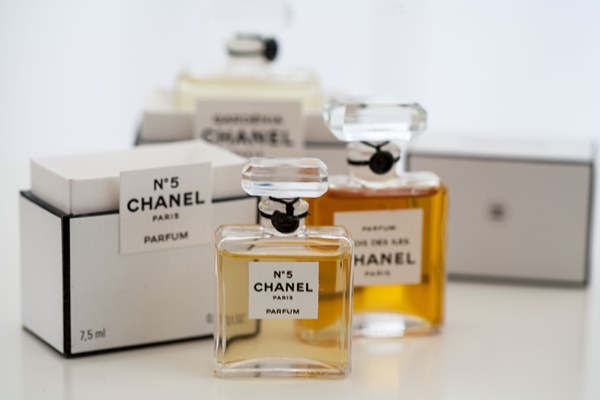
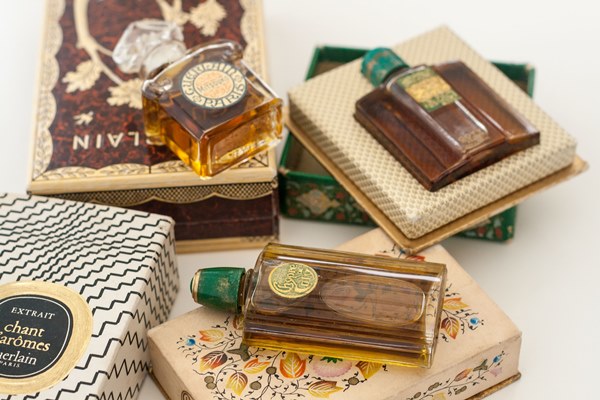
The luxurious, oil-based perfumes Al-Nuwayri describes in his book are the distant ancestors of the modern extrait de parfum. Today, the extrait de parfum is usually diluted in alcohol, but the proportion of fragrant oils in its formula is still sumptuously high. In my recent FT magazine column, The Allure of Extrait de Parfum, I describe what makes extrait de parfum different and why it still has a place in our perfume wardrobe.

As I’ve noted in my article about perfume concentrations, the proportion of oil alone doesn’t matter as much as the ingredients themselves. However, the parfum, along with the Eau de Cologne, is the oldest way of enjoying fragrance. It was meant to be applied directly on skin, allowing it to envelop the wearer in a soft cloud of scent. For instance, the great classics like Chanel No 5, Guerlain Jicky or Caron Tabac Blond were created as such concentrated blends. Their lighter variations appeared later in the second half of the 20th century when atomizers became popular. To continue reading, please click here.

What are some of your favorite extrait de parfums?

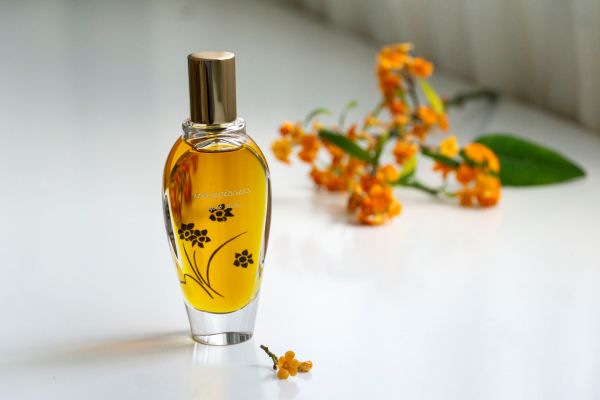
Photography by Bois de Jasmin

Spanish Still Life : A Study of Jasmine and Fruit

I first saw this painting during an exhibition in Brussels devoted to Spanish still life art and it stayed in my memory. The artist behind it is Benito Espinós (1748-1818), whose still life floral arrangements are among the most dramatic and varied.

If you could match this painting to a perfume, what would you select?

Photography by Bois de Jasmin, detail, at the Spanish Still Life exhibit, Bozar.

The Olfactory Equivalent of a Souffle

Over dinner recently at Le Soufflé, a Paris restaurant specializing in the famed French dish, my friend asked me if there are any fragrances that suggest the same lightness and sensuality as this airy confection. The question took me by surprise, but I liked the idea of finding a floral scent that felt weightless without being fleeting. This was no simple task because the floral family is vast, ranging from fresh blends based on orange blossom and lily of the valley to smoldering potions of tuberose and jasmine.


In my recent FT column, The Olfactory Equivalent of a Soufflé, I take up the challenge and select three perfumes that capture the airy and decadent qualities of a soufflé.

The first fragrance I selected was Cartier’s Baiser Volé, a composition of white blossoms glazed with vanilla. Its green, sparkling opening includes rose, gardenia and white Casablanca lilies, while the sweetness is tempered by the cool touch of woods, subsiding in the drydown to musk and cedar. Despite its caressing, velvety impression, Baiser Volé retains its effervescent personality from the first to the last accord. To continue reading, please click here.

Image via FT

Recommend Me a Perfume : September 2019

Are you looking for a new fragrance? Our “Recommend Me a Perfume” thread is open this week. You can use this space to find perfume recommendations, to share your discoveries and favorite scents, and to ask any questions about scents, aromas and flavors.

How does it work: 1. Please post your requests or questions as comments here. You can also use this space to ask any fragrance related questions. To receive recommendations that are better tailored to your tastes, you can include details on what you like and don’t like, your signature perfumes, and your budget. And please let us know what you end up sampling. 2. Then please check the thread to see if there are other requests you can answer. Your responses are really valuable for navigating the big and sometimes confusing world of perfume, so let’s help each other!

To make this thread easier to read, when you reply to someone, please click on the blue “reply” link under their comment.

Photography by Bois de Jasmin
Tamara Toumanova’s Perfume Collection

Called “the Black Pearl of the Russian Ballet” for her glamorous look and dramatic beauty, Tamara Toumanova (1919-1996) was as memorable on stage as she was behind the curtains. I very much like this photo showing the ballerina before a performance surrounded by icons, flowers and perfume bottles. It reminded of the gift that the American avant-garde artist Joseph Cornell presented to her in 1968.

Called Untitled, the box contained eleven perfume bottles filled with objects that captured the essence of Toumanova’s performances. Some bottles contain fragments of the costumes she wore to dance Don Quixote and Les Sylphides. Another one includes fragments of painted eggs, colored beads and gold threads, referring to Easter rites and the importance of the Orthodox faith for the dancer. Looking at the photo above, I can see why Cornell’s was an ideal gift for Toumanova.

Anyone care to guess the names of the perfumes on her vanity table?

As Seen On

Design by cre8d
© Copyright 2005-2026 Bois de Jasmin. All rights reserved. Privacy Policy