Perfume 101: 517 posts

Here you can find how to guides to selecting, testing and enjoying scents. Also includes are the lists of our top favorite perfumes for different occasions and articles covering all range of topics related to fragrance. If you’re curious to step inside a perfume lab (or even become an industry professional), this group of essays will be of interest.

7 Best Perfumes for Moon Viewing

Mid-Autumn Festival is on Saturday, September 10th, and I already envision brewing a pot of tea and admiring the full moon in the evening. Some years the weather doesn’t cooperate, and the temptress moon hides behind the clouds, but when it reveals its full splendor, the effect is magnificent. The pearly moonlight makes the sleeping city shimmer and the skies turn a deep blue color, with soft whispers of grey.
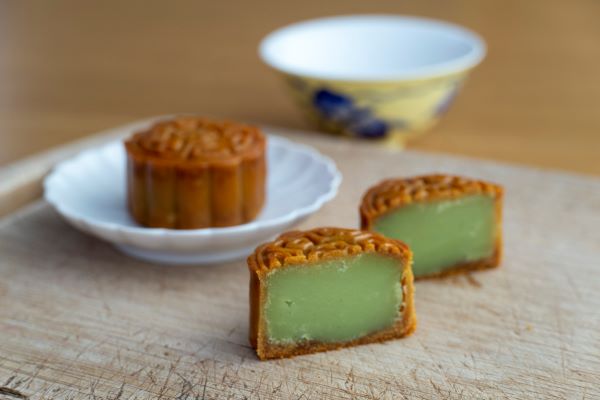
My moon-viewing is incomplete without mooncakes, pastries filled with lotus seed paste or red beans, and an appropriate perfume. The latter is particularly important to set the ambiance and add more magic to my evening. Below are my seven choices, for both men and women.
Continue reading →

On The Beauty of Fresh Incense

Incense is one of those materials that changes its character depending on what else is present in the formula. It can be bright and peppery or dark and smoky. It can even evoke the verdancy of spring buds. Incense is one of the most incredible ingredients used in perfumery. Before I describe a few fragrances to illustrate how incense is used as a fresh note, first a few words on what we mean by incense. Typically, perfumery incense is frankincense or olibanum. It’s sourced from the Boswellia species, most commonly found in countries like Sudan or Ethiopia. In its raw form incense comes as opaque lumps of resin that are called frankincense tears, and the tears need to be further processed into essence.

The scent of raw frankincense is peppery and vivid, and one of the easiest ways to enjoy it is to put one tear into a glass of water and leave it to infuse. The taste of such incense water is refreshing and bright, with a spicy edge.  The closest equivalent in fragrance is Serge Lutens’s appropriately named L’Eau Froide, which explores the bright nuances of frankincense.

Continue reading →

In Search of Eau de Cologne in Cologne

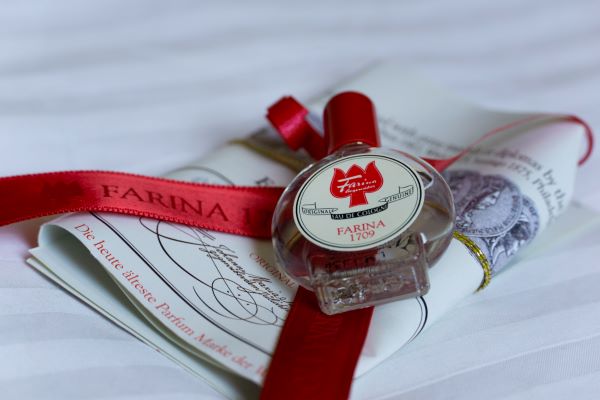
A major industrial center on the River Rhine, Cologne may not seem like a place with a fragrant history, but it was here in July of 1709 that Giovanni Battista Farina founded the company “G. B. Farina” and began to sell fashionable Italian goods from his native Piemont. When Johann Maria, Giovanni’s younger brother, joined the company in 1714, he developed a perfume that he called “Aqua mirabilis” or “miracle water” and that he named Eau de Cologne or Kölnisch Wasser in honor of his adopted city.

The fragrance was based on Italian essences of bergamot and lemon. Fresh, bright and effervescent, it was a break from the heavy perfumes of the period that featured dark musk and civet. “My fragrance is like an Italian spring morning after the rain,” was Johann Maria’s description of his Eau de Cologne, and this fantasy was so compelling that soon the perfume was much sought after. Mozart wore it and so did Napoleon. Oscar Wilde ordered it and Queen Victoria was a fan with a purchase order of over 600 bottles.


Continue reading →

Patchouli Fragrances : Part 1 Classical Patchouli

A green plant that evokes the scent of earth. A leaf that smells like wood. A wood that smells like chocolate. Patchouli is a complex, intriguing, and polarizing ingredient in a perfumer’s palette. Some like it, others hate it. It leaves nobody indifferent. Yet, it’s also a material that gives perfumery today its distinctive character. A modern chypre can be made without oakmoss, but not without patchouli.

My latest video is part of the patchouli series, and in the first episode, I discuss the material itself and cover classical patchouli fragrances. The way patchouli is processed affects its smell dramatically. A steam-distilled patchouli oil smells earthy, musty, loamy, while solvent-distilled patchouli absolute is reminiscent of cacao and dry woods. Other methods allow distillers to recompose fractions of patchouli essence to highlight certain effects, such as its licorice or sweet notes.

Continue reading →

In Memory of Issey Miyake and L’Eau d’Issey

44444

In memory of Issey Miyake.

The legendary Japanese designer passed away on August 5th at the age of 84. He changed fashion by creating geometrical designs out of pleated fabrics, loose kaftans out of batik, and his signature Flying Saucer dresses. He also revolutionized perfumery by collaborating on a fragrance that smelled of water.

The iris-perfumed water that served as inspiration for L’Eau d’Issey is based on a custom called shoubu yu. On May 5th, Children’s Day, people in Japan take a bath with iris leaves. The leaves are sold in small bundles to be floated in an ofuro bathtub, and while the symbolism is good health, the delicate fragrance of iris leaves was one of the lasting memories for Mr. Miyake. He explained to Cavallier that he wanted to capture this specific scent in his fragrance.

Continue reading →

As Seen On

Design by cre8d
© Copyright 2005-2026 Bois de Jasmin. All rights reserved. Privacy Policy