Perfume 101: 517 posts

Here you can find how to guides to selecting, testing and enjoying scents. Also includes are the lists of our top favorite perfumes for different occasions and articles covering all range of topics related to fragrance. If you’re curious to step inside a perfume lab (or even become an industry professional), this group of essays will be of interest.

Synthetics in Perfumery : Hedione Part 2

As a counterpart to the first series of Synthetics in Perfumery, here is the second part. The material I cover today is hedione. I explain how and by whom it was discovered, what led up to the experiments with hedione and what makes it such an important material. Hedione, which is the Firmenich tradename for methyl dihydrojasmonate, occurs naturally in jasmine. While its quantity in jasmine essence is quite small, it provides a unique radiant effect–and that is what Edmond Roudnitska discovered when he used it to create Dior’s Eau Sauvage. While on its own hedione doesn’t have a particularly strong character, the luminosity and radiance that it lends to compositions are striking.

Without hedione, Eau Sauvage would have been a well-crafted but not particularly memorable cologne. Without hedione, we wouldn’t be able to experience a variety of sensations and textures. It’s one of the most versatile perfume materials and today it’s hard to find a fragrance that doesn’t include it.

If you’ve liked my video and want to learn more about hedione, here is another article: Hedione Luminous Jasmine. It includes a number of perfume examples and mentions the doses of hedione used in them.
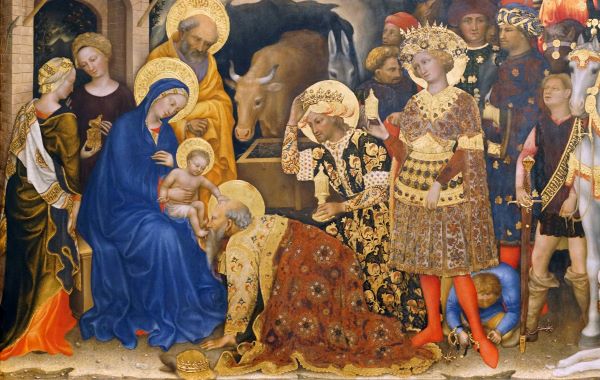
Gold, Frankincense and Myrrh

When they saw that the star had stopped, they were overwhelmed with joy. On entering the house, they saw the child with Mary, his mother; and they knelt down and paid him homage. Then, opening their treasure chests, they offered him gifts of gold, frankincense, and myrrh.” Matthew 2:11

Gold, frankincense and myrrh have been venerated since antiquity and their importance often exceeded their monetary value. Many know the Biblical story of the adoration of the Magi, but you can find mentions of these materials interspersed in Hindu, Islamic and Judaic texts. Since perfumery reflects trends in art, fashion, and society at large, I have always wanted to explore the three gifts of the Magi in the context of fragrance. I thought that it would be a fascinating exercise.

While the value of gold may be self-evident, its ability to hypnotize and dazzle is even more prized. The pursuit of such an irresistible sensation has deeply influenced perfumery, despite the fact that gold does not have an obvious olfactory profile. After all, just as gold is an exquisite adornment, so too is perfume.  Although every perfumer might interpret the gilded idea differently, many gold fantasy accords fall in the realm of rich oriental notes—spice, amber, balsam, tobacco, vanilla.

Continue reading →

Synthetics in Perfumery : Intro and Background

I’ve made a series of videos about synthetics in perfumery–from a perfumer’s perspective. I would like to explain why certain synthetic aroma-materials have become important in modern perfumery and what effects they create. The video I share today is the  first in the series, and it will offer an overview of the topic as well as talk about one of the most important synthetics. The second video will be released next week.

If you have any suggestions on the materials you would like me to cover or specific topics, please let me know. I note down all of your requests. Thank you!

The Nutcracker and Its Perfumes

“The Sugar Plum Fairy bade Marie and Nutcracker sit down while a feast was brought before them: teas, cakes and the rarest of fruits … Marie hardly had time to nibble at her sweetmeats before the next diversion was presented: the music abruptly changed to an adagio tempo. Arabian dancers dressed in gauzy veils garnished with gold medallions and jewels swayed hypnotically past… The rich aroma of coffee drifted past.”  –from E.T.A Hoffman’s The Nutcracker and the Mouse King.

As a former ballet dancer, I can’t think of winter without associating it with Hoffman’s tale and Tchaikovsky music–even the countless Nutcracker performances and rehearsals haven’t robbed the story of its magic. December for me has a strong whiff of rosin on ballet slippers, but it is also a month of fairy kingdoms, groves made of candied fruit and coffee scented dancers.

My pointe shoes are rarely in service these days, but my Nutcracker fantasies find their expression in perfume. It allows me to become the Sugar Plum Fairy, the Arabian Dancer, Prince Coqueluche or any other character I wish. No wonder that the great American choreographer George Balanchine picked fragrances for his favorite dancers and encouraged them to wear perfume to class.

Continue reading →

The Elusive Perfume of Matthiola and Night-Scented Stocks

The fragrance of night-scented stocks is so heady, sweet and spicy that if you’ve experienced it once on a balmy summer evening, you’ll understand my obsession. For years, I’ve been searching for a fragrance that captured it. I’ve also tried creating a night-scented stock accord. I’ve asked other perfumers for their ideas. Although all of these trials have been fun, none captured the scent of this humble, but richly scented flower.

This night-scented stock saga reminded me of the oft asked questions to find a perfume that smells like this or that flower. A rose on a summer morning. A garland of jasmine. A bouquet of lily of the valley. Whenever I think of these quests–and of my own search for a perfume of night-scented stocks, I realize that what we want is more than the scent of the flower. We want a mood, a scene, a story. For this reason, finding the right perfume becomes more complicated.

Continue reading →

As Seen On

Design by cre8d
© Copyright 2005-2026 Bois de Jasmin. All rights reserved. Privacy Policy