Perfume 101: 517 posts

Here you can find how to guides to selecting, testing and enjoying scents. Also includes are the lists of our top favorite perfumes for different occasions and articles covering all range of topics related to fragrance. If you’re curious to step inside a perfume lab (or even become an industry professional), this group of essays will be of interest.

A Rose Like No Other

Rose is a classical flower in perfumery, along with carnation, jasmine and violet. Yet, it need not be interpreted in a classical manner. It can be made either daring or innocent, dark or pale, smoky or soft. I like roses in all of their guises, but some of my favorites are roses with a twist. My FT column, Unusual Roses, was originally prepared for Valetine’s Day, but since I wear these roses all year round, I’d like to take them further into spring.
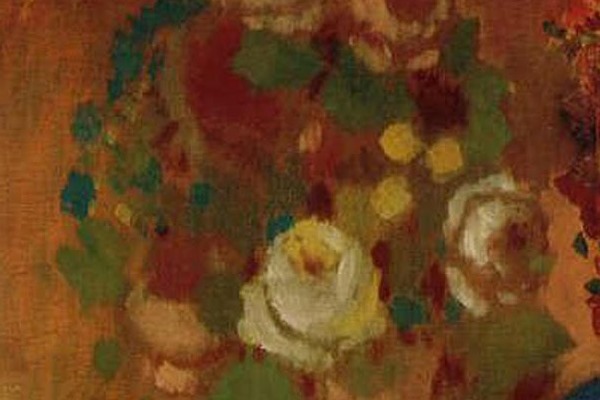
When the Spanish actress Rossy de Palma decided to create a fragrance, she selected rose as her main theme. While the choice of such a classical flower from the star of Pedro Almodóvar’s Women on the Verge of a Nervous Breakdown might have struck some as surprising, the perfumers Antoine Lie and Antoine Maisondieu weren’t taken aback. They were the co-authors of de Palma’s scent, and when it was released as Eau de Protection (£82 for 50ml EDP) by the niche perfume house Etat Libre d’Orange, the result was anything but staid. As the perfumers knew, rose had many faces, and it could be made as smouldering or as innocent as an artist’s skill allowed.  To read more, please click here.

What are your favorite unusual roses?

Pablo Picasso, 1905, Garçon à la pipe, (Boy with a Pipe), fragment. Private collection

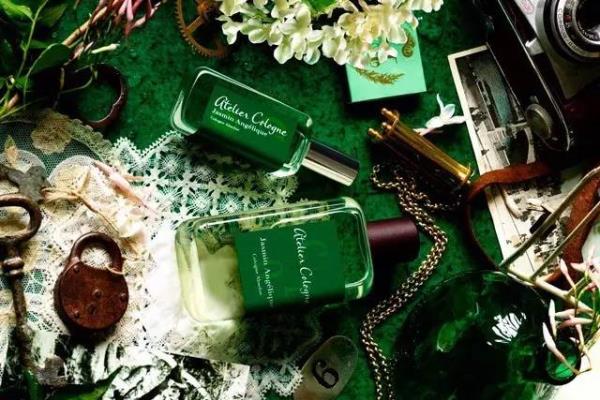
Atelier Cologne Jasmin Angelique : Perfume Review

44444

Angelica may seem like an esoteric perfume note to be obsessed with. If people associate it with anything, it’s with the candied green stems that make their way into cakes.  As I discovered when I was researching an article for my FT column, it’s an essential ingredient in many types of fragrances and a fascinating material. Angelica combines musky and green nuances with a bright, peppery touch, making it a perfect partner to florals, citrus, woods and musks. Atelier Cologne Jasmin Angélique is firmly in the floral camp, but its angelica layer gives the fragrance complexity and radiance.

The first impression of Jasmin Angélique is so green and peppery that it’s a surprise every single time I put on the perfume. It’s the hit of gin, the bite of black pepper and the pleasant bitterness of greens rolled into one accord. The illusion is created by the use of frankincense that can smell either dark or shimmering depending on what notes accompany it. Here it is paired with leafy notes, and the effect is dazzling.

Continue reading →

7 Rare Vintage Perfumes : The Perfume and Wine Class

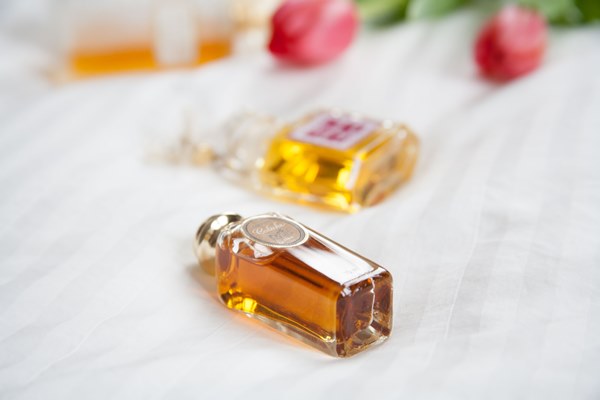
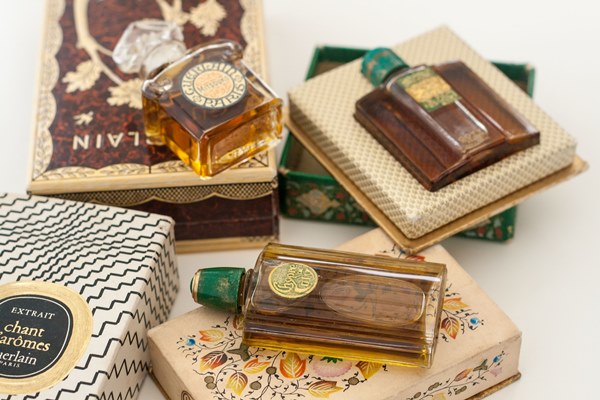
As preparation for the Art of Perfume and Wine class that I’m teaching in April in France (more details here), I thought I would write about 7 vintage perfumes that have been influential for the evolution of perfumery and that we will smell in their original versions. There will be over 50 different perfumes in this course, but these 7 are among the most essential to learn.

Guerlain L’Heure Bleue 1912

Many perfumers will name Guerlain as the most influential perfume house, especially in its period when Jacques Guerlain was the head creator. L’Heure Bleue is a textbook example of a classic as well as of a symphonic perfume.

We will, of course, smell other Guerlain classics, from Après L’Ondée and Mitsouko to Chamade and Chant d’Arômes.

Continue reading →

Peach Flowers and Cherry Leaves : 5 Fragrances for Hinamatsuri

This week as Belgium and the rest of Europe was battered by Siberian winds, I’ve enjoyed thinking about peach blossoms and pink confections. March 3rd is celebrated in Japan as Hinamatsuri, also known as Girl’s Day or Doll’s Festival. Starting in February, families with daughters put up elaborate platforms representing the imperial wedding, complete with the emperor, empress, court ladies, famous poets and musicians of the Heian era (794-1192). These doll sets are usually given by grandparents to their granddaughters as they wish them health and happiness. Since most Japanese live in tiny, cramped apartments and doll sets cost around $2000, only a few still keep to the old customs. Nevertheless, girls are still feted on this special day.

The reason I enjoy Hinamatsuri is not for the dolls but the flowers and food. March 3rd is known also as Momo no Sekku, the festival of peach blossoms. Peach trees blossom even before spring makes its first claims, and the flowers are as beautiful as they are symbolic–delicacy need not come at the expense of resolve. The fragrance of peach blossoms has a hint of bitter almond and creamy jasmine, but it’s fresh and bright. The pale color of flowers inspires the meals served on Hinamatsuri, like chirashi zushi, a bed of vinegared sushi rice scattered with raw fish, salmon roe, egg threads and pickled lotus root slices, or hishi mochi, diamond shaped rice cakes in delicate pastel shades. My other favorite is sakura mochi, glutinous rice cakes filled with red beans and wrapped in a salted cherry leaf.

Continue reading →

Perfume With the Aroma of Gingerbread

For anyone interested in perfumery, blending a gingerbread spice mixture can be a useful exercise. You can learn to create top, heart and base notes and to understand how spices interplay to create an aroma greater than the simple sum of their parts. Most European countries have their own gingerbread recipe and a combination of spices that gives each regional variation its distinctive flavor. My great-grandmother’s Ukrainian version was scented with cinnamon, clove, nutmeg, star anise and a hint of saffron. When I blended it myself following her proportions, I realized that it was similar to the “gingerbread perfume” accord I learnt how to make as a perfumery student, although my liquid version didn’t have the voluptuous richness of saffron.

In FT magazine column Mouthwatering Scents of Gingerbread, I write about spices, pastries and perfumes, including my four favorite fragrances with a gingerbread accord. To read the full article, please click here.

More on gingerbread: Ukrainian Honeycakes with Cinnamon :: Gingerbread Spice Blends :: Belgian Gingerbread (Speculoos) :: Dutch Cinnamon Cookies (Jan Hagel).

I’d love your opinion on other gingerbread redolent perfumes. Also, if anyone has a favorite recipe for the dark, moist, soft gingerbread or honeycake, I’d be most grateful.  

Photography by Bois de Jasmin, to make the printed gingerbread, I used the dough recipe for speculoos.

As Seen On

Design by cre8d
© Copyright 2005-2026 Bois de Jasmin. All rights reserved. Privacy Policy