Perfume 101: 517 posts

Here you can find how to guides to selecting, testing and enjoying scents. Also includes are the lists of our top favorite perfumes for different occasions and articles covering all range of topics related to fragrance. If you’re curious to step inside a perfume lab (or even become an industry professional), this group of essays will be of interest.

Looking for Lost Perfumes  

Elisa describes her beloved long lost perfumes and considers alternatives.

Perhaps the hardest part of the perfume hobby is seeing beautiful perfumes be discontinued. But that’s only the first stage to get through – often, discontinued perfumes are still available online and through discounters for years after they fall out of production. The really hard part comes when those stocks dry up, and the last remaining bottles can only occasionally be found for sale through unreliable sources and at astronomical prices. Iris Gris – a legendary Vincent Roubert creation from 1946 – is perhaps the quintessential “lost perfume.”
l-arte-di-gucci

But you don’t have to dig back too far into last century to find lost perfumes. Here are five perfumes from the last 25 years that I’ve fallen in love with, only to find them largely unavailable.

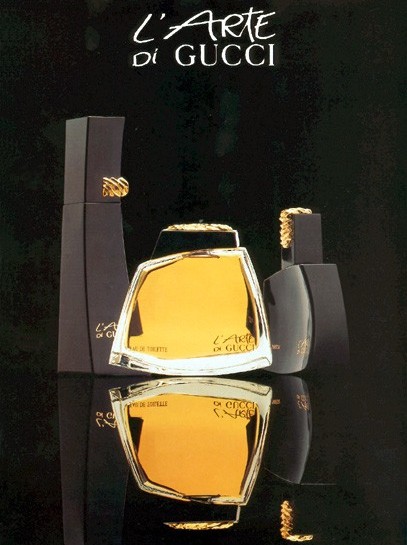
L’Arte di Gucci (1991)

Thankfully, there are still good rose chypres in production. But L’Arte di Gucci was special – a big, fruity, nuanced red rose that brings to mind Eau de Joy, with its facets of aldehydes, cassis, and jasmine. To my nose, the base is mostly about the dark, earthy patchouli, with the oakmoss less prominent than in, say, Paloma Picasso. When Angela reviewed this perfume in 2011, she compared it to “wearing red lipstick with a red dress” – a combination so obvious that Donatella Versace called it bourgeois. But I love the costumey effect of L’Arte di Gucci, the way it references both elegance and power. Victoria recommends trying Dior Diorling, Chanel Cuir de Russie, and Parfum d’Empire Cuir Ottoman, if the dark, dry leather of L’Arte di Gucci is what you loved the most.

Continue reading →

Why You Can’t Smell Your Own Home

If you’ve ever wondered why you can’t smell your own home or why you stop smelling your own perfume, the explanation given by Pamela Dalton, a cognitive psychologist at Monell Chemical Senses Center, will shed some light. “At home, say you have a new cinnamon-scented air freshener. When you first start to use it, the odorant molecules waft through your nose and hit your odor receptors, which then send signals to your olfactory bulb in the brain’s limbic system, which is associated with emotion and behavior. There, your brain identifies the odor and decides what to do about it.”


home

“But very quickly — after just about two breaths — ‘the receptors in your nose sort of switch off,’ Dalton says, and the intensity of the smell starts to fade. That’s because your brain has perceived the scent to be nonthreatening, which means there’s little need to pay close attention to it.” Read the rest of the article in NY Mag.

How do you counter this sensory adaptation? Switch scents from time to time, take breaks from using the same fragrance and also simply pay attention to smells. The more you focus on smelling, the more sensitive your nose becomes.

Photography by Bois de Jasmin

When Every Buy is Blind Buy

“Being almost completely blind, I have always used my nose as a means to investigate and love my world, so it is no surprise that I became a perfume addict at an early age,” says Shermeen, our guest author today. She shares her experience of using her nose instead of her eyes. “Although I would have loved to have pursued a career in the fragrance industry, I enjoy indulging in it as an obsessive hobby. I studied law and live in Southern Ontario, and when I’m not using my legal background to persuade myself into buying more perfume, I enjoy reading, writing, singing, drinking loose-leaf tea, and travelling when I’m able.”

When people first learn that I’m almost completely blind (which is often instantaneously, since I’m often accompanied by a gigantic yellow dog), one of their first questions is invariably along the lines of “So are your other senses, like, heightened?”

geranium

Yes, I can hear, smell, and taste things you probably didn’t even know existed. I know you had garlic bread yesterday morning, that your kid spilled a bowl of cheerios on your pajamas last night, and I bet you can’t even hear that fire engine blasting its way down your street as you read this (how many of you looked out your window to check?)

Continue reading →

Cult Perfumes

Elisa on what gives perfume a cult status.

What makes a fragrance a “cult fragrance”? It’s not enough for a perfume to simply be popular; bestsellers like Coco Mademoiselle and Light Blue don’t qualify. A cult fragrance needs obsessively devoted fans, while remaining a little mysterious and under the radar. Thus its fans can form a kind of counterculture – they understand something that the general population does not.

boudoir36-catania

So what enables a perfume to develop a small but intensely devoted following? The following criteria certainly help:

  • The perfume is hard to find – it’s a limited edition, discontinued, only available online or in Europe, etc.
  • The perfume has a love-it-or-hate-it quality; there is something weird or off-putting about it on first sniff, which some people end up finding addictive.

Sometimes only one or the other is true, but when both are true, you have the making of a cult fragrance on your hands.

If you read perfume blogs, you’re bound to hear about these cult fragrances over and over. With some of the below perfumes, the descriptions I read gave me desperate lemmings; they haunted me until I found a sample. With others, just the opposite was true – I actively avoided them, fearing their notoriety would make them hard to love or worse, easy to hate. Here they are in the order I managed to try them.

Continue reading →

In the Defense of Guilt-free Pleasure

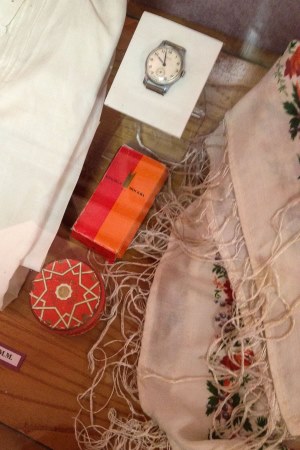
I often receive letters from women explaining that they feel guilty about their interest in perfume, because it’s “too indulgent” or “unnecessary.” It’s a luxury and we can live without it. Or so the argument goes. Except that it doesn’t make sense. Perfume is not a fundamental need for human life, but you could say the same for music, art, fashion, sports, restaurants or millions of other things that are not strictly necessary for survival but essential for a happy life. There is no reason to deprive yourself of something that gives you pleasure, and giving in to it shouldn’t be associated with guilt.

great great grandmother-300museum-perfume

Scent is one of the simplest and most rewarding of enjoyments. By stimulating the sense of smell, you fantasize about another time and place, uncover a whole universe of new sensations and add splashes of color to the most ordinary day. Something as ubiquitous as a trip to the grocery store can become a fun experience as you smell the earthy tang of carrots or the pungent sharpness of onions piled in the vegetable section.  New research has revealed that the sense of smell is even more intricate than previously thought, and that smelling is one of the best exercises for the brain.

Continue reading →

As Seen On

Design by cre8d
© Copyright 2005-2026 Bois de Jasmin. All rights reserved. Privacy Policy