Perfume Notes: 112 posts

Articles on perfume ingredients and fragrance terminology

Ambergris : Mysterious and Controversial Amber Note

Amb

Amber, ambergris, ambreine, Ambroxan, Ambrox…. These terms found in fragrance descriptions are often among the most confusing, since the only amber most of us know is the fossilized resin with no scent whatsoever. In perfumery, the amber fragrance family is among the most important. As a perfumery student, like many of my colleagues, the first fragrance accord I learned to make was amber, a dark, voluptuous abstract composition. Since the topic of amber in fragrances is a large one, I decided to break it up into two posts. In the first of the “Amber Perfume Notes” articles, I will talk of ambergris. The second part talks about the sweet amber, which is usually based on labdanum.

Precious perfume materials like oud, sandalwood, musk, and rose are surrounded by much mystery and lore, but none is more so than ambergris. Even in ancient times, it was a highly valued material, very much sought after for its medicinal, aphrodisiac and fragrant properties. Meaning “grey amber” in French, ambergris looks like dark grey or black lumps. The touch of a warm hand releases its unique fragrance—sweet, musky, warm, with a salty facet of seaweed and cured tobacco leaf. The most unusual aspect of ambergris is its unique radiance and tenacity. While the scent itself is not heavy or overwhelming, the sillage of ambergris is one of the most extraordinary.
Continue reading →

Citrus : Perfume Lexicon & Fragrance Notes

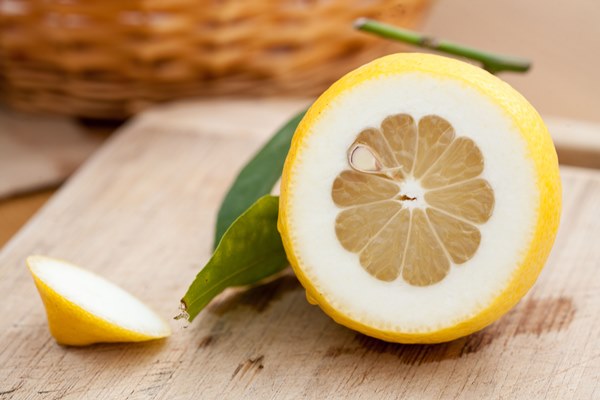
According to the Greek mythology, the garden of Hesperides was a garden belonging to Zeus’s consort, Hera, where immortality-giving apples grew, tended by the daughters of Hesperus or the God of Evening, the Hesperides. Alluding to the magical golden apples, the name Hesperide came to be applied first to oranges and then to the entire citrus family.

lemon1

Although citruses seem ubiquitous now, the fragrant fruit was among the precious cargo from the Spice Route. The earliest mention of citruses occurs in the Nan-Fang Ts’ao Mu (Trees and Plants of the South) written around 300 A.D. by Chi Han, while in 1178, there appears a whole chronicle dedicated to citruses, the Citrus Chronicle (Chű Lu), written by Han Yen-chih (Morris 48). Native to China and Southeast Asia, where about 500 species can be found, citruses were brought to the west by the Arabs. The parts of Europe under Arab control, such as Spain and Sicily have a long tradition of citrus cultivation. Indeed, Sicilian citrus oils have always been among the most prized. In the 14th century, spice trade was the source of revenue for Italy, specifically Venice, which after the battle at Chioggia in 1380, defeated Genoa and monopolized the trade (Morris 141). The Venetian galleys intercepted the caravans at Aleppo or Alexandria, and then would transport their wares to various guilds in Europe (141).

Continue reading →

Scented Garden : Freesia

Freesia cropped

by Elise Pearlstine

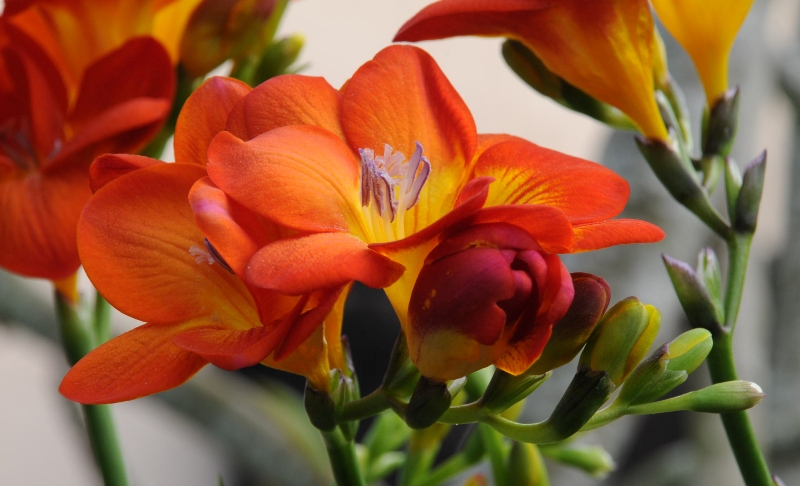
Fresh, light, and yet pervasive is the initial impression I got from a potted freesia (Freesia sp.). As I put my nose to the deep orange blooms and concentrate, I get more nuances. Floral? Yes, light and lovely. Green? Maybe a subtle green like violet leaves. Cool? Definitely, but with a touch of richness like a pure floral sorbet melting in a bowl with a touch of chilled caramel at the edges. Before I bought this plant I tested all of the potted freesias at the market for smell and chose the deep orange-red one for its strong, sweet scent. There were also pale lilac and white varieties; both with a light, sweet floral scent but it’s the orange-red one that I brought home. For days I smell the faint sweetness it gives to the air as it sits in my kitchen by the window.

Continue reading →

10 Perfect Summer Colognes

IMG_4882

On a hot summer day, it is easy to appreciate the allure of a classical cologne, a citrus rich composition accented with green, herbal and orange flower notes. The effervescence of citrus—be it the bracing sharpness of lime, the peppery shimmer of bergamot, the intense verdancy of petitgrain (bitter orange leaves and buds) or the playful sweetness of mandarin—has a refreshing, exhilarating effect. It instantly cools, evoking the delicious sensation of an ice cube melting on hot skin. It creates a light, unobtrusive veil of scent. There is also a very strong logic behind using colognes in warm climates– neroli and petitgrain oils share the same pungent component as perspiration and allow it to become masked by the bright, green freshness of orange flower.

I’m not sure whether my perfume tastes are in flux, or whether I’m being influenced by the fact that our air conditioning broke down in the middle of a heat wave, but lately I have been relishing citrus colognes and exploring this genre in all of its permutations. Below are my ten choices for some of the best colognes I discovered during my quest. Some of them are venerable classics; others are interesting newcomers. While they are perfect on a hot June afternoon, my other criterion for selecting these fragrances is that I would want to wear them year round, mercury level notwithstanding.

Continue reading →

Incense, Frankincense : Fragrance Notes

Incense1

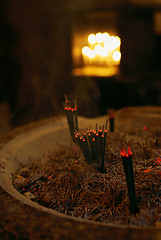
The dry balsamic scent of frankincense, a resinous material obtained from a Boswellia tree species native to the east, readily conjures visions of golden censers, sonorous chants and burning candles. In fact, both Eastern and Western religions share the use of frankincense in their ceremonies as it is believed to aid prayer and meditation. Frankincense can be burned on its own, or blended with other ingredients to create incense sticks. As a perfumery note, frankincense is remarkably versatile, being as naturally suited for the dark heft of an oriental fragrance as for the effervescent sparkle of citrus cologne. The smell of frankincense oil in its pure state is fascinating. At first, it is reminiscent of freshly ground black pepper, with a twist of lemon peel in the background. As the oil dries down, it reveals its dry woody character, which lies halfway between balsamic richness and flinty mineral crispness.

Continue reading →

As Seen On

Design by cre8d
© Copyright 2005-2026 Bois de Jasmin. All rights reserved. Privacy Policy