Perfume Notes: 112 posts

Articles on perfume ingredients and fragrance terminology

Ylang Ylang : Perfume Lexicon & Fragrance Language

Yy

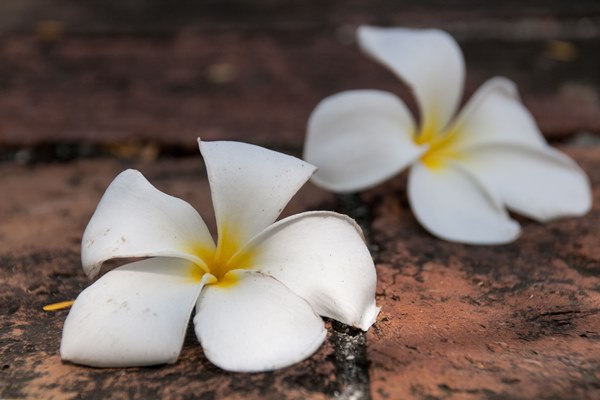
Some perfume materials have an unwavering place of honor—rose, jasmine, sandalwood. Ylang ylang, on the other hand, has often been called “a poor man’s jasmine” and given various inferior descriptors. Today, of course, that proverbial poor man must be swimming in cash to afford ylang ylang oil in his perfumes, but ylang ylang still loses in a competition with jasmine. I would like to come to its defense and explain why ylang ylang is such a fascinating material that should be compared to nothing but itself.

Continue reading →

Character : Perfume Lexicon & Fragrance Language

Verasand
Perfume is a blend of different materials that is more than just a sum of its parts; it is a composition with its own unique character. Character in a fragrance means the impression that a perfume creates: vibrant and uplifting like citrus colognes or opulent and seductive like oriental fragrances with rich notes of vanilla, musk and spices. Each perfume is like a person– the character it possesses is created by its specific traits, which in the case of a scented blend is determined by materials and their proportions. In the same vein, just like some people have stronger characters than others, fragrances differ in terms of their distinction and individuality.

Continue reading →

Building Perfume Wardrobe Guide Part 2 : Jasmine and White Florals

Part 1: Florals ~ Rose
Part 3: Florals ~ Lily of the Valley and Violet
Part 4: Florals ~ Blends
Part 5: Essentials
Part 6: Orientals

It is easy to get overwhelmed by the sheer number of floral variations. This need not be the case. Once you know what rose, jasmine, violet and lily of the valley smell like, you already know a fair bit and have a nice foundation to continue with your fragrance explorations. Almost everything else would stem from these notes.

tiare

In continuing my guide on building a perfume wardrobe, I will resume the discussion of floral fragrances, with the focus today being on jasmine. In marketing descriptions, jasmine, orange blossom, gardenia and tuberose are called white florals, which is a vague and confusing term. Rose, carnation and lilac can also be white. What unites the flowers in my group today is their jasmine character of apricot jam, banana peel and an inky touch of indole. The jasmine group also offers the most examples of prominent floral notes used in masculine perfumery.

Continue reading →

Musk in Fragrance : Salt and Butter of Perfumery

DeerThis article was originally published on November 23, 2005. The original hyperlink got damaged during a recent platform upgrade, therefore I am republishing it.

It would not be an understatement to say that there is hardly a fragrance that does not contain at least one musk component. The power of musk to refine, balance, fix and accentuate compositions without adding a heavy note is exceptional, and no other ingredient can rivals musks in terms of their popularity and versatility. Musk forms the pedestal upon which the entire composition rests. It fuses sensuality and warmth even into the simplest of compositions, and there exist numerous fragrances based solely around musk.

The term musk/musky in perfumery refers not only to the specific ingredients, but also to the abstraction of the complex odours of natural musk, which range from balmy, sweet, and powdery to fig-like, animalic, leathery, spicy, and woody. As Philip Kraft notes in his great overview of musks, “the more one studies its character [that of natural musk tincture], the more contrasting, vibrant and oscillating it becomes: repulsive–attractive, chemical–warm, sweaty–balmy, acrid–waxy, earthy–powdery, fatty–chocolate-like, pungent–leathery, resinous–spicy, fig-like, dry, nutty and woody, to give just some impressions” (144). The abstraction of these complex impressions into “warm, sweet, powdery and sensual” is what can be understood whenever “musky” tonality is mentioned. …

Continue reading →

Amber and Sweet Labdanum : Perfume Notes

Amber1

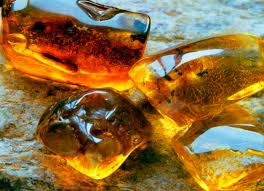
The classical amber in perfumery is a sweet, rich accord of labdanum and vanilla. In contrast to the marine and animalic ambergris, it is a pure fantasy accord like fougère or chypre, and despite the fact that its name evokes the fabled material, ambergris, it does not attempt to reproduce this animalic marine scent. Perfumery amber is so called, because the golden color of the blend resembles the semi-precious amber jewel. Sweet and voluptuous, perfumery amber is quite versatile, and whenever one encounters a fragrance named Amber or Ambre, it is likely to be a warm, vanilla and labdanum based blend.

Continue reading →

As Seen On

Design by cre8d
© Copyright 2005-2026 Bois de Jasmin. All rights reserved. Privacy Policy