Perfume Notes: 112 posts

Articles on perfume ingredients and fragrance terminology

Tolu Balsam, Benzoin, Styrax and Other Oriental Balsamic Notes
Tolubalsam

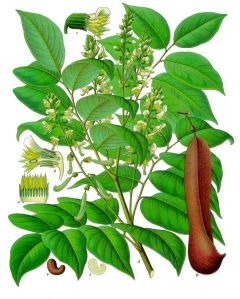
Balsamic: heavy, sticky, sweet, unctuous scent, usually from an aromatic resin. If you think of balsamic vinegar whenever you read about balsamic notes in perfumery, you are not far off. They have a similar sticky-sweet, rich character as a true wooden cask aged balsamic vinegar.

The oud trend and the fascination with the East is nothing new in perfumery. The oriental style of fragrances, compositions that rely on rich, opulent notes of vanilla, musk, resins and ambers was inspired by the traditional elements of Middle Eastern and Indian perfumes. As the fascination with everything Eastern and exotic grew at the end of the 19th and early 20th century, these “odalisques and harems” fantasies also took olfactory forms. The oriental fragrances, which are represented well by Guerlain Shalimar, Dana Tabu, Estée Lauder Youth Dew, Yves Saint Laurent Opium and Serge Lutens Ambre Sultan, are inconceivable without balsamic notes. Whether they include benzoin, tolu balsam, peru balsam or styrax, their sweet vanilla fragrance with a distinctive cinnamon note lends a beautiful richness and heft to the compositions.

Continue reading →

Galbanum : Perfume Vocabulary & Fragrance Notes

Galbanum

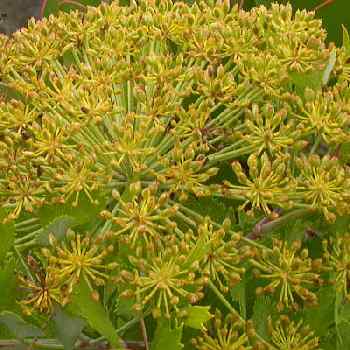
Smell Chanel No 19, and the first thing you will notice is the intensely green, somewhat earthy note. That effect is created by galbanum, a natural resin collected from several species of flowering Ferula plants, which are native to Iran and the Middle East. The oil is steam-distilled and has a very powerful, green, woody-resinous odor, reminiscent of sliced green peppers and hyacinth leaves. Its verdant notes are immediately apparent in fragrances, while the balsamic-woody facets come through as the composition dries down. Galbanum is a traditional note to give a natural green effect to floral accords like hyacinth, gardenia, narcissus, iris and violet. While on its own, galbanum has quite a brash, roughewn character, it lends a beautiful, natural green effect.

Continue reading →

Sillage : Perfume Vocabulary & Fragrance Terms

Sillage (pronounced as see-yazh) is a term used to describe a scented trail left by the fragrance wearer. It comes from the French word for “wake,” as in the trail left in the sky by an airplane or on the water by a boat.  Sillage defines how fragrance diffuses around the wearer, and a strong sillage means that a fragrance projects well. Sillage has nothing to do with the richness of the composition, however, but rather with the diffusive nature of the materials that go into it. For instance, hedione, fresh floral notes and some types of musk are extremely diffusive and radiant, while retaining an airy, light character.

Fragrances with a strong sillage include such rich compositions like Guerlain L’Heure Bleue, Lancôme Trésor, and Christian Dior Poison as well as light, ethereal blends like Bulgari Eau Parfumée au Thé Vert and Christian Dior Eau Sauvage. Conversely, minimal sillage fragances are ones that stay close to the skin and create a more intimate scented aura. Some examples include Comme de Garçons Avignon (Incense Series) and Prada Infusion d’Iris, Chanel 31, rue Cambon.

Generally, the most complimented fragrances are the ones with a strong sillage, but I find that depending on my mood, I alternate between diffusive and intimate fragrances. Plus, in some circumstances (office environment, theater outings, restaurants, etc.,) it is also a good idea to keep one’s fragrant trail as understated as possible.

Photography by Andreas via Flickr, some rights reserved.

Aldehydes : Perfume Vocabulary & Fragrance Notes

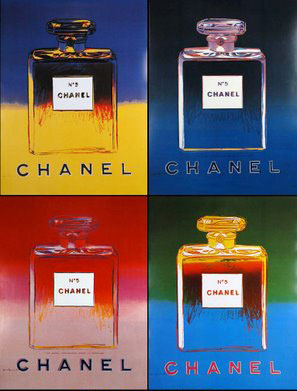
Aldehydes are organic compounds present in many natural materials (eg. orange rind, rose, cinnamon bark). Various aldehydes can also be synthesized artificially. There is hardly a fragrance without some type of aldehyde in it; however, it is the vividness of aliphatic aldehydes (a specific subgroup of the aldehydes family) that gives Chanel No 5, Lanvin Arpège, Yves Saint Laurent Rive Gauche and other floral-aldehydic fragrances their characteristic impressionist sparkle.

Their scent ranges from metallic, starchy and citrusy to green, fatty and waxy (for instance, aldehyde C-11 commonly found in rose and cilantro smells like metal and dirty hair to me, but in tiny quantities it adds an impressive lift and freshness to fragrances.) Aldehydes were used previously by Robert Bienaimé in Houbigant Quelques Fleurs (1912) and by Henri Alméras in Rosine Le Fruit Défendu (1914), Chanel No 5 became famous for its unprecedented overdose of several different aldehydes (a total of almost 1%.)

What is the Fragrance Pyramid and Perfume Notes?

One of the first things you see in any fragrance press release or magazine editorial, besides the ubiquitous advertising with a model in the throes of ecstasy, is a list of notes that the fragrance contains. Usually, they are arranged in pyramid form with top, middle and base notes carefully separated. It seems like this would provide a useful roadmap, a way to envision a fragrance as it would develop on the skin: first, you will smell citrus and fruity notes, then you will smell florals and then some time later, you will enter the world of solar musks and cashmere woods. The problem with this neat design is that it is a myth as it pertains to modern fragrances.

Most contemporary fragrances are not built in a fragrance pyramid style, so the fragrance will not develop according to the pyramid description. More importantly, the list of notes tells only a small part of the story and is heavily driven by marketing considerations. While the fragrance notes are definitely helpful in some ways, they should always be seen as a rough guide to unexplored terrain.

Continue reading →

As Seen On

Design by cre8d
© Copyright 2005-2026 Bois de Jasmin. All rights reserved. Privacy Policy