Reading Tea Leaves: Best Tea Perfumes in 10 Different Styles
The scent of tea leaves is created by hundreds of aroma-molecules, and each variety has its unique fragrance. Terroir plays a role as does the method of curing the tea leaves. For instance, steamed Japanese teas like sencha and matcha have grassy, spinach-like aromas thanks to hexenal, while mildly oxidized oolongs share aromatics with lilac blossoms, roses and jasmine (nerolidol, cis-jasmone, linalool). The smoky profiles of teas like lapsang souchong are created by molecules like pyrazines, longifolene and guaiacol. In an interesting twist, guaiacol, along with certain types of pyrazines, is what gives roasted coffee its distinctive scent, which is why smoky teas are recommended to coffee drinkers wanting to expand their horizons. With such a rich palette of aromas, the tea accord is a fascinating exercise for a perfumer.
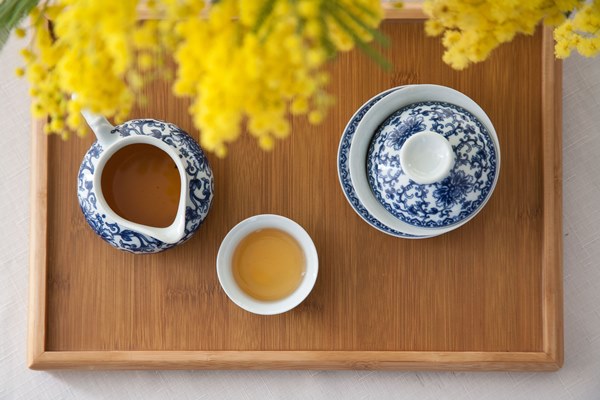
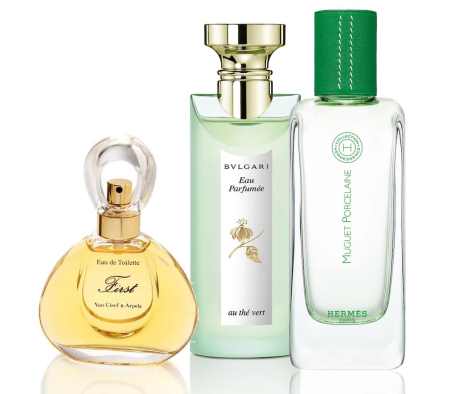
In my recent article on the development of Bulgari’s Eau Parfumée au Thé Vert, I described how Jean-Claude Ellena discovered a novel accord and created a modern classic. Since Bulgari launched the perfume in 1992, it became the green tea of fragrance. However, tea accords aren’t limited to delicate green blends, and when I began researching my article, I realized how many fragrances successfully incorporate a tea effect, both light and dark. I decided to make a list of the most interesting examples, in 10 different styles.