Culture: 426 posts

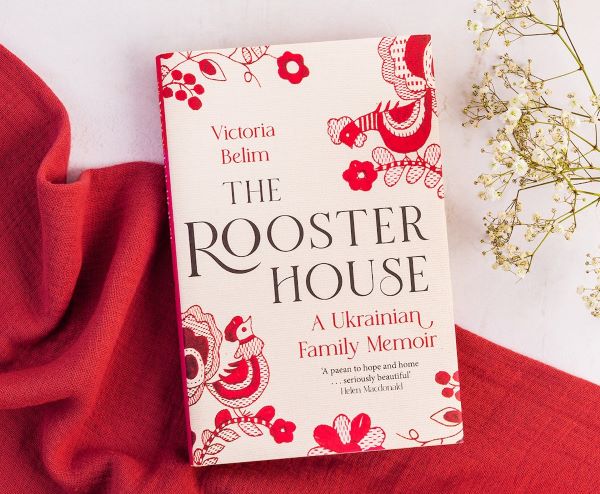
Art, travel, books, history. About my book, The Rooster House.

Rose Retreat in Bulgaria and Perfume Workshop

I’m partnering with Silvia Yonkova of Roseoverdose, to teach a rose accords workshop during the Rose Retreat of 2019. 50% of the roses grown for perfumery come from the Rose Valley in Kazanlak, Bulgaria, and Silvia’s family has been in the rose growing business for generations. During the Rose Retreat, you’ll have a chance to participate in the rose harvest and study different types of roses. My one-day workshop will cover some of the most iconic rose perfumes and teach you to create fragrance accords.

The Rose Retreat will take place on May 20th-24th, 2019. You can find more information and book a spot via Roseoverdose.com.

Continue reading →

How I Learn Languages 2 : What Languages To Study

I didn’t anticipate the interest that my first article on my language learning strategies would generate. Your comments and emails sharing your experience with studying were fascinating and full of great tips. Above all, many of you asked me questions such as the resources I use for reading, writing, and listening, how I maintain all of my languages, how many languages one could study at the same time, and so on. I’m glad to reply to them all.

I learn languages for a variety of reasons. Some I’ve learned because I moved to the countries where they were spoken. Some I’ve studied for my degree in Political Science and to facilitate research. I’ve also learned languages as I traveled or wanted to understand better the cultures that fascinated me.  In the this article on the languages topic, I’ll discuss how to decide what languages to study. It may sound like a straightforward decision, but how you take it will determine your success and your ability to persevere with studying a new language.

Do Not Study a Language Just Because It’s Popular

Let’s bracket the real issue of needing to study a language for work or to adjust to a new country. Today I want to talk about a situation where you’re simply picking a language to learn and are not sure whether you should study French or Italian.  First, think about what language you would like to speak? Hearing what language do you feel your heart skip a beat? What language do you find beautiful? What language belongs to a culture (cultures) you find fascinating?

Continue reading →

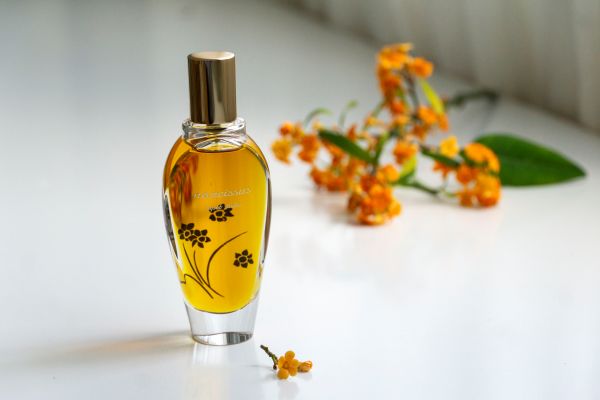
Scented Orchids : A Kaleidoscope of Perfume

Andy wrote this article a couple of years ago after his visit to Longwood Gardens in Pennsylvania, and I kept looking for a chance to share it with you. Now in the middle of grey winter days, an invitation to contemplate scented orchids seems particularly welcome.

What does an orchid really smell like? In the world of perfumery, the answer is fairly limited—orchid is usually portrayed using a note that is spicy, exotic, and floral like Tom Ford Black Orchid or Jo Malone Dark Amber & Ginger Lily, often accented by woodsy, powdery, or vanillic nuances. In reality, though, orchids possess far too wide a range of scents to be classified using any of these descriptions. Orchids are a particularly diverse class of plants, found on every continent, except Antarctica, growing in rainforests, deserts, and marshes, on mountains, valleys, and plains, and taking root in just about every type of climate imaginable.

Orchids are highly adapted to their environments, which is reflected in the fact that most species of orchids have co-adapted with their pollinators to exhibit flowers that are shaped, colored, and scented to attract a specific species of insect or bird. This explains why an orchid species like Orphrys exaltata, which is pollinated by male bees, carries a sweet scent that mimics female bee pheromones, and why an orchid species like Bulbophyllum graveolens, which is pollinated by carrion flies, smells like rotting meat. Fortunately for human noses, though, most cultivated orchids smell pleasant, with odors that span the range of fruity, floral, and all other notes in between.

Continue reading →

How I Learn Languages

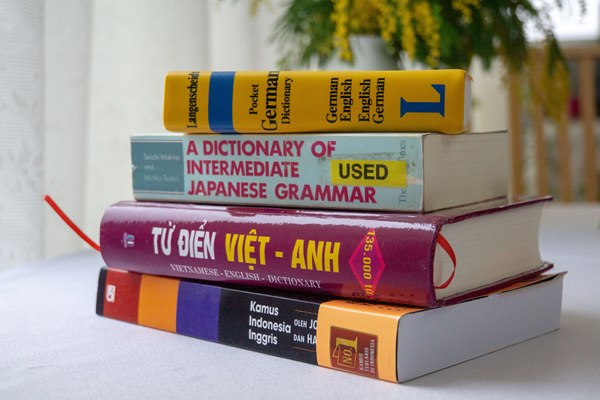
The KGB blacklisted my stepfather, making it impossible for him to travel outside the Soviet Union. He satisfied his wanderlust by reading and learning languages. I remember our bookshelves filled with self-study books and dictionaries: English, French, Italian, German, Bulgarian, Serbian/Croatian, Czech. I opened them at random and the more unfamiliar they looked, the more I wanted to learn and enter the universe of new languages. It felt exciting and liberating.

That exhilarating feeling of discovery has remained with me, and it drives me to learn new languages. I speak, read and write 18 languages and am currently learning my 19th. Besides English, these languages include French, Italian, Persian, Indonesian, Japanese, Russian, Ukrainian, Turkish, Vietnamese, Urdu, Bulgarian, German, Hindi, Uzbek, Portuguese, Albanian, Serbo-Croatian–and learning Mandarin. Most of these I’ve learned in the past few years when I figured out a method that worked for me. I’m often asked by many of my friends and readers to put together my strategy for studying languages, and so I’ve jotted down certain rules and important elements that make my learning efficient. Once I started writing, I realized that I could come up with a whole book on the topic, but since my goal today is to summarize my approach in an article, I’ll leave the comment field for any additional questions and clarifications. Please feel free to ask your specific recommendations and share your experience with learning languages.

Continue reading →

Niko Pirosmani : A Movable Feast

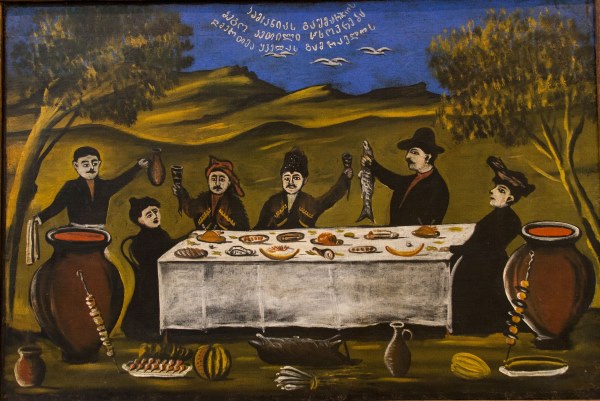
The paintings by Georgian artist Niko Pirosmani (1862–1918) throw me off balance. It may be a strange reaction to art, especially to the one depicting animals, people feasting, gathering grapes, or fishing, but Pirosmani is not an ordinary painter. Why are the deer’s eyes so much like human eyes? Why do the revelers raising their horns full of wine look so serious? What are they celebrating? What went through the artist’s mind as he sketched and what did he intend for us to see? What motivated him to paint?

Most likely–and we have so little information about Pirosmani’s life that we can only guess–it was hunger that prompted Pirosmani to take up the brush. Born in 1862, in a village in the Kakheti region of Georgia, he didn’t have any formal education, and his stints as a train conductor and cattle herder ended in failure. He learned painting from itinerant artists and he wanted to open a workshop producing signboards. It almost came to naught. The first order he painted for free, while the second one never came. He remained poor and hungry for the rest of his life, a vagabond and a pariah.

Continue reading →

As Seen On

Design by cre8d
© Copyright 2005-2026 Bois de Jasmin. All rights reserved. Privacy Policy