Culture: 426 posts

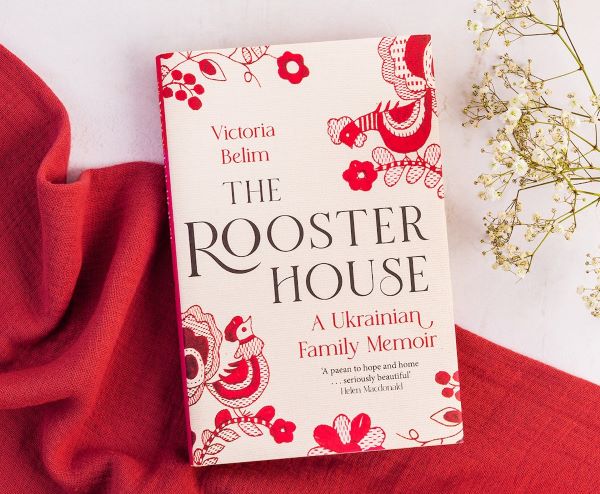
Art, travel, books, history. About my book, The Rooster House.

Edmond Roudnitska’s Perfumed Garden

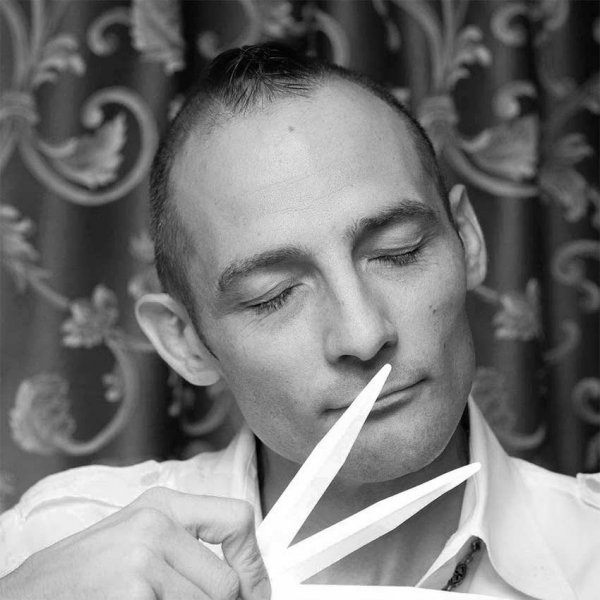
I’m in Provence this week teaching the Art of Perfume course. One of the sessions will take place in the garden created by the legendary perfumer Edmond Roudnitska. Situated in Cabris, it’s maintained by his son Michel Roudnitska, the creator of Parfums DelRae Bois de Paradis and Frédéric Malle Noir Épices who also keeps the tradition alive by running Roudnitska’s Art et Parfum lab and studio.

It’s a marvelous place to visit for anyone interested in modern perfumery, fragrant gardens and history. Above you can see the view from Edmond Roudnitska’s office. How could anyone not have created masterpieces in front of such a splendid view.
Continue reading →

Reading Nikolai Gogol in 2017

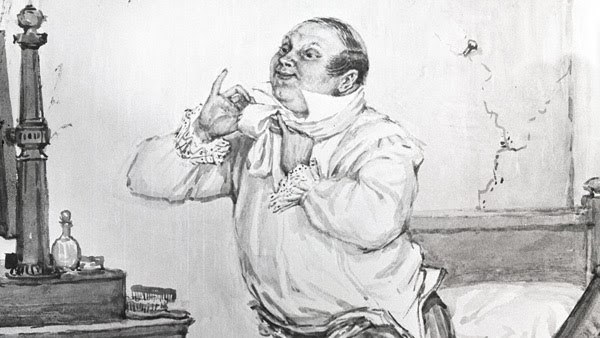
I celebrated Nikolai Gogol’s birthday on March 31st by picking up a volume of Dead Souls. The last time I read it in its entirety was during my school days, and many scenes were so vivid in my memory that picking up the novel again felt less like re-discovering than wandering through a familiar landscape. Gogol, the Ukrainian and Russian dramatist, playwright and novelist, is unrivaled for his sharp satire and colorful language, but what struck me this time is how relevant his observations were to our present day affairs. Today everyone is re-reading Orwell’s 1984, Bradbury’s Fahrenheit 451 and Atwood’s The Handmaid’s Tale, and I’d like to make a case for adding Dead Souls to the list.

Let’s start with one of my favorite quotes in the book. “Absolute nonsense happens in the world. Sometimes there is no plausibility at all.” Yes, a similar thought in different formulations has been coursing through my head a lot lately. Or, “You can’t imagine how stupid the whole world has grown nowadays. The things these scribblers write!” What would be Gogol’s take on our world of “post truth,” “alternative facts,” and “fake news”?

Continue reading →

Petrykivka and Gogol : Colors and Scents

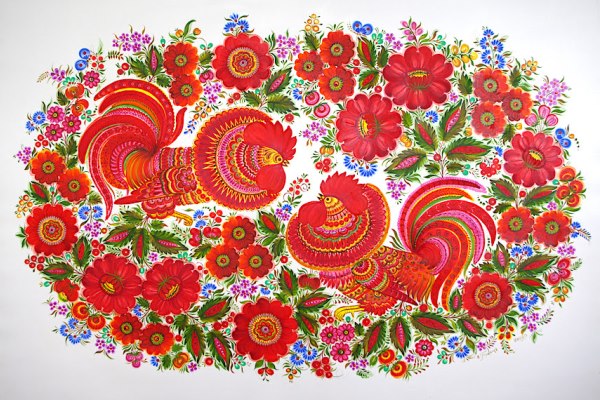
The colors and images of Petrykivka, one of the traditional Ukrainian arts, are vivid and joyous. Fire birds take flight among branches laden with fruit and fantasy blossoms. The artists believed that such colorful images protect people from evil spirits, and looking at the complex and happy ornaments of Petrykivka I can’t help thinking that there is something to the idea of art as talisman.

Petrykivka is considered as Intangible Cultural Heritage of Humanity by UNESCO, and the village of Petrykivka in the Dnipropetrovsk region still boasts many artists. I wrote about my visit two years ago, and anyone can tour the art studios, take a class or simply admire the paintings. Those of you in New York, however, have a unique chance to experience this art in person as The Ukrainian Institute of America hosts the exhibit Petrykivka: A Ukrainian Folk Phenomenon and Living Tradition from April 8 to April 30. The collection presented is based on discoveries by Natalie Pawlenko and Yuri Mischenko and features 47 paintings by some of the most renowned Petrykivka artists.

Continue reading →

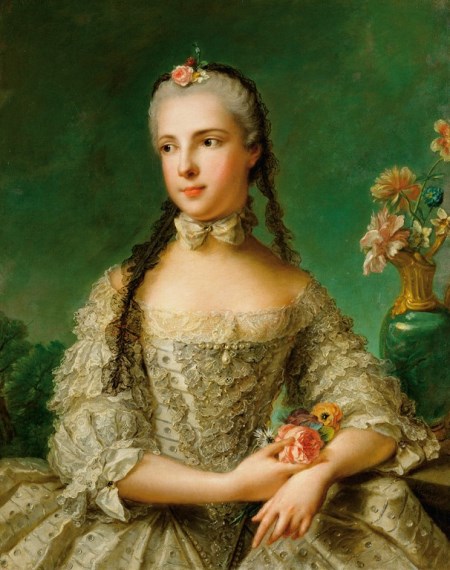
“I’m Dying of Love for You” : The Letters of Isabella von Parma

I returned from my recent trip to Vienna bringing back not only an obsession with Johann Georg Pinsel, but also with Isabella von Parma (1741-1763), who lived at the same time as the mysterious 18th century sculptor. Isabella was one of the most remarkable personalities of the 18th century, admired for her achievements in art, music, and philosophy. The reason I became fascinated with her, however, was an excerpt from a letter she wrote to her sister-in-law, Marie Christine of Austria. “I am told that the day begins with God. I, however, begin the day by thinking of the object of my love, for I think of her incessantly.”

I am once again struck by the narrow lenses through which we see women in history. In many books Isabella is repeatedly described as “mad,” “tragic,” or “odd.” People search for the roots of her melancholy moods in the family tree and discuss at length the mental problems of her father and her mother’s cold attitude. What about the fact that princesses in the 18th century were little more than breeding mares, and Isabella had half a dozen miscarriages during her short marriage to Joseph II of Austria? The couple was under enormous pressure to produce a male offspring to the Hapsburgs.

Continue reading →

Martenitsa for Beautiful Spring

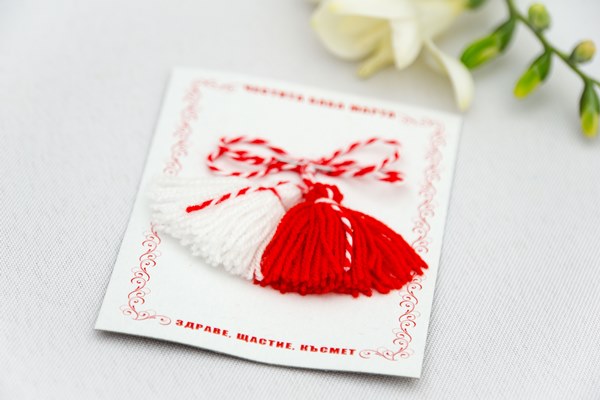
It’s been years since anyone has given me a martenitsa, but when a Bulgarian neighbor handed me two tassels made out of red and white wool, I recognized what they were instantly. Martenitsa is an ancient Bulgarian tradition observed on the 1st of March as a way to welcome spring and good fortune. It is a kind of amulet that you wear on your clothes or tied to your wrist until you see a blossoming fruit tree or a stork for the first time in the spring. Then you tie it to a flowering tree, a custom I find charming.

You shouldn’t get a martenitsa for yourself–they’re meant to be given and received as gifts, with a wish of “Chestita Baba Marta!” (Happy Grandma Marta!) Baba Marta is a folk character with a mood as volatile as that of early spring, and the red and white colors are supposed to placate her. So here is my martenitsa to you. I wish you happiness, health and a beautiful spring.

I’m making March 1st, our wintery weather notwithstanding, with Balmain Vent Vert. It’s truly the essence of spring. What is your perfume today? 

Photography by Bois de Jasmin

As Seen On

Design by cre8d
© Copyright 2005-2026 Bois de Jasmin. All rights reserved. Privacy Policy