Culture: 426 posts

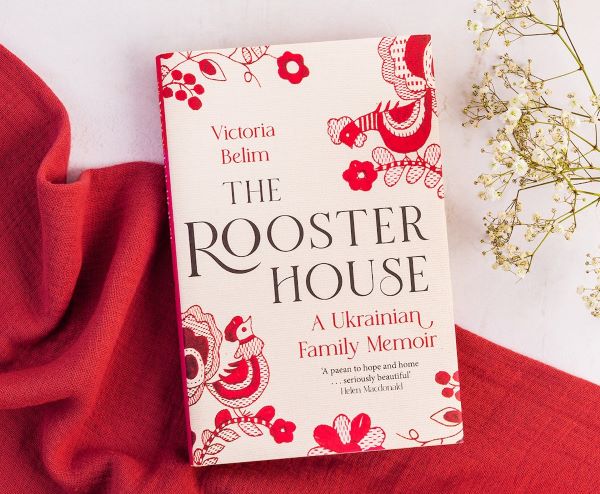
Art, travel, books, history. About my book, The Rooster House.

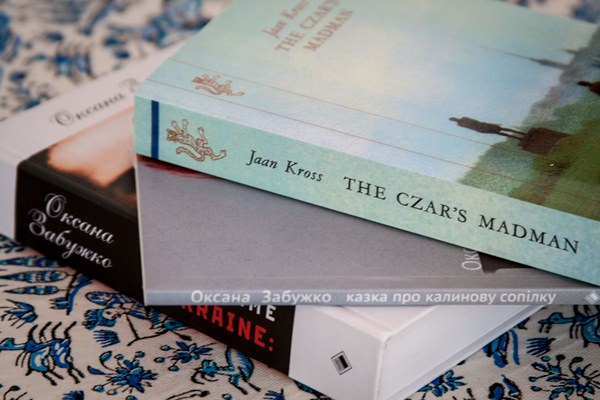
Stepfather’s Library

When our house in Kyiv was finally sold, the arrangements promised to be uncomplicated–sign some papers, make a few visits to the notary and townhall and arrange for a moving truck. Unexpectedly, the latter turned into a source of some discord, because while my mother was of the opinion that whatever the house held should either be sold or discarded, my grandmother was adamant that every last chair and plate must be salvaged. “Think of the fine dinner sets we bought for your wedding,” she pleaded with mom over the phone. “I always disliked those zaftig Madonnas–and we did get divorced.” “But what about your lovely lacquered desk?” “Soviet satellites sure made some clunky furniture in their day.” And on and on it went scrambling the telephone lines over the Atlantic. But one thing they agreed upon was to collect my stepfather’s library and store it at my grandmother’s.

graffito

At her house, the books stayed in boxes, because for all of my grandmother’s good intentions, the lack of available space in a house already full to the brim with books made it impossible to find another solution. Every time I visited, I would flip open the lid and glance inside, and one day I couldn’t resist and before long all the boxes were unpacked with books arranged in towering piles on the floor around me.

Of the many things that make us–people, places, experiences–some leave the deepest marks. We’re a mosaic of it all, bits and shards of influences shaping our desires, yearnings and dreams. When I think of my stepfather’s library, I’m conscious of a magnetic pull that the eclectic collection of books had on me, taking me far beyond the intentions of its collector.
Continue reading →

A Love Letter to Belgian Rain

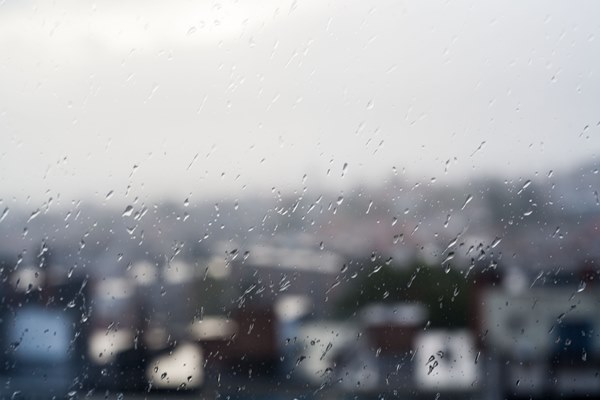
I like Belgian rain. It sounds like a strange admission, but there you have it. Partly, it’s because I don’t like summer and heat. Another reason is that rain is an inescapable fact of life here, and my choices to deal with it are either to follow the lead of the Belgian Santa Klaus and move to Spain or to complain nonstop. The former  is infeasible, and the latter is tiresome. Instead, I begin to think of rain as something with beauty of its own.

rain

And beautiful it can be. The fine mist that often marks the beginning of Belgian winter has a pearly glow, transforming the familiar red rooftops of the city into an Impressionist etude of soft brushstrokes. It’s the kind of rain that fools you into thinking that you will be fine without an umbrella, but it drenches you in a matter of seconds. When you’re at home, with a cup of tea and a good book, this rain is romantic and serene. Turn off the email notifications, add a drop of an iris perfume like Chanel No 19 or Annick Goutal Heure Exquise–rooty, cool iris smells of rain, so it’s an ideal companion–and imagine that the world has just stood still, apart from the changing patterns of raindrops on the window.

Continue reading →

Gifts From The Silk Road

One of my favorite stores in Brussels isn’t a chocolate shop. It’s not even a fabulous perfume treasure trove called Senteurs d’Ailleurs. It’s a supermarket at Rue de l’Escadron 35 called FreshMed. Technically, it’s not even in Brussels proper, but in Etterbeek, one of the 19 communes that make up the metropolis. It’s a store offering a vast selection of Middle Eastern and Mediterranean foods, with a smattering of Baltic and Polish products.

incense-cat-burner

FreshMed isn’t a fancy store; it’s a place where the aesthetics are provided by the towering pyramids of fresh vegetables and fruits, not an overly creative interior design. I like this simple and unpretentious approach. Here you can find fresh tarragon and pomegranates, stock up on Greek retsina and Lebanese arak, and then load up your cart with homemade foods: tiny Syrian pies, Turkish-style pizza, hummus, tzaziki, olives and 10 kinds of feta. Then there are shelves of Iranian floral waters, Cretan dark honeys and Moroccan amber scented soaps. It’s a journey down the Silk Road within the space of a few supermarket aisles.

Continue reading →

Books From Around The World

It’s fair to say that much of my recent reading has been inspired by your recommendations left in the comments, often under articles that had little to do with literature (you have such eclectic interests!). Since it shall be a slow week with my US based writers and readers celebrating Thanksgiving, I thought that it might be a good chance for all of us to share more favorite books, especially those written by the less well-known authors. (This, of course, is relative; Eka Kurniawan may not be a household name in the US, but he’s famous in his native Indonesia.) Of course, please don’t feel bound by this and share your favorite writers, poets or essayists.

books1

I will start with The Girl From the Coast, a novel by Pramoedya Ananta Toer. Pramoedya is so famous in Indonesia that he’s usually referred to only by his first name. The story is about a girl from a backwater village who is married off to a Javanese aristocrat without realizing that she’d only be his “temporary wife” to be sent back home whenever he gets tired of her. The characters are outlined with humanism that pervades Pramoedya’s other novels, and the plot develops swiftly. It’s a good introduction to Indonesian literature, and I thank my readers who recommended it to me.


Continue reading →

Uplifting Power of Beauty

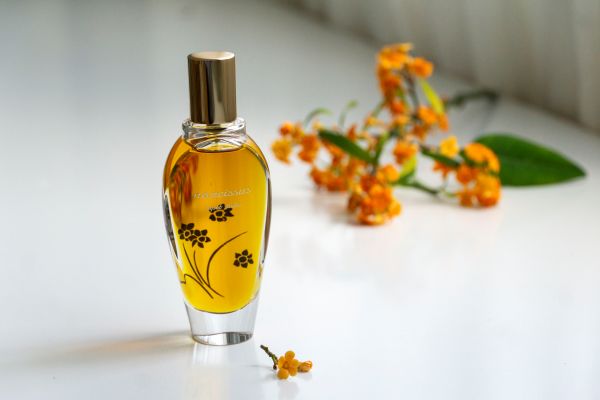
“In the small bag that seldom leaves his shoulder as he traverses the dusty thoroughfares of his surrogate hometown, Younis carries a bottle of aftershave, a photographic portfolio and a copy of his CV.” When a reader sent me The Guardian article about a budding photographer and journalist, this sentence caught my attention. Younis, the protagonist of the story, is 19 years old; after he and his family fled Syria, they ended up in Jordan’s Za’atari refugee camp.

perfume

Reading about refugee camps in the news rarely conveys the reality on the ground. One, of course, realizes that life is difficult in the camp conditions, because the opportunities are limited, especially since most countries hosting refugees don’t allow them to move freely, to work, or to attend school outside whatever is provided inside the camp. In addition, relief agencies are so severely underfunded that many have been forced to cut food rations and close clinics. It means millions of displaced people suffer from malnutrition and illness.

Even more difficult to convey is the sense of loss and psychological suffering that people fleeing from their homeland experience. Although my family left Ukraine voluntarily and adjusted to life in the US, I still feel the lingering pangs of separation that will probably never disappear. After more than 20 years, I can describe in precise detail my old room, the pattern of shadows on the windowsill made by the grapevines and the exact smell of the bookshelf (dark chocolate and smoky vanilla).  Sometimes I dream of walking through the apartment my parents and I shared with my grandmother and uncle–the cramped, Khrushchev-era flat was no paradise lost, believe me, but I still wake up in tears from such dreams. I can’t imagine the magnitude of this pain when one is forced to leave everything behind and when the road back may not be possible.

Continue reading →

As Seen On

Design by cre8d
© Copyright 2005-2026 Bois de Jasmin. All rights reserved. Privacy Policy