Culture: 426 posts

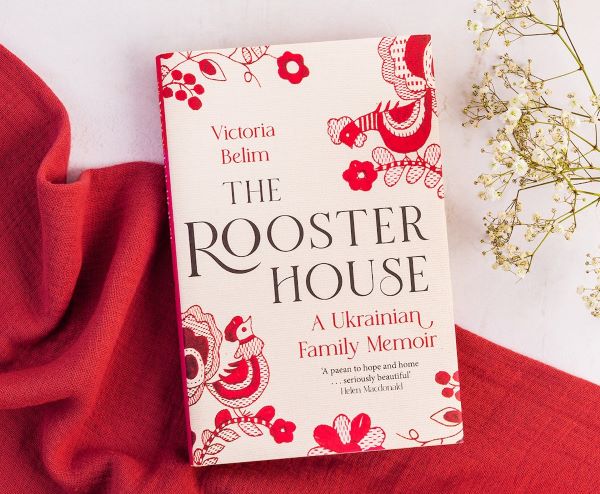
Art, travel, books, history. About my book, The Rooster House.

Growing Fragrant Paperwhite Narcissus at Home

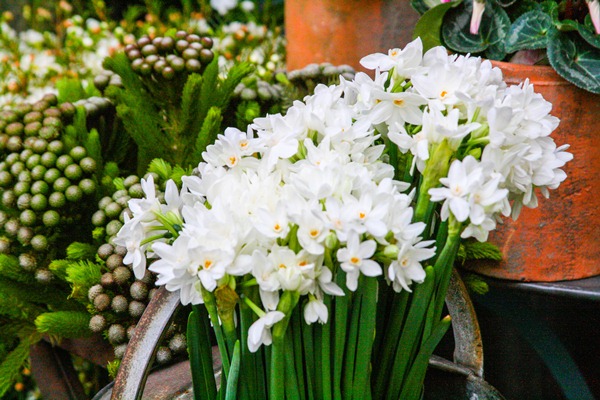
It may be March, but here in the Northeastern U.S., spring is still elusive. Bulbs have started to poke through the firm soil, but they are still over a month from blooming. Even once the official start to spring rolls around, everything where I live will still look very much as it did in the middle of winter—barren, grey, and spare. I could sit and brood, longing for springtime, but instead I’ve decided to start spring early—indoors—by jamming the windowsills with the fast and incredibly fragrant paperwhite narcissus.
paperwhites

Paperwhites are among the easiest and most rewarding of flowering bulbs to grow indoors. They often flower within two to three weeks of starting the bulbs, and for almost no effort, they reward you with clusters of incredibly fragrant, snow white blossoms that easily fill a room with their rich, indolic fragrance. Even if you have never smelled narcissus before, the scent of paperwhites immediately evokes springtime, with a heady white floral perfume that is accented by chilly earthiness and fresh, green touches.
Continue reading →

What to Buy in Paris : French Pharmacy Finds

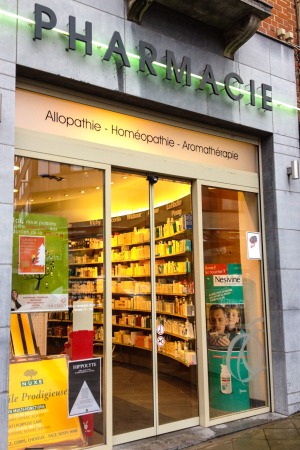
Perfume shops, chocolate stores, lingerie boutiques, pâtisseries… When I’m in Paris, I can’t resist any of them, especially since the fine-tuned French sense of design extends as much to the products as to the window displays. But I will tell you honestly that if I had to pick my favorite shopping ground, it would be a pharmacy. It’s a treasure trove of finds for anyone who loves scented products and skincare, or simply enjoys searching for affordable and interesting brands.

paris-invalidespharmacy1

Of course, pharmacies are not a Parisian phenomenon. If you travel in Europe, you will quickly notice stores with a neon green cross. Within two blocks of my apartment building in Brussels there are about 5 or 6 pharmacies. It’s more than a store where you get your medicine. It’s the place where you go to complain about your illnesses, the weather and the lack of government (although in my observation, Belgians don’t complain much about the latter; in fact, they can go for months without electing one). You can also buy skin and hair care products, perfume, soaps, vitamins, and an array of bizarre slimming supplements advertised by close ups of perfectly tanned behinds.
Continue reading →

Birthday Ladies : Estee Lauder Youth Dew and Robert Piguet Fracas

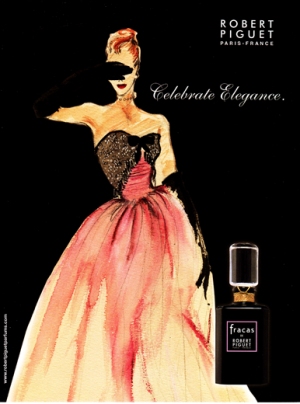
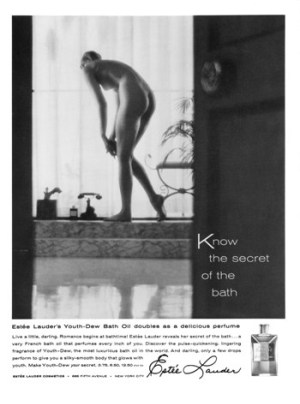
This year two formidable classics celebrate their sixtieth anniversaries. Robert Piguet Fracas (1948) will turn 65, while Estée Lauder Youth Dew (1953) will mark its 60th year. These remarkable fragrances elicit strong emotions and inspire us even today. Youth Dew set the trend for rich orientals, while no tuberose perfume can be spared a comparison with Fracas.

fracasYouth Dew

These perfumes are also notable because they were created by two of the first female perfumers: Germaine Cellier and Josephine Catapano, respectively.  The perfume industry of the 1940s and 50s was a boy’s club. In 1947, Donald William Dresden wrote in his article, The Twenty “Noses” of France“Only a few people have the supersense of smell necessary to become a Nose—for reasons known only to Noses themselves, no woman has ever had it…” Dresden, reporting for the New York Times, simply reiterated what he heard around Grasse, France, the main perfumery hub of those days.

Continue reading →

Impressionism, Fashion, and Modernity at The Metropolitan Museum

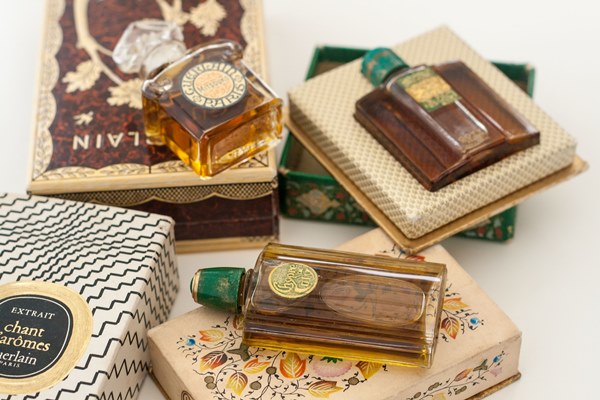
From February 26 to May  27, 2013, The Metropolitan Museum of Art in New York will present its new exhibit, Impressionism, Fashion, and Modernity This exhibit was unveiled at the Musée d’Orsay in Paris last year, and I highly recommend this beautifully curated look at the role of fashion in the works of the Impressionists and their contemporaries. The exhibit is complemented by masculine and feminine costumes, period photographs, illustrations, and rare Guerlain perfume bottles*. It truly gives you a unique glimpse into late nineteenth-century Parisian life and society.

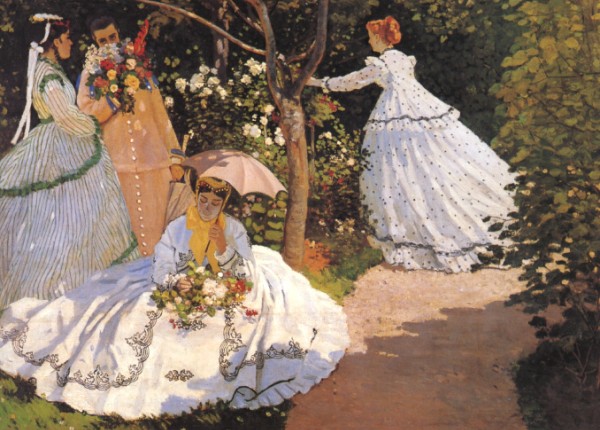
Monet-women-garden

Highlights of the exhibition include Monet’s Luncheon on the Grass (1865–66) and Women in the Garden (1866), Bartholomé’s In the Conservatory(circa 1881, paired with the sitter’s dress), Monet’s Camille (1866), Renoir’s Lise–The Woman with the Umbrella (1867), Manet’s La Parisienne (circa 1875), and much more.

To find out more, please check the Met website.

Update: the exhibit will also travel to the Art Institute of Chicago, where it will be shown at Regenstein Hall from June 26 to September 22, 2013.

*as seen at the similar exhibit at the Musée d’Orsay in Paris.

Painting: Claude Monet, Women in the Garden (detail), 1866, via wiki-images, some rights reserved.

Touring The Art of Scent Exhibit at the Museum of Art and Design New York

Victoria’s Note: Today Daisy Bow will take us through the Art of Scent Exhibit at the Museum of Art and Design in New York. You may know Daisy from her comments here and from her fun blog, Cool Cook Style. Daisy recently completed her doctoral degree in French Literature from New York University, and she is currently teaching a course on French Food and Culture as part-time faculty at the New School. Her love affair with perfume began with Dune at the tender age of 14. She has smelled great ever since. 

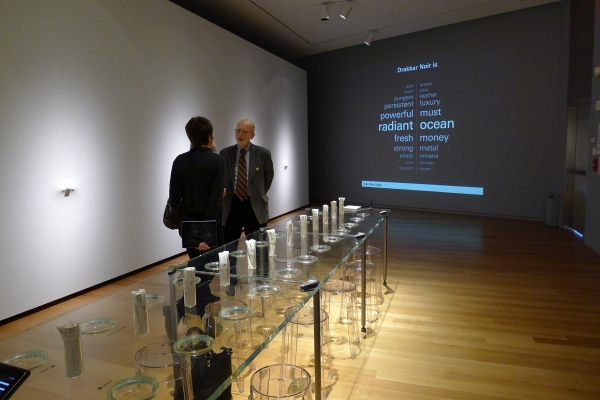
“Scent can do what all art does: change the way we perceive the world,” says Chandler Burr, the director of the olfactory art department at the Museum of Art and Design. According to him, the fundamental concept for The Art of Scent exhibit, its layout, and its chronological organization has its genesis in a talk that he gave in 2008 at The Times Center when he was still the scent critic for the newspaper. For the sold-out event, individual blotters for each of the 15 different fragrances chosen were provided to over 400 guests. As the runners did their work, Burr played a piece of music that was also representative of the style of the scent distributed. Each work was accompanied by visual presentations of painting, sculpture, and architecture too.

P1060229

Since its opening in New York, much of the discussion on The Art of Scent has focused on how Burr uses different artistic movements and schools to talk about different works of olfactory art. Burr emphasizes that “none of these analogies are exact.” The parallels drawn between scent and other mediums exist to provide us an intellectual tool with which to talk about it as art. “I want to place scent as an artistic medium in the center of all the arts: music, dance, literature, painting, and sculpture. [Scent is] just one medium. Each medium is different. Some of them used certain schools and some of them didn’t. For example, Romanticism from roughly 1800-1840 was ascendant in literature, poetry, and painting. However Romanticism in music was in the late 1800’s. [Alfred] Einstein, the great cataloguer of music, takes the Romantic period up to 1940. Not every medium used it at the same time,” Burr explains.

Continue reading →

As Seen On

Design by cre8d
© Copyright 2005-2026 Bois de Jasmin. All rights reserved. Privacy Policy