Artists & Perfumers: 106 posts

Articles about perfumers, artists and other interesting personalities. Also, please see Interviews.

Career in Fragrance : Where to Start

Are you interested in a fragrance industry career? Lauren shares her insights and tips.

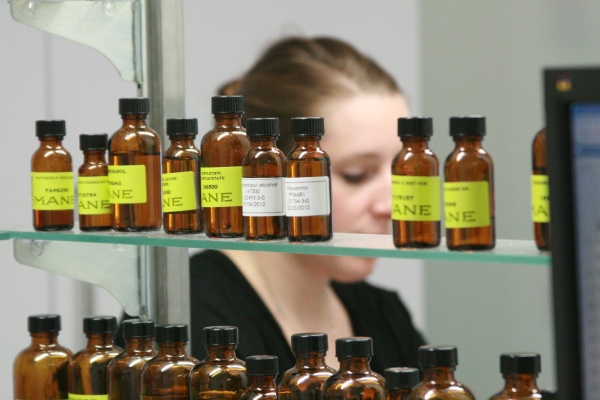
As a fragrance evaluator, the question I am asked most often is: How did you get into that career?  Some people mean this in a non-literal sense and are really asking me, What on earth made you decide to turn your interest in perfume into a full-blown profession?  This is casual conversation, amusement expressed plainly through twinkling eyes and grinning lips.  But there is another set of people who ask me this question literally.  They want to know how they can get a job in the fragrance industry, too.  They want to turn their passion for perfume into an everyday reality, and I recognize what we have in common: they want it is as badly as I wanted it.

perfume-work

When I was in college, I loved writing, so much that I considered pursuing it as my main profession.  My professor said, “Don’t pursue creative writing unless you truly cannot imagine doing anything else.”  Now, I would offer the same advice for those interested in a fragrance career: go after it only if you cannot imagine doing anything else.  If you keep this in mind and stay open to what you learn each day, there’s really no way to fail.  No matter what your job title may be.

Continue reading →

Perfumers on Perfume : Paul Parquet

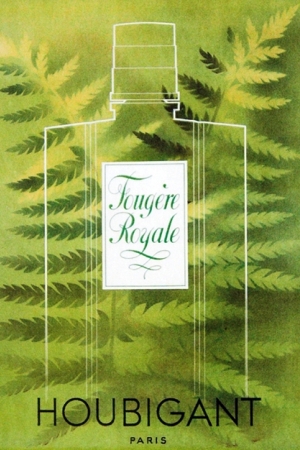
Ernest Beaux called Paul Parquet the “greatest perfumer of his time.” Coming from the legendary creator of Chanel No. 5, it’s very high praise, but Parquet (1856-1916) deserves it for his innovative work. Although most of his fragrances, like Le Parfum Idéal or Coeur de Jeannette, created for Houbigant, have not survived, his influence is profound. He is responsible for giving perfumery the fougère fragrance family, inspired by his marvelous Fougère Royale. His experiments with novel synthetics inspired many groundbreaking fragrances of the 19th and early 20th centuries such as Piver’s Le Trèfle Incarnat, Roger & Gallet Vera Violetta. Even Beaux himself was under the spell of Parquet’s creations.

Paul Parquetfougere royale

The start of Parquet’s career was in hosiery, rather than perfume. It was not until 1878 when his father bought a perfumery called Houbigant-Chardin (founded in 1775 by Jean-François Houbigant) that Parquet became interested in the business. In 1881, Parquet bought Houbigant-Chardin from his father, and over the course of the next three decades composed a fascinating and original collection*. His style was bold, dramatic, and daring, but also romantic.

Continue reading →

Perfumers on Perfume : Vincent Roubert

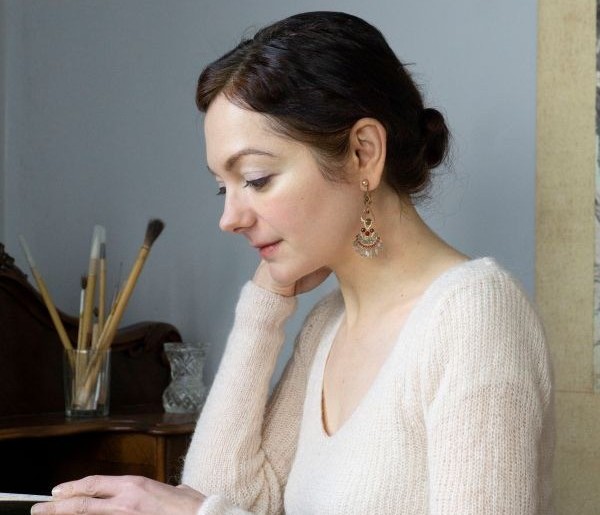
My fascination with vintage perfumes owes a lot to Coty L’Aimant and Jacques Fath Iris Gris, fragrances created by Vincent Roubert. I stumbled across L’Aimant at a second-hand clothing store, where its red box sat among the bins of faux pearls from the ’60s and “genuine nylon” shirts from the ’70s. I had no idea that this perfume was launched in 1927 or that it was Coty’s answer to the smashing success of Chanel No. 5. I simply enjoyed its powdery, sweet scent that was completely unlike any of the fragrances I smelled at department stores. It gave me an escape from my routine on par with favorite books and The Classic Movie Channel.

coty-laimantRoubert1-s

Iris Gris, on the other hand, was a special quest. By then, I already knew that Roubert was a talented but not a prolific perfumer and that he crafted a legend by blending the cool, earthy iris essence with the luscious sweetness of peach skin. I searched high and low, and when I finally found a bottle of Iris Gris, the remaining perfume smelled of tobacco and sour wine. It was too old. My encounter with Iris Gris–pristine, stunning–took place years later, and I still have a blotter perfumed with iris and peaches.

So who was Roubert? What inspired him? In partnership with the Osmothèque, I offer you an excerpt from The Perfume of Memories, a 1947 magazine article by Vincent Roubert. The Osmothèque has all of the perfumes he mentions in his piece: Caron Fleurs de Rocaille, Chanel No. 5, Coty À Suma, Coty L’Aimant, Coty Muse, Guerlain Jicky, Guerlain L’Heure Bleue, Houbigant Cœur de Jeannette, Houbigant Demi-Jour, Houbigant Quelques Fleurs, and Lanvin Arpège. Iris Gris is still awaiting its hour.

Continue reading →

Perfumers on Perfume : Ernest Beaux on Fragrance Masterpieces

Today we know Ernest Beaux first and foremost as the creator of Chanel No. 5, but he was also responsible for Bois des Îles, Cuir de Russie, No. 22, and many other early Chanel perfumes. His style is elegant and graceful, but with a strong character. Soir de Paris, a fragrance he created for Bourjois, doesn’t just skip from one note to another; it shimmers, revealing in one moment a peppery citrus and green leaves, and in another a velvety rose and wood shavings. As it turns out, Beaux was not only a great perfumer; he was also a good writer, and his candid observations remain relevant today. In partnership with the Osmothèque, I offer you an excerpt from Memories of a perfumer (Souvenirs d’un parfumeur), a 1946 magazine article by Ernest Beaux published in Industrie de la Parfumerie.   

Ernest-Beaux

The article gives a glimpse into what Beaux considered to be the greatest perfumes of his time and his thoughts on the art of perfumery in general. “If our thoughts are but fantasies, such fantasy finds, thanks to the talent of the perfumer, a possibility of fulfillment,” he writes, and I cannot agree more.

The article comes from the archives of the Osmothèque, a French non-profit institution whose mission is to preserve fragrances in their original formulations. The current regulations make it impossible for Chanel to offer No.5 as Beaux intended it to be, but the Osmothèque features it in its collection, which is open to the public. You can also discover there the fragrance masterpieces Beaux mentions in the article:  Houbigant Cœur de Jeannette, Houbigant Fougère Royale, Houbigant Le Parfum Idéal, Houbigant Quelques Fleurs, Piver Le Trèfle Incarnat, Roger & Gallet Vera Violetta, Guerlain Jicky, Guerlain Après l’Ondée, Guerlain L’Heure Bleue, Coty La Rose Jacqueminot, Coty L’Origan, Caron Le Narcisse Noir, Lanvin Scandal, and Lanvin Arpège.

Continue reading →

How Many Hands Touch Your Bottle of Perfume : Perfumers

The first article in this series described the process through which the perfume brief goes before it ends up on the perfumer’s desk (Brief). Then, my perfumery school classmate and former colleague Lauren gave you a glimpse of what it’s like to be a perfume evaluator (Evaluator). Today, I will describe the role of the perfumer.

If you’re new to this series, I recommend starting with Part 1: Brief.

Ever since Frédéric Malle highlighted perfumers by adding their names on the fragrances created for Editions de Parfums, these actors, traditionally consigned to ghost writing scents, have become more prominent. We can find out which nose created our favorite perfume, read about perfumers’ work, and even hear them explain their metier. Names of houses that employ perfumers–International Flavors & Fragrances, Givaudan, Firmenich, Symrise, Mane, Robertet–even show up in the traditional media. Magazines call noses rock stars. Fans queue to meet them at store events. Isn’t then the perfumer the most important person in the process of creating a perfume?

perfume-lab1

Yes and no. With the exception of those who direct their own brands, most perfumers are only one of many groups that influence how a fragrance will smell. Today, it’s hard to speak of a perfumer’s fingerprint on a big brand launch because many fragrances are created as a collaboration among several creators, marketing reps, sales people, and evaluators. In most cases, an individual perfumer may not have a say in the matter and simply has to follow the given direction.

Continue reading →

As Seen On

Design by cre8d
© Copyright 2005-2026 Bois de Jasmin. All rights reserved. Privacy Policy