Food & Fragrance: 176 posts

Articles about the gourmand pleasures, flavorful cooking, scent and taste experiments and tested recipe ideas

Coriander and Cumin or The CC Powder

Being married into an Indian family, I learned a few things: Time is a flexible, fluid entity; when you have a few millennia of history underpinning your culture, what’s an hour here or there. You can always eat–and if you can’t, you’re probably not conscious. Spices to a cook are like essences to a perfumer. On this latter point, I would like to linger.
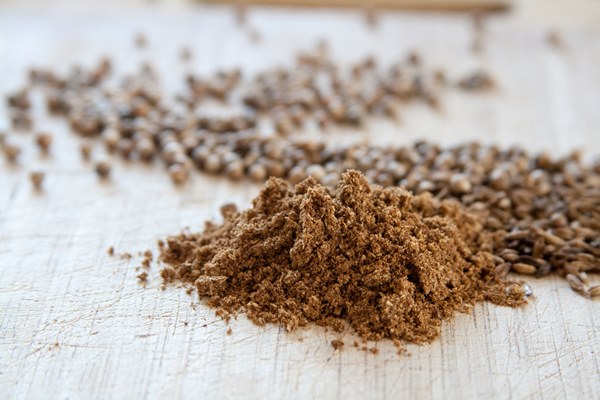
cc powder

I thought I knew spices before I went to India, but nothing prepared me for the dazzling array of flavors and the variety of techniques with which they can be brought to life. India is divided into 29 states, and each region has its spice signature; generalizing is all but impossible. For instance, Aai’s, my mother-in-law’s cooking combines the refined sweetness beloved in her native Gujarat with the robust spiciness of Maharashtra fare. These two states share a long border, but the cuisines are remarkably different. Gujarati cooking is rich in coriander, tamarind, with peanuts and sesame giving it a nutty flavor, while Marathi dishes have a sharp bite of garlic, chili pepper and mustard seeds. Cross into northern India, and the richness of cinnamon, clove and fenugreek color the local meals. Travel down the southern coast, and coconut becomes the main leitmotif.
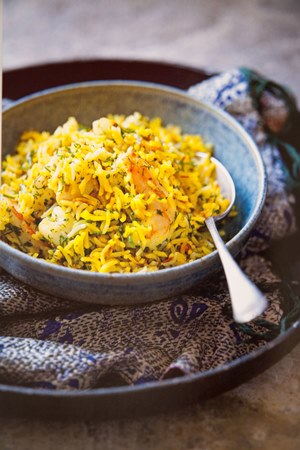
Continue reading →

Saraban : Persian Spiced Hazelnuts

Saffron, pistachios, apricots, pomegranates, angelica seeds… When my inspiration for scent pairings starts to wane, I flip through my favorite Iranian books and think of the vibrant combinations of Persian cuisine. It’s one of the world’s most sophisticated, with complementary and contrasting flavors used in a single dish. There are rice pilafs steamed until every grain is separate and glossy and then embellished with saffron scented butter and rosewater. Poultry is cooked with fruit and sweet and sour sauces. Meat is grilled in a variety of ways and vegetables star in everything, from soups to jams. Even something as simple as a yogurt cucumber salad is served topped with a flourish of golden raisins, walnuts and herbs. Every mouthful is an adventure. Every taste is a surprise. It’s a cuisine custom-made for perfume lovers.

saraban1bsaraban1a

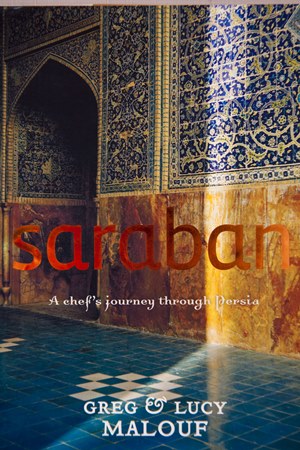
If your perspective on Iran comes from the news, then you’re likely to associate it with the brutal events of the 1979 Islamic revolution, religious intolerance and reprehensible treatment of women. Persia, on the other hand, may connote the orientalist visions of roses and nightingales. As Greg and Lucy Malouf note in their marvelous book on Persian cuisine, Saraban: A Chef’s Journey Through Persia, “there is an element of truth and exaggeration in each version, but they are, of course, one and the same place… This duality, these contrasts, the opaqueness–once we arrived in Iran, we realised that they all contribute to a very real sense of mystery, and of reward.”

Continue reading →

Rose Jam

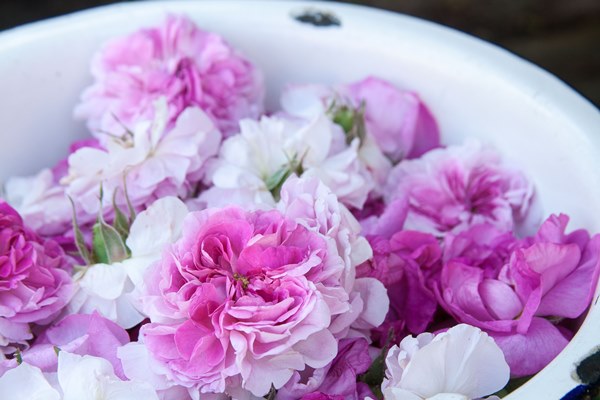
“Do you remember Asya’s recipe for rose jam?” I ask my grandmother as I return to the house with a basket full of rose petals. A craggy shrub by the fence has suddenly sprouted into a mass of frilly pink blossoms, and I feel inspired. “No,” says Valentina, with an expression that accepts no arguments. “She wasn’t much of a cook. She never made jam.” I’m confused, because I do recall gathering roses for jam with my great-grandmother. Did I make it up, just like I concocted the story of my father being a Bollywood actor? Then my grandmother reconsiders. “You’re right, she did. Every summer. But it was terrible. Dark and overcooked.”

rose-jam1

The saccharine stories that preface many cookbooks, of learning cooking at grandmother’s side as she tenderly explains the right way to cut carrots or hull strawberries, aren’t part of my childhood recollections. Valentina has so little tolerance for imperfection, or deviations from her way of doing things, that cooking with her is as relaxing as being a Top Chef contestant. Asya, her mother, had no patience for mincing and sauteing; her passion was the garden. Perhaps, this is why I don’t remember eating her jam, only the intense honeyed fragrance of roses as we picked them.

Continue reading →

Chocolate, Violets, Bread : A Call for New Gourmands

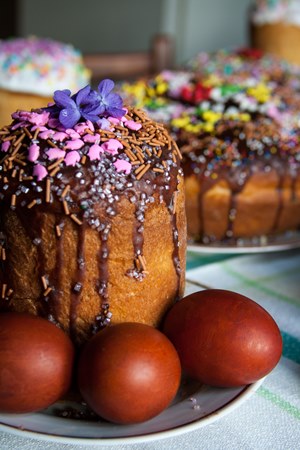
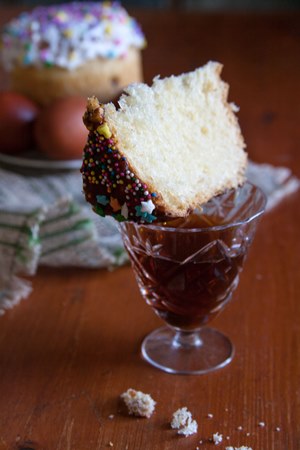
My grandmother’s Easter bread is a lacy confection of butter and sugar. Glazed with chocolate and decorated with flowers, it looks like a Byzantine mosaic. Redolent of bitter cacao and violets, it doesn’t just smell good. I realize with a thrill that it smells like a complete perfume–the top note of violet, the heart of hazelnuts and wheat, and the lingering backdrop of musky chocolate. Take this idea, refine it into an accord–a combination of several perfume notes that becomes more than the sum of its parts–and voila, you can use it to create a new gourmand genre. Sounds fanciful, but this is how perfume is made.

easter breads1easter breads1a

On the face of it, it seems as if the gourmand genre has captured every dessert, from crème brûlée (Aquolina Pink Sugar) to cupcakes (Vera Wang Princess), from rice pudding (Tommy Hilfiger True Star) to raspberry macarons (Guerlain La Petite Robe Noire). You can have your chocolate with cinnamon (Pacifica Mexican Cocoa), with caramel (Thierry Mugler Angel), or with honey (Tom Ford Noir de Noir).

Continue reading →

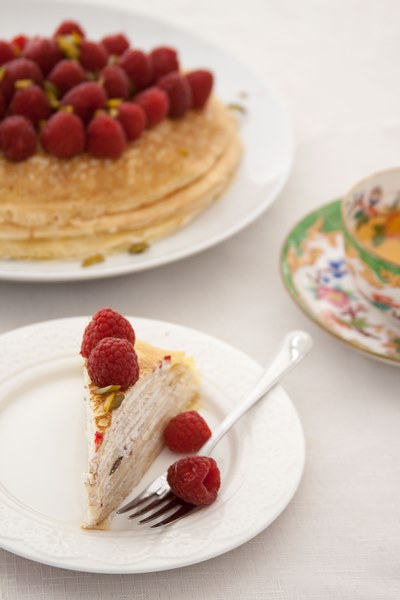
Crepe Cake with Sweet Cheese, Raisins and Raspberries (Solozhenyk)

I love nothing more than to pour a cup of tea and to flip through my great-grandmother Olena’s recipe books. Although there are many good cooks in my family, Olena was uncontested in her expertise and passion. I was a toddler when she passed away, but my mother and aunt’s stories and Olena’s handwritten books give shape to the woman of whom I only have a few sepia tinted photographs. Our family lore wouldn’t be complete without stories of Olena’s garlicky pork roasts, bright yellow sponge cakes filled with vanilla cream and raspberry compotes.

solozhenyk1

My favorites among Olena’s recipes are the forgotten old dishes that got lost during the decades of Soviet food shortages, standardization of the cuisine and obliteration of regional traditions. Some of it was forced by the state to create a market for commercial products; some of it was a part of a natural process as more women joined the work force and no longer had time to prepare complex meals. Olena’s recipes belong to another generation, but this is not to say that all of them are time consuming, extravagant affairs. For instance, her solozhenyk, crepe cake filled with lemony cheese garnished with raspberries, is elegant, but it’s also inexpensive and easy to make.

Continue reading →

As Seen On

Design by cre8d
© Copyright 2005-2026 Bois de Jasmin. All rights reserved. Privacy Policy