Food & Fragrance: 176 posts

Articles about the gourmand pleasures, flavorful cooking, scent and taste experiments and tested recipe ideas

Spinach with Pomegranate Molasses, Honey and Caramelized Onions

While we’re at the tail end of our cold spring days–or so I hope, I still crave warm, rich flavors. On hot summer days, I often steam spinach and then dress it lightly with lemon juice, olive oil, salt, and pepper, but when I arrive home soaked with rain, I want something more comforting. That’s how spinach ends up married to pomegranate molasses and honey in my kitchen. It’s a light dish, but its flavor is bold and lush.
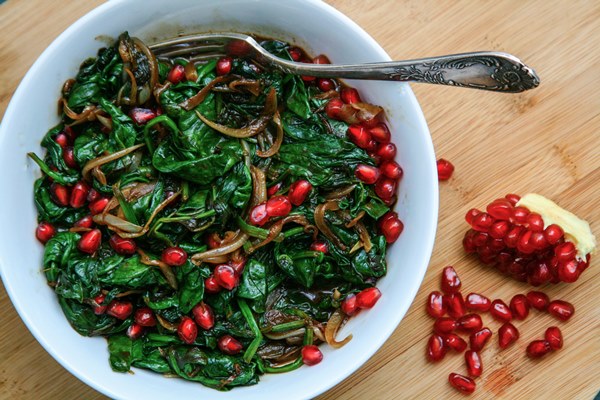
spinach-pomegranate3

Pomegranate molasses is a trendy ingredient right now with chefs, but it’s a traditional ingredient in Eastern countries, from Turkey to Iran. I first tried it at the table of my Azeri relatives, and I’ve been in love ever since. In Azerbaijan, a former Soviet republic on the Caspian Sea, this tart condiment is commonly served as a dipping sauce and in numerous vegetable preparations. In the Ukraine of my childhood, where mayonnaise was the most exotic condiment, it seemed like something out of One Thousand and One Nights. But before long it became as ubiquitous in my pantry as mustard.
Continue reading →
Le Palais des Thes Flavored Teas : Tea Review

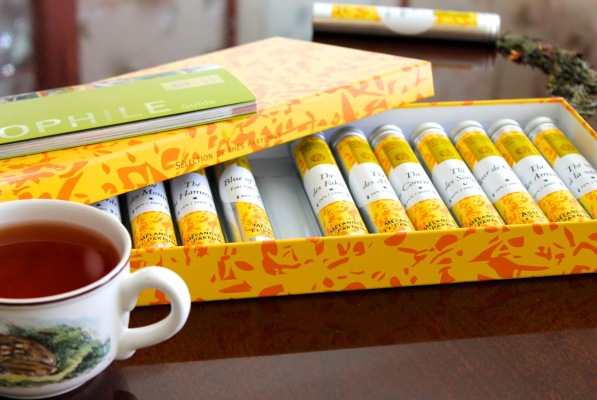
As much as I love tea, and would be more than happy to drink almost any tea you could put in front of me, I must admit that I am not typically a fan of flavored teas. Most of the time I find them to taste artificial, with the flavor overpowering the natural flavor of the tea leaf. However, many tea-loving Bois de Jasmin readers have recommended various flavored blends from Le Palais des Thés. My curiosity was piqued and, eager to test these teas myself, I ordered the Teas and Flavored Blends Box Set.

andy-tea-lpdt1

Much to my delight, all of the teas are scented delicately enough to accent the flavor of the tea, but strongly enough to be clearly tasted. I like some more than others, but overall, I’m happy with the purchase. The beautifully boxed set includes twelve screw-top metal tubes that each contain enough tea to prepare about six cups. Also included is The Théophile Guide, a small paperback book complete with detailed information about tea history, preparation, and detailed descriptions of all the teas sold by Le Palais des Thés.

I found the samples to be generously sized and conveniently packaged, with brewing time and temperature labeled on each one. All in all, this set would make an excellent gift for a tea lover, and could be equally appreciated by someone new to tea or to a seasoned tea drinker. Below are my impressions of each tea in the set, which includes Thé des Moines, Thé Vert à la Vanille, Thé du Hammam, Fleur de Geisha, Thé des Fakirs, Thé des Alizés, Thé des Amants, Blue of London, Thé des Lords, Thé des Sables, Thé des Concubines, and Thé des Songes.

Continue reading →

Orange Trout with Garlic, Ginger, and Sesame

When I think of orange, I usually think of desserts–a long curl of zest steeped in milk for rice pudding, a dash on top of bitter chocolate mousse or whipped into poundcake batter. By sweetening the orange, you highlight its floral, honeyed nuance, but what happens if you add a dash of salt instead? The effect is explosive. Salt volatilizes aromatic components, and the orange aroma becomes even more saturated. Moreover, its zesty flavor marries so well with savory notes that it’s fun to explore different combinations.

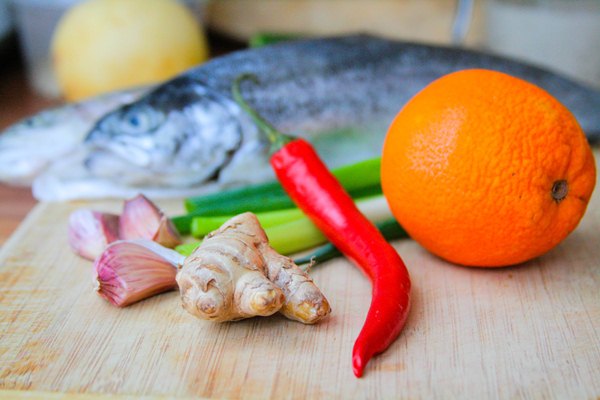
trout

One of my favorite piquant combinations with orange is a Korean inspired dry rub for fish. Garlic, scallions, ginger, sesame and chili pepper are used with dazzling effect in Korean cooking, giving it a distinctive flavor–earthy and aromatic, nutty and spicy. I haven’t encountered orange in Korean dishes, but its sweet perfume is a harmonious touch. It brings out the citrusy nuances of ginger and softens the toasty richness of sesame. Because of their acidity, oranges are also excellent with fish, and voilà, here is my creation.

Continue reading →

10 Ways to Use Rosewater : Perfume, Beauty & Food

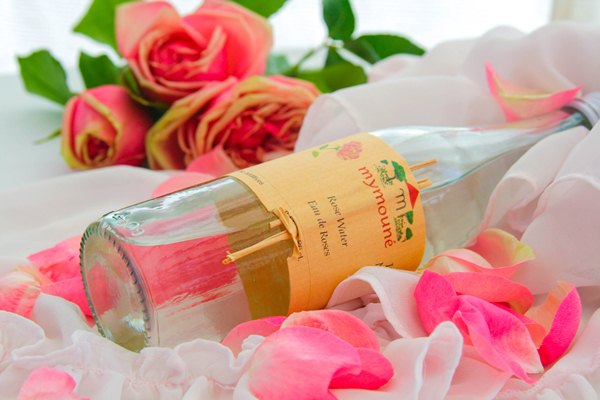
Let me shower you with rose petals today. On second thought, as far as I’m concerned, roses are too good to be left only for Valentine’s Day, and whenever I can, I indulge in a bit of pink petal fantasy. Rose perfumes are great to daydream about summer, but my little secret is found in a kitchen cupboard. It’s a bottle of rosewater. I use it in my tea, splash it on my face and sprinkle the bed sheets for a delicious finale to my day. If you want everything coming up roses, it’s hard to resist its honeyed perfume.

Rosewater is the by-product of rose oil production. When the rose petals are steam distilled, the watery substance (hydrosol) that remains behind after the essential oil is removed still has a rich scent. It’s prized for its cosmetic and flavor properties, and genuine rosewater smells like a walk through a blooming garden. Commercially, it’s biggest use is in skincare and flavors. In food, it’s not only used for candy and desserts; a rose accent can add an intriguing layer of flavor to a savory dish.

Continue reading →

Tea Primer Part 5 : A Guide to Buying Quality Tea

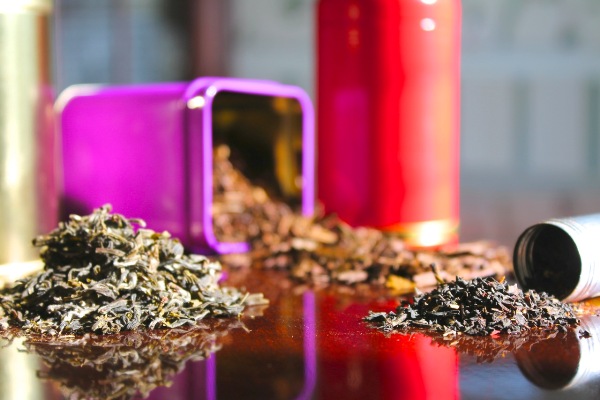
Whenever we decide to savor something, we prepare ourselves for enjoyment. We relax, slow down, and cast aside our worldly cares in favor of finding pleasure in what we are about to experience. As a result, no matter what we decide to savor, it is a most disappointing feeling when quality lets us down—the moment when the tea tastes flat, the perfume smells lifeless, and we are left unsatisfied.

tea-andy

Part 1 : Black and Oolong Teas

Part 2 : Green, White and Herbal Teas

Part 3 : Tea Brewing Basics

Part 4 : How to Brew a Perfect Cup of Tea

Of course, quality is not only an important consideration when discussing perfume, but also tea, which can vary greatly from company to company. In the case of perfume, a skillfully created fragrance that is composed of a few simple, inexpensive ingredients may not necessarily smell worse than a complex formula filled with costly flower absolutes and other precious raw materials. However, in the case of tea, one major difference is that the tea we buy is the raw material, and as long as the tea is brewed properly, the quality of the tea leaf can often be directly related to the quality of our tea drinking experience.

Continue reading →

As Seen On

Design by cre8d
© Copyright 2005-2026 Bois de Jasmin. All rights reserved. Privacy Policy