Food & Fragrance: 176 posts

Articles about the gourmand pleasures, flavorful cooking, scent and taste experiments and tested recipe ideas

Indian Flattened Rice Pilaf (Poha) : Layering Flavors

My first taste of India was completely different from what I anticipated. I arrived at my friend’s apartment in Delhi, my head still aching from jet lag and the kaleidoscopic array of new sensory impressions. “You must be hungry,” said Swati, as she went into the kitchen. It was close to midnight, but the air was still hot and humid, and my shirt stuck to my back. I wasn’t hungry at all, but I still politely ate a bit of the vegetable pilaf she put in front of me. I expected it to be spicy and hot, but instead it was tart and refreshing, reminiscent more of Mediterranean tastes than anything I’ve previously experienced with Indian food. Poha was the start of my love affair with Indian layered flavors.
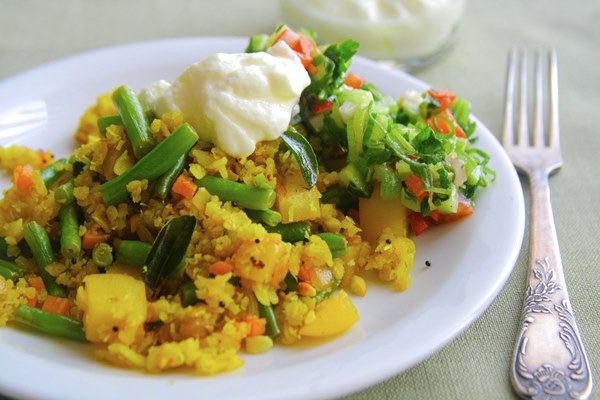
poha

Poha is the name for flattened rice (sometimes also referred to as beaten rice) that has been parboiled, rolled, flattened, and dried to produce easy-to-cook, nutritious flakes. It’s a Western Indian version of muesli, and it’s a common breakfast dish. Since poha is already cooked, it only requires a brief soaking to turn the thin flakes into plump grains. It absorbs liquids and flavors easily, and poha works well in soups, pilafs, salads, and even desserts. You can use it in any dish in which you would have used couscous, adjusting the cooking times accordingly.
Continue reading →

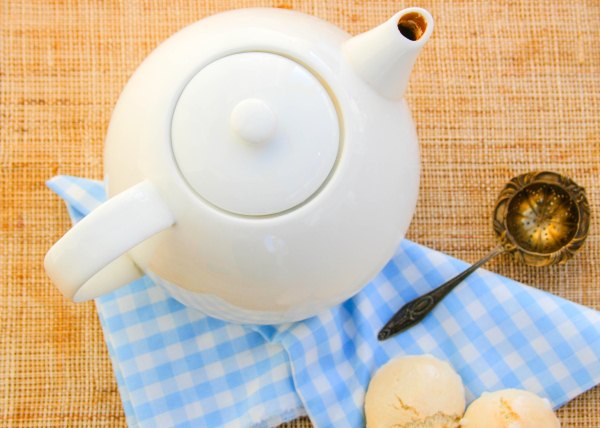
Tea Primer Part 4 : How to Brew a Perfect Cup of Tea

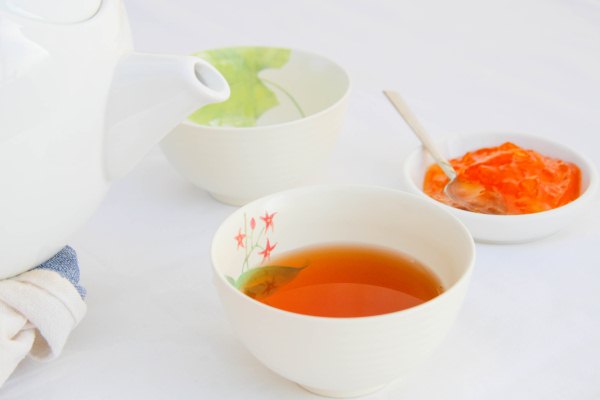
In my last article of Tea Primer, I discussed the three essential parts to brewing any cup of tea: water, tea, and teaware. Now you have all three ready, but where to start? It’s really very simple, and only requires a bit of practice to master. Just as your preference for particular fragrance notes and styles would be evident after a look at your fragrance wardrobe, each person’s way of preparing tea is unique, shaped by their preferences and proclivities. Luckily, once you are familiar with the techniques detailed here, you will have a basic understanding of how to prepare any tea using any method of preparation that you like, as the basic underlying principles are always the same. To make it easier to follow, I’ve separated the elements of brewing a cup of tea into four easy steps.  Let’s get started!

tea-primer4

Part 1 : Black and Oolong Teas

Part 2 : Green, White and Herbal Teas

Part 3 : Tea Brewing Basics

Part 5 : A Guide to Buying Quality Tea

1. Know your tea

Before you start heating up your water, it is important to decide what kind of tea you are going to drink, as this will determine how hot the water needs to be. In my experience, this step can often be the hardest of them all, because, as with perfume, choosing what tea you are in the mood for is sometimes difficult. Below is a chart of time and temperature information for brewing various types of tea. Teas differ from company to company, however, so it is also a good idea to refer to the company website and packaging for exact instructions for the tea you wish to prepare. And, as always, feel free to experiment! The information on this chart is only a guideline for brewing tea. Your instinctive sense of scent and taste is always the best guide.

Continue reading →

Viennese Vanilla Crescents with Tonka Bean (Vanillekipferln)

Tonka beans look like dusty, wrinkled pods, but they smell like smoky cherries, sugared almonds and sun warmed hay. Many fragrance raw materials have heady aromas that are as complex as those of a finished perfume, but few rival tonka bean for its luscious seduction. Gourmand doesn’t even begin to describe it. It’s decadent, sultry, and addictive.

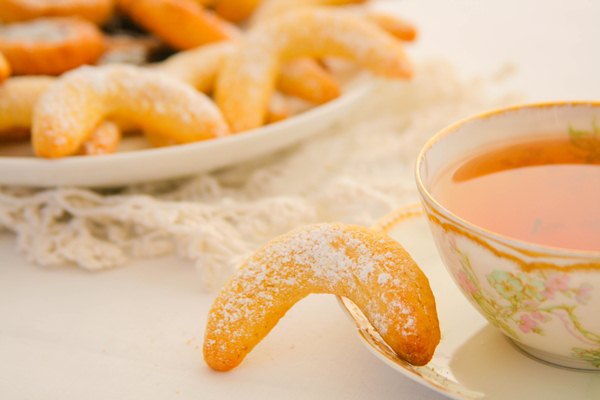
The best way to experience the complexity of tonka bean is not just to smell it, but to eat it. Tonka bean is the flavor of the moment in Europe, where I’ve encountered it in cakes, ice cream, chocolates, and even savory dishes. The sweetness of tonka lends itself perfectly to desserts, especially anything that contains almonds, vanilla, or cherries. These ingredients explore natural affinities, and you can’t go wrong by adding a pinch of tonka to cherry compotes, almond cakes or vanilla custard. The best way to imbue as much tonka flavor as possible into a dessert is to grate it finely and either infuse it in warm liquid, or as I do in the recipe for Viennese Vanilla Crescents (Vanillekipferln), cream it with butter.

Continue reading →

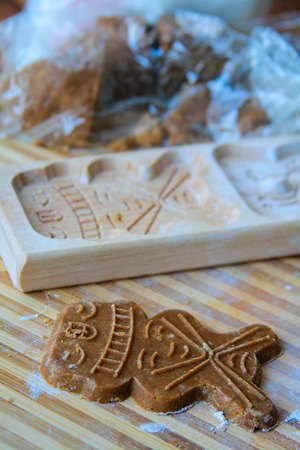
Belgian Gingerbread Treasure : Speculoos (Speculaas)

It’s called spéculoos in French, speculaas in Dutch, and Spekulatius in German, but by whatever name you call this fragrant gingerbread cookie, it will always evoke the scent of holidays in this part of the world. Speculoos may look humble, but take one bite, and you will know why it’s a favorite among Belgians. Perfumed with cinnamon, clove and cardamom, the cookie tastes of butter and caramel, and it’s impossible to have just one.

For me, speculoos is one of the quintessential Belgian tastes. Of course, there are also fries and waffles, but speculoos have their place of honor in this small country of 10 million, bridging the cultural divide between Dutch-speaking Flanders in the North and Francophone Wallonia in the South. Speculoos are eaten all over the Benelux region, with some areas such as Hasselt specializing in their own unique versions. Traditionally, the cookies were baked to celebrate Saint Nicholas Day on December 5th in the Netherlands and December 6th in Belgium, but today you can find them at bakeries all year round. In Paris you will be served your expresso with a square of dark chocolate, but your lait russe (café au lait) in Brussels will arrive with speculoos on the side.

Continue reading →

Tea Primer Part 3 : Tea Brewing Basics

In the world of fragrance, the difference between being lightly veiled in scent and being a walking thundercloud of headache-inducing vapors is often a fine one. Whereas a citrusy eau du cologne might be sprayed on with reckless abandon, to no ill effect, a single drop of a rich gourmand perfume might suffice in scenting you generously for the entire day. Wearing fragrance is simply not a one-size-fits-all proposition, and the same goes for brewing tea, which requires a bit of know how to be done correctly. Fortunately, the skip over from perfume to tea is a short one, as knowing how to brew your tea properly is a lot like knowing how to wear a fragrance appropriately—once you have mastered the technique, it becomes second nature.


Part 1 : Black and Oolong Teas

Part 2 : Green, White and Herbal Teas

Part 4 : How to Brew a Perfect Cup of Tea

Part 5 : A Guide to Buying Quality Tea

Of first importance in learning how to brew tea is to realize that there are very few hard and fast rules that you must follow to enjoy your tea to its fullest. Most of the tips I describe below are merely guidelines. It is perfectly acceptable, and even encouraged that you experiment with quantities, temperatures, and steeping times to discover a personal style for brewing tea that makes your teatime the most delicious and enjoyable experience possible. No matter how much you customize your tea experience, though, there are three essential elements to all tea preparation—water, tea, and teaware.

Continue reading →

As Seen On

Design by cre8d
© Copyright 2005-2026 Bois de Jasmin. All rights reserved. Privacy Policy