Food & Fragrance: 176 posts

Articles about the gourmand pleasures, flavorful cooking, scent and taste experiments and tested recipe ideas

Persian Flower Delights

In time for Nowruz, which falls on March 20 or 21 in 2019, depending on where in the world you are, I wanted to share with you my favorite Persian floral delights. Flowers don’t only bloom in Persian gardens and adorn Qajar art and textiles, they’re also used in cuisine. Rosewater adds a bright note to savory and sweet dishes. Willow flowers flavor sugar and candy. Orange blossom accents tea blends. As good as flowers smell, their flavors are equally beautiful.
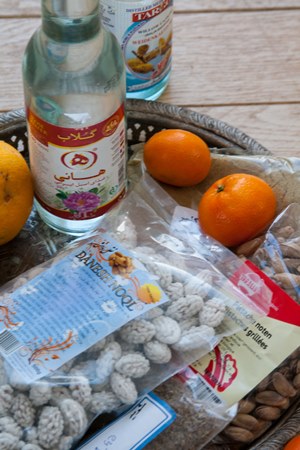
So I took a walk through my local Iranian store and came home with a whole treasure trove of floral delicacies.
Continue reading →

Lateral Cooking by Niki Segnit : Unlocking the Secrets of Flavors

Why does pork pair well with peaches? Why does jasmine uplift the aroma of green tea? And why does chocolate and coffee marry so well together? Great cooking is based on an understanding of flavors and the way in which different ingredients can pair together.  Yet, it’s a skill that can seem elusive, especially to those who are new to cooking.  While there are numerous resources with excellent recipes, few of them teach novices how to approach flavors and techniques. This is an especially unfortunate oversight since one of the easiest ways to improve one’s cooking—and to enjoy the process more–is to cook using one’s nose and palate to their fullest.

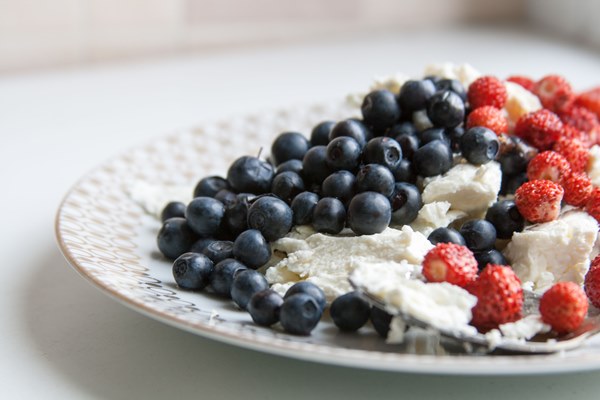
This is a subject the food writer Niki Segnit explored  in her 2010 book The Flavour Thesaurus. Covering a wide range of ingredients, from almonds to washed rind cheeses, the author deftly intertwines food science and her own experience to unlock the mystery of aromas and tastes. The book suggests hundreds of combinations and explains why, for instance, coriander and blueberry pair well together. Coriander contains up to 85% linalool, a compound with a bright, floral-citrusy fragrance. The same molecule is responsible for the aroma of blueberry, and adding a bit of ground coriander to a blueberry dessert magnifies the flavors.

Continue reading →

Sweet Like a Persian Lemon

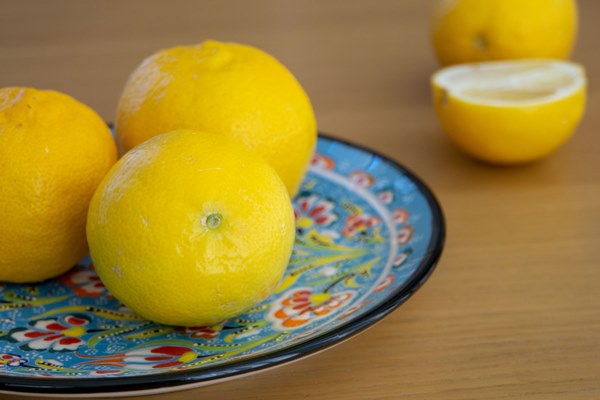
A sweet lemon is not an oxymoron. Neither is it a new fancy hybrid. Persian limu shirin, citrus limetta, is one of the oldest cultivated varieties of lemons and it tastes sweet like honey, with no hint of acidity. The first time I bit into a slice was a shock, because I was prepared for tartness and instead my mouth was filled with sweetness.  Even more beautiful was the scent of the peel that lingered on my fingers. It also smelled like no lemon I had tried before.

Persian lemons have a delicate flavor, but their perfume is anything but.  It is strong, bright and sharp. “It smells like flowers,” said one Iranian friend. “Lemon peel mixed with orange blossom,” said another. “And then tossed with jasmine,” she added. Trying to pin down the fragrance of Persian sweet lemon, I kept scratching the peel and rubbing it onto my skin, paper, and fabric.  The scent made me think of citronella and palmarosa, plants that are related to a rose (at least in a perfumer’s palette). Green petals, crushed stems and tightly closed rose buds. The winter fruit smelled of spring at its most vital and rejuvenating.

Continue reading →

Cranberry Mors : Ruby Red Drink

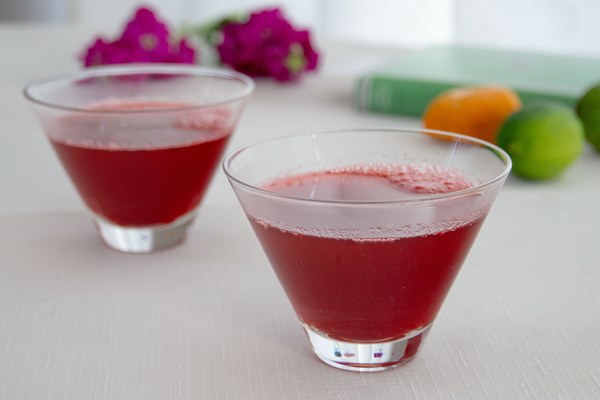
I love the bold acidity of cranberries. Sometimes when I cook with them, I keep a few berries aside to eat raw and their combination of bitterness and tartness always takes me by surprise. Yet, if I wait a moment, I taste a floral sweetness, with a hint of red currant. When I make something with cranberries, I select simple recipes that allow these facets to shine, and more of often than not, I return to my grandmother’s recipe for cranberry mors, a fruit drink.

Mors is the whole world of Russian fruit beverages made with strawberries, currants, gooseberries, blueberries or cloudberries, those unique berries with a taste of cardamom that grow in the northern lands. My paternal grandmother Daria was born in the region of Russia edged in between Ukraine and Belarus, and she remembered going to the forest to pick berries and prepare enough mors to last the family of 12 through the winter.

The traditional method to make cranberry mors was to cover berries with water and leave them to ferment naturally. However, when Daria moved to Ukraine and settled in Kyiv, the capital city, she began to make mors differently, by cooking the berries. Daria’s recipe was simple, but it was ingenious in the way it preserved vitamins and freshness.


Continue reading →

French Fig Jam

Jam has become such an industrial, mass-produced product that it might be hard to imagine making it at home. This is not the case in France–or much of Europe, for that matter. When I visited my friend on her farm in Burgundy, we drove around for hours only to discover that all of the stores were out of preserving supplies. We ended up ordering a case of jars from an online shop, because the figs were ripening fast.

My friend follows a recipe that has been in her family for several generations. We cut figs into quarters and weigh them to determine the amount of sugar. It’s 2 parts fruit to 1 part sugar. Figs are sweet, so we add lemon juice. As their juices melt into sugar, the syrup becomes pink, then purple, then burgundy, like the famous wines of the region. The green perfume of figs transforms as they cook. The fragrance of natural coumarin in their peel, the aromatic that smells of toasted almonds and cherries, becomes more pronounced and richer. The lemon zest gives the fig jam a twist reminiscent of Shalimar.

Continue reading →

As Seen On

Design by cre8d
© Copyright 2005-2026 Bois de Jasmin. All rights reserved. Privacy Policy