Rose: 149 posts

Empress Nur Jahan by Ruby Lal : Power and Roses

One doesn’t often see empresses portrayed loading a gun, but among the many representations of Nur Jahan, the 17th century Mughal sovereign, the most famous shows her doing just that. She’s standing against a leafy landscape, dressed in a man’s turban, orange trousers and a transparent silk coat. The musket is long and unwieldy, but she handles it with ease. Her posture is confident, bold and self-assured. When the painting was presented to Nur Jahan’s husband, the emperor Jahangir, he proclaimed it perfect and named the court painter Abul-Hasan, Nadir uz-Zaman, the Wonder of the Age. But as the historian Ruby Lal notes in her book, Empress : The Astonishing Reign of Nur Jahan, the true wonder was the subject of the painting herself.
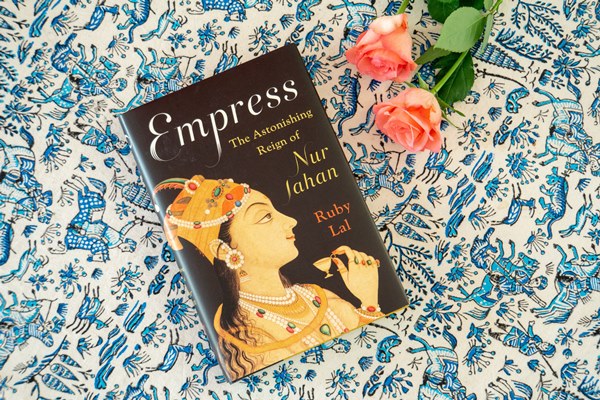
Nur Jahan (1577-1645) was born Mihr un-Nissa, a daughter of Persian nobles who left the repressive conditions of Safavid Iran for the greater freedom–and wealth–of Mughal India. She became Nur Jahan, the Light of the World, when she married Jahangir in 1611. She was an unconventional imperial spouse, because she was not only past the nubile age–she was 34 at the time of their betrothal, but also a widow and a mother. Records don’t tell us exactly how the meeting between Mihr and Jahangir happened. What we know for sure is how much the emperor esteemed his wife, describing her bravery, archery and shooting skills, her wisdom, and her generosity at length in his journal, Jahangirnama.

Continue reading →

Hermes Myrrhe Eglantine : Perfume Review

44444

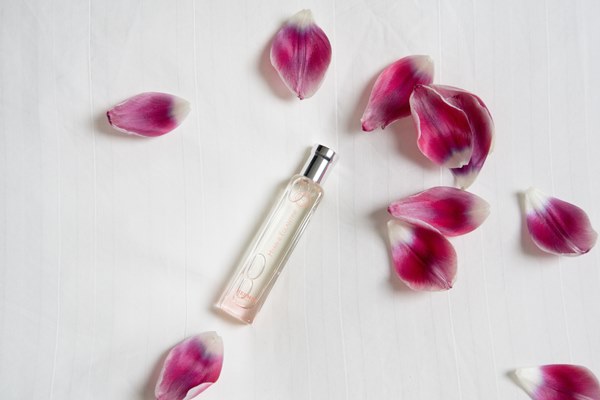
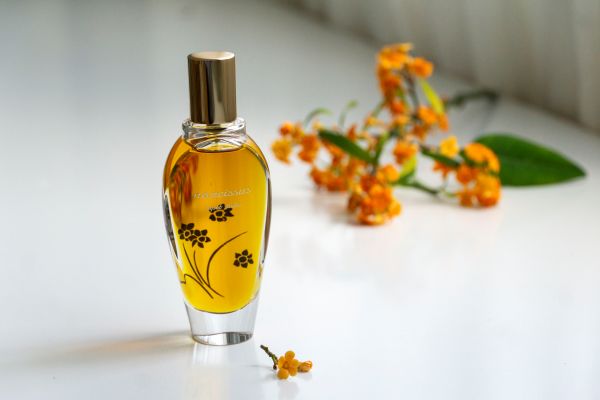
When I first heard of the new Hermessence collection, with its ouds and myrrhs, I was apprehensive. The previous additions to the line were all sheer, opaline and ethereal, and I couldn’t see how Middle Eastern inspiration could continue the same aesthetic. As it turns out, I underestimated Christine Nagel, the current in-house perfumer for Hermès, because Agar Ebène, Cèdre Sambac, Myrrhe Églantine, Cardamusc and Musc Pallida have the radiance that gives the house’s perfumes its distinctive quality. They also have curves and sensuality.

Myrrhe Églantine is the most classical of the five new Hermessence fragrances and the one that pays the most homage to an existing perfume, Rose Ikebana. Created by Jean-Claude Ellena, Rose Ikebana was one of the most underrated gems from the collection. Yes, it’s a pretty, fizzy rose, but it also had a level of precision and refinement that few other fresh roses possess. Myrrhe Églantine plays with the same shimmering effects, but it sets the rose against a velvety background.


Continue reading →

Neela Vermeire Creations Niral : Fragrance Review

55555

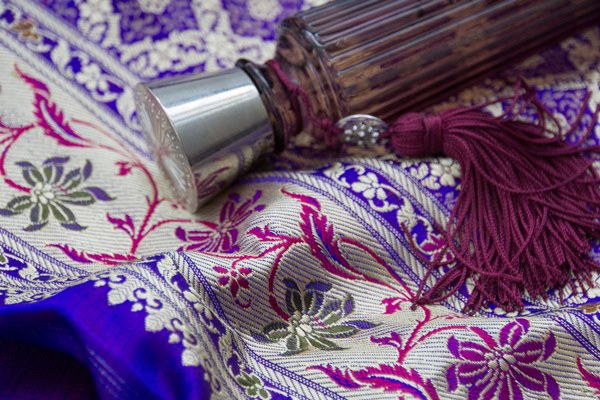
My saris are my personal archaeological layers. The turquoise and saffron one was bought from a market in Pune on my very first trip to India. The magenta one with the border of gold thread woven into the peacock pattern came from a cavernous shop in Gujarat, where I sat in a hot daze surrounded by towering stacks of silks. The hot pink one with the silver embroidery was a nod to Mumbai fashions circa 2005 picked up on a whim, along with matching bangles. The sienna and orange one was given to me on my wedding day by my parents-in-law.

My saris live in a box and I wear them only when I’m in India. Here, in Belgium, they don’t feel right. A sari needs the context–the music, the movement, the heat, the chaos of an Indian wedding. So I spread them out on the furniture to enjoy their colors, but I drape myself in a sari-like perfume of layers and folds. Like Neela Vermeire’s Niral, for instance.

Continue reading →

A Rose Like No Other

Rose is a classical flower in perfumery, along with carnation, jasmine and violet. Yet, it need not be interpreted in a classical manner. It can be made either daring or innocent, dark or pale, smoky or soft. I like roses in all of their guises, but some of my favorites are roses with a twist. My FT column, Unusual Roses, was originally prepared for Valetine’s Day, but since I wear these roses all year round, I’d like to take them further into spring.

When the Spanish actress Rossy de Palma decided to create a fragrance, she selected rose as her main theme. While the choice of such a classical flower from the star of Pedro Almodóvar’s Women on the Verge of a Nervous Breakdown might have struck some as surprising, the perfumers Antoine Lie and Antoine Maisondieu weren’t taken aback. They were the co-authors of de Palma’s scent, and when it was released as Eau de Protection (£82 for 50ml EDP) by the niche perfume house Etat Libre d’Orange, the result was anything but staid. As the perfumers knew, rose had many faces, and it could be made as smouldering or as innocent as an artist’s skill allowed.  To read more, please click here.

What are your favorite unusual roses?

Pablo Picasso, 1905, Garçon à la pipe, (Boy with a Pipe), fragment. Private collection

Rose Jam Kyiv Style

If I had to select a few ingredients that define Ukrainian cooking for me, it would be tomatoes, pork and roses. Tomatoes are essential for borsch, stuffed peppers, ragouts and salads. Pork is eaten in all guises, from lightly salted belly fat to roasted ham and garlicky sausages. Roses, on the other hand, are all about sweetness. Almost every yard in our small village near Poltava has a shrub of the so-called jam roses, usually the rosa damascena variety. Rose jam fills the Christmas pampushky, sweet doughnuts, strudels, crescents and crepes. Best of all, it’s eaten alongside a cup of black tea, a taste of Ukrainian summer at its most opulent. (Despite the common stereotypes, Ukraine is not covered with snow for most of the year. Not only is it large enough to contain different climatic zones, the summers are long, hot and bountiful.)

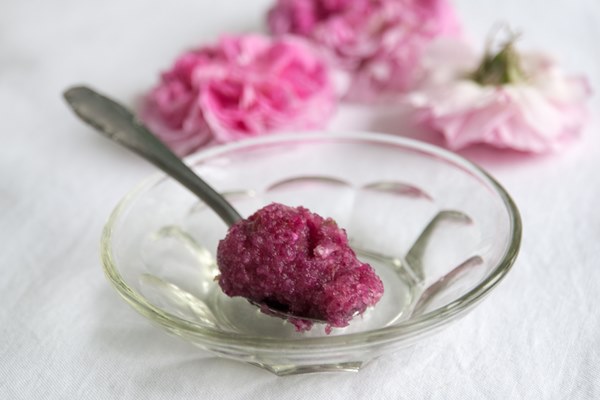
Ever since I’ve revived my great-grandmother’s roses, I’ve been trying different rose jam recipes, such as this delight I shared two years ago. This summer’s experiment is the Kyiv style rose jam, a variety of preserve made without a drop of water. Raspberries, strawberries, blueberries, gooseberries and cherries are the most common fruits used in Kyivske varennia, Kyiv style jam. The fruit is cooked in syrup and then drained and rolled in fine sugar. The result is more of a sweetmeat than the usual runny conserve. The rose jam Kyiv style is different, however. The rose petals are crushed with sugar and no cooking is required.

Continue reading →

As Seen On

Design by cre8d
© Copyright 2005-2026 Bois de Jasmin. All rights reserved. Privacy Policy