Reading Nikolai Gogol in 2017

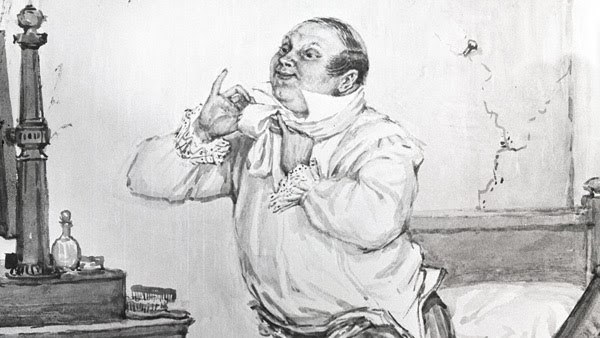
I celebrated Nikolai Gogol’s birthday on March 31st by picking up a volume of Dead Souls. The last time I read it in its entirety was during my school days, and many scenes were so vivid in my memory that picking up the novel again felt less like re-discovering than wandering through a familiar landscape. Gogol, the Ukrainian and Russian dramatist, playwright and novelist, is unrivaled for his sharp satire and colorful language, but what struck me this time is how relevant his observations were to our present day affairs. Today everyone is re-reading Orwell’s 1984, Bradbury’s Fahrenheit 451 and Atwood’s The Handmaid’s Tale, and I’d like to make a case for adding Dead Souls to the list.

Let’s start with one of my favorite quotes in the book. “Absolute nonsense happens in the world. Sometimes there is no plausibility at all.” Yes, a similar thought in different formulations has been coursing through my head a lot lately. Or, “You can’t imagine how stupid the whole world has grown nowadays. The things these scribblers write!” What would be Gogol’s take on our world of “post truth,” “alternative facts,” and “fake news”?

Continue reading →

Petrykivka and Gogol : Colors and Scents

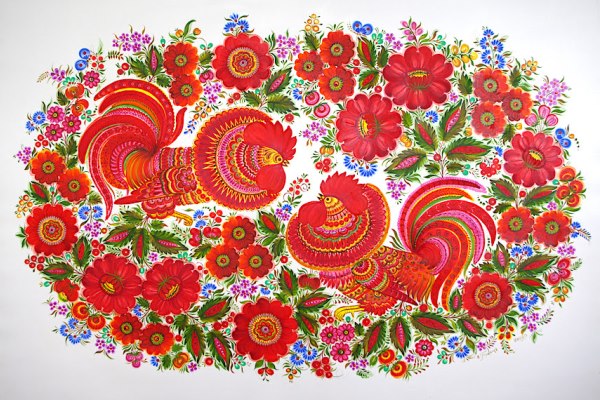
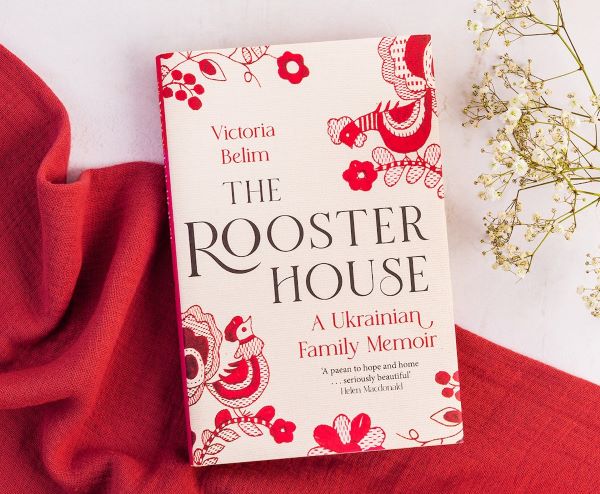
The colors and images of Petrykivka, one of the traditional Ukrainian arts, are vivid and joyous. Fire birds take flight among branches laden with fruit and fantasy blossoms. The artists believed that such colorful images protect people from evil spirits, and looking at the complex and happy ornaments of Petrykivka I can’t help thinking that there is something to the idea of art as talisman.

Petrykivka is considered as Intangible Cultural Heritage of Humanity by UNESCO, and the village of Petrykivka in the Dnipropetrovsk region still boasts many artists. I wrote about my visit two years ago, and anyone can tour the art studios, take a class or simply admire the paintings. Those of you in New York, however, have a unique chance to experience this art in person as The Ukrainian Institute of America hosts the exhibit Petrykivka: A Ukrainian Folk Phenomenon and Living Tradition from April 8 to April 30. The collection presented is based on discoveries by Natalie Pawlenko and Yuri Mischenko and features 47 paintings by some of the most renowned Petrykivka artists.

Continue reading →

Woods : Scents and Words

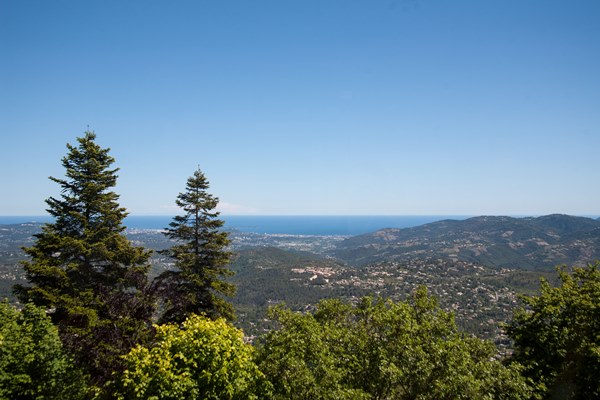
For our edition of scent diary today, I’ve selected woods as our theme. You can describe your favorite perfume that contains woods such as cedarwood, sandalwood, rosewood, etc. Although it’s a leaf, patchouli is classified as a woody note. Or you can pay attention to your environment throughout the day and see if you can notice a woody aroma–coffee, cloves, pepper also have nuances reminiscent of woods.

One of my favorite woods is cedarwood, a wood redolent either of fresh sap and violet petals or of pepper and soft smoke. In perfumery, the note called cedarwood usually comes from a type of juniper, although the precious Atlas cedarwood is also used for its plush honeyed effect. Another popular cedarwood is a synthetic called Iso E Super. To experience it unvarnished, you can try Escentric Molecules Molecule 01, which is a solution of Iso E Super, or Hermessence Poivre Samarcande, which overdoses Iso E Super.

Extra Reading: Perfumes with Cedarwood Notes

Photography by Bois de Jasmin

The Shifting Contexts of Perfume

Could other factors, apart from the aroma itself, influence our perception of perfume? Yes, of course, and this is not limited to fragrance. Elisa explores the topic.

A few years ago, I went to a nearby wine shop to stock up for a weekend in the mountains with some old college friends. A representative from a local winery intercepted me in the red blends aisle and implored me to try a bottle of his family’s wine. Colorado is not known for its vineyards, but I went along in the spirit of adventure, bonhomie, and perhaps a touch of pity.

When we got to the mountains, I warned my friends (occasional wine snobs) that I couldn’t vouch for the quality of the local wine. Since we were all sure it would be bad, we saved it until the end of dinner, a couple of bottles in. When we finally opened and tasted it, we were blown away—it was utterly unusual, with the complexity and creaminess of a good Bordeaux but some additional, unplaceable quirk that made it compulsively drinkable. I was sad when it was gone.

Continue reading →

The Vetiver of Spring : Season’s Favorites

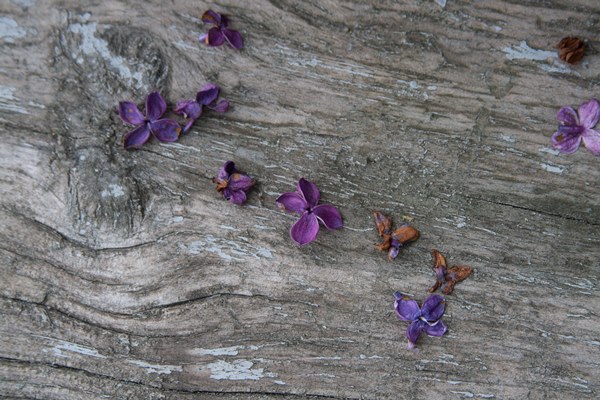
Patricia enjoins spring to arrive faster with a selection of vetiver favorites–and a few salty woods and violets.

Spring in New England takes its time in coming. As I’m writing this, a blizzard is raging, and the blooming heather at the end of the driveway is covered in snow. But I know that the snow and ice will reluctantly give way, the earth will gradually thaw, and what is somewhat affectionately called “mud season” will begin. During the melting phase, my favorite fragrance is L’Eau d’Hiver by Frédéric Malle Editions de Parfums. Creator Jean-Claude Ellena perfectly captures with transparent powdery iris, the sensation of the run off of melting snow into a cold mountain spring. Though it doesn’t last long, the musks evolve into a soft skin scent that is a pleasure to wear.


Vetivers

The vetivers, too, bring to mind the first weeks of spring and the anticipation of change. The dryness of Lalique Encre Noire with its cypress and dark woody notes suggest the raw, hard earth not yet ready to give way to new growth. Unlike L’Eau d’Hiver, it lasts a good six to eight hours, softening gently in the drydown process.

Continue reading →

As Seen On

Design by cre8d
© Copyright 2005-2026 Bois de Jasmin. All rights reserved. Privacy Policy