The Vetiver of Spring : Season’s Favorites

Patricia enjoins spring to arrive faster with a selection of vetiver favorites–and a few salty woods and violets.

Spring in New England takes its time in coming. As I’m writing this, a blizzard is raging, and the blooming heather at the end of the driveway is covered in snow. But I know that the snow and ice will reluctantly give way, the earth will gradually thaw, and what is somewhat affectionately called “mud season” will begin. During the melting phase, my favorite fragrance is L’Eau d’Hiver by Frédéric Malle Editions de Parfums. Creator Jean-Claude Ellena perfectly captures with transparent powdery iris, the sensation of the run off of melting snow into a cold mountain spring. Though it doesn’t last long, the musks evolve into a soft skin scent that is a pleasure to wear.
Vetivers

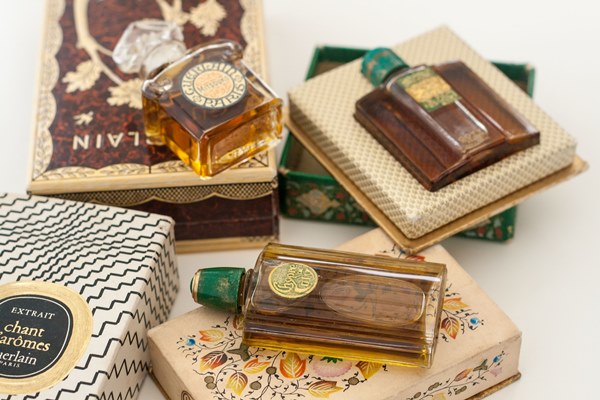
The vetivers, too, bring to mind the first weeks of spring and the anticipation of change. The dryness of Lalique Encre Noire with its cypress and dark woody notes suggest the raw, hard earth not yet ready to give way to new growth. Unlike L’Eau d’Hiver, it lasts a good six to eight hours, softening gently in the drydown process.
Continue reading →

Persian Olives in Walnut-Pomegranate Sauce

For the symphonic complexity of Persian cuisine, with all of its rice pilafs bathed in saffron and rosewater, meats flavored with dozens of herbs and desserts made out of nuts and flowers, it’s the simplest dishes that illustrate most fully the imaginative riches of this venerable culinary tradition. It can be said that Persian cuisine is the closest relative to perfumery. It’s based on accords and notes.

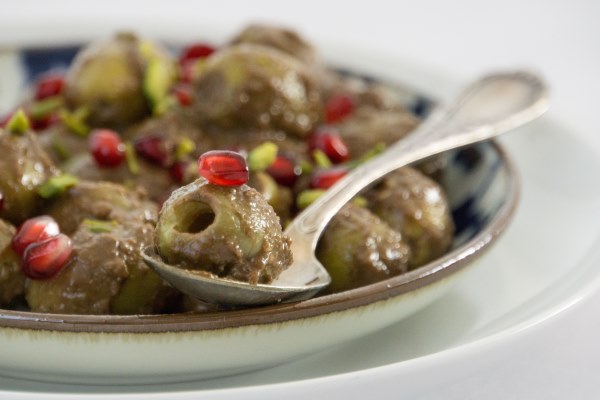
One of the most popular accords is walnut and pomegranate. It’s a perfect harmony of sweet and sour, delicately smoky and fruity. You can build plenty on this base, but one of my favorite recipes is a simple blend of green olives in a walnut-pomegranate sauce. The dish is called zeytun parvardeh, which means preserved olives, but with the word “parvardeh” having the secondary meaning of “nourished,” it also makes me think of olives that have been well taken care of before they ended up on my plate. You will be too after tasting this dish.

Continue reading →

Scents and Words : Spring Fragrances

How do you describe something as intangible as a scent? It’s less difficult than it seems, and the only way to get better at it is to practice. So let’s do it together by describing our favorite spring aromas.

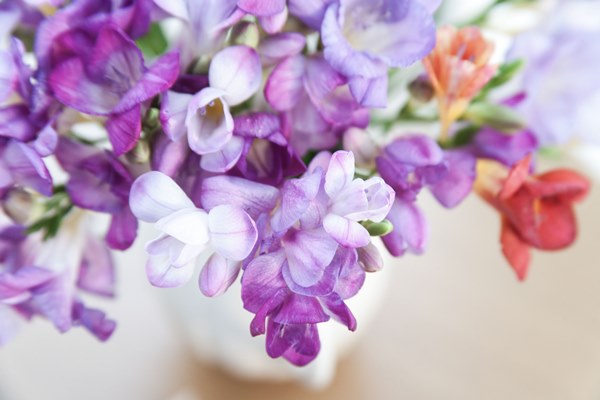
I will start with freesias, which are some of my favorite spring flowers. They smell of Concord grapes with a touch of violet and black pepper. They are sweet, lush and unexpectedly dramatic for such dainty blossoms.

You can also use the space here like a scent diary–for sharing what perfumes you’re wearing or what smells, good or bad, you notice around you.

The Ordinary : Review with Sample Routines

The Ordinary is a relatively new skincare brand that did something so radical that it caught everyone’s attention. It showed that you can make effective skincare products at affordable prices. I realize that the internet is full of reviews of these products, but since I have tested them for over a year, I feel confident to give my opinion on the results. I also would like to share a few sample routines.

Deciding how to use The Ordinary is something I found difficult in the beginning. My skin is combination, and it can be capricious. The brand promotes its products as inexpensive, and while it’s true that many are under $10, the collection is enormous and if you buy everything indiscriminately you can easily spend a hefty sum. So which products to get? In what order to apply? How to combine several serums into one routine? The Ordinary skincare products don’t fall into the usual toning, firming, hydrating categories, so figuring out how to use them–and how to maximize their benefits–took some research. The Ordinary website gives a few regimen suggestions, but it still left me slightly confused. Below is what worked out best for me, although it’s by no means the only way to use The Ordinary.

Continue reading →

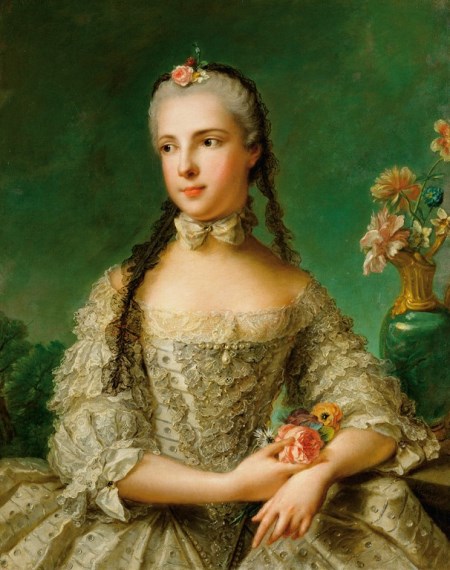
“I’m Dying of Love for You” : The Letters of Isabella von Parma

I returned from my recent trip to Vienna bringing back not only an obsession with Johann Georg Pinsel, but also with Isabella von Parma (1741-1763), who lived at the same time as the mysterious 18th century sculptor. Isabella was one of the most remarkable personalities of the 18th century, admired for her achievements in art, music, and philosophy. The reason I became fascinated with her, however, was an excerpt from a letter she wrote to her sister-in-law, Marie Christine of Austria. “I am told that the day begins with God. I, however, begin the day by thinking of the object of my love, for I think of her incessantly.”

I am once again struck by the narrow lenses through which we see women in history. In many books Isabella is repeatedly described as “mad,” “tragic,” or “odd.” People search for the roots of her melancholy moods in the family tree and discuss at length the mental problems of her father and her mother’s cold attitude. What about the fact that princesses in the 18th century were little more than breeding mares, and Isabella had half a dozen miscarriages during her short marriage to Joseph II of Austria? The couple was under enormous pressure to produce a male offspring to the Hapsburgs.

Continue reading →

As Seen On

Design by cre8d
© Copyright 2005-2026 Bois de Jasmin. All rights reserved. Privacy Policy