The Italians

Some of the most interesting artisanal brands I’ve recently discovered come from Italy. I won’t venture to generalize about this trend, if it can be called so, although what strikes me about the new Italian creations is the freshness of their approach. They pay tribute to classics, but not self-consciously so, and they stay au courant while avoiding the pitfalls of style versus substance. In my new FT column, Italian Perfumes, I focus on two fairly new niche houses, Antonio Alessandria Parfums and Rubini Profumi, and explain what makes them stand out.
sicily1sicily2

Wearing their perfumes reminded me why I love the Italian take on elegance. It has a sense of humor.

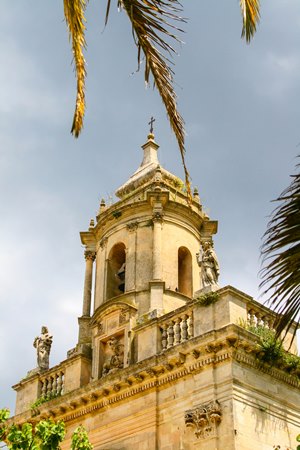
“Classic Italian perfumery has a reputation for flamboyance – embodied by the Cinecittà glamour of Sophia Loren, as well as the gold tan and bleached-blonde aesthetic of Donatella Versace. It may be a cliché, but one need not be a marketing specialist to notice that Italians wear scents differently from the French or Germans. Women enjoy lush white florals with a touch of powder for an enveloping, lingering effect. Men aren’t shy about donning sweet perfumes and using them to make a statement. Encounter such a fragranced denizen cutting la bella figura at an outdoor café some place in Rome or Palermo, and you’ll understand better Italy’s penchant for the baroque. To continue, please click here.”

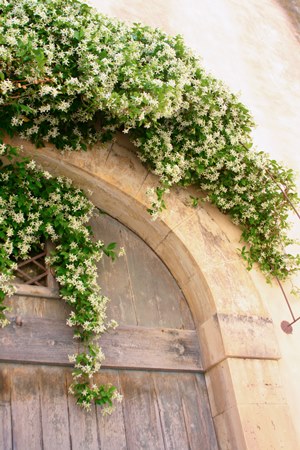
Do you have any favorite Italian fragrances? Apart from the bottled sort, mine would be the wet vetiver and iris smell of Milan, freshly baked pizza bianca with rosemary, lemon groves off the Amalfi coast, and the shamelessly lush Sicilian jasmine.

Photography by Bois de Jasmin, all rights reserved

Sandalwood Scented Dreams

India and sandalwood. Long before I became interested in perfume as vocation, I knew of this connection. More than a stereotype, it reflects the significance of this wood in India’s traditions, from birth to death, from a wedding to a funeral. Sandalwood makes one’s skin more beautiful and gods more pleased. It smells divine. In my new FT column The Scent of Sandalwood, I explore how Indian and modern European perfumery were inspired by this precious material. Also, I touch upon an issue that rarely clouds the romantic accounts of Mysore sandalwood groves–their overharvesting and near complete devastation.

puja

“My mother-in-law rubbed a piece of pink-coloured wood on a rough stone until it turned to paste. My husband and I were about to travel back to Europe and in the Hindu custom my mother-in-law performed a puja, an act of worship, to ensure our safe journey. She lit joss sticks around the deities and dabbed some of the paste on the figurines of gods arranged on her small altar and then on our foreheads – the fragrance of sandalwood rose in the warm air. Many hours later as I sat in the plane, the creamy, floral perfume lingered around me, carrying with it the memory of a caring touch.” To continue, please click here.

One of my favorite sandalwood perfumes today–it uses a mixture of Australian and synthetic sandalwood–is 10 Corso Como. A niche classic. Do you enjoy sandalwood?

Photography by Bois de Jasmin, all rights reserved
Reading for Late Summer Days

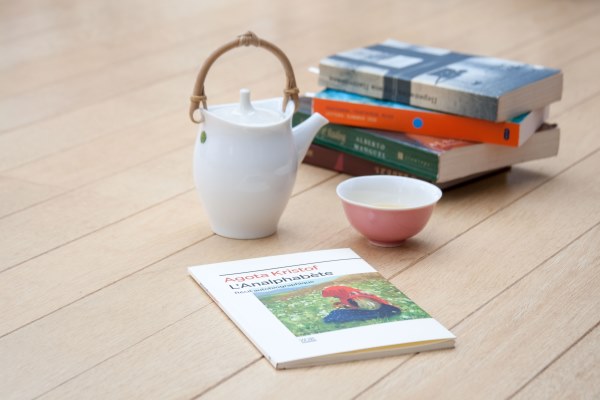
It’s the time of les vacances in Brussels. The streets are quiet. The parks are deserted, especially during the week. This summer tourists have taken the warnings of their home countries to heart and have mostly stayed away. I have the city to myself. So I take a book to a park, sit on the grass and read. (It’s a rare luxury in these parts, a fact demonstrated by the distinct lack of outdoor scenery in my picture. It started raining just when I had time for a photography session.)

books summer recommendations

The question then becomes what book to pick. A romance, a detective novel or a great classic? Walt Whitman once commented that the only reason he didn’t become overwhelmed by a steady diet of Sophocles, Homer, Aeschylus, and Dante was “likely because I read them… in the full presence of Nature, under the sun, with the far-spreading landscape and vistas, or the sea rolling in.” My selection is less lofty–simply some of my new and old favorites.

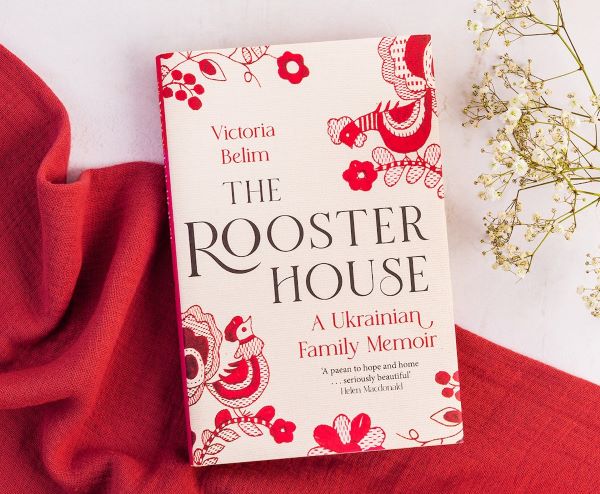
Agota Kristof The Illiterate

It’s fitting that I discovered the work of a Hungarian writing in French while reading a book by an American author writing in Italian. In her explorations of self and language, In Other Words (see my review), Jhumpa Lahiri mentioned being touched by Kristof’s experience. Kristof was born in Hungary and moved to Switzerland in 1956 as a refugee, and while she gained safety, she ended up in a social desert as she lost her language. The Illiterate is a series of stories about her love of reading, her family, her writing. They are tragic but also hopeful, and I related to them. I didn’t cross a frontier as an infant and didn’t have to work at a Swiss watch factory while writing poetry in my spare minutes, but having left the place where I was born, relatives, friends, and the familiar language(s), I can understand the anguish.



Continue reading →

Odacite Jasmine Blueberry and Rose Pomegranate

Claims of something being all-natural and organic aren’t a selling point for me. Not only do I find the pseudo-science and scaremongering that often come as part of the organic bundle off-putting, I have enough familiarity with the beauty industry not to take any breathless promises seriously. It doesn’t mean that there aren’t wonderful brands out there who take their organic ethos seriously and provide excellent products. But organic or not, you still have to read the ingredient labels and take any claims with a grain of salt.

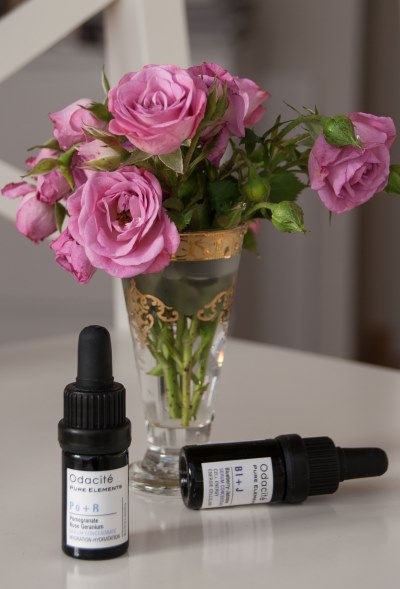
odacite1

If I would have come across Odacité via its site that hypes the toxin-free, chemical-free aspect of the line, I might have skipped it. Luckily, I learned about it from a friend whose recommendations have never misled me. Odacité’s core comprises blends of oils, mostly exotic varieties such as blueberry seed, pomegranate, baobab or black cumin, and if you’re looking for a hydrating oil-based serum to add to your skincare, they’re a good choice.

Continue reading →

The Layered World of Anand Ram Mukhlis

Bureaucracy rarely conjures positive associations in most people’s minds, and for someone who faces far too much of it, I may not seem like the kind of person who goes into raptures over bureaucrats. Yet, Anand Ram Mukhlis (1699-1750)* is an exception, and he is easily one of my favorite historical personages. Born into a Hindu family in the north of India, he practiced a trade that wouldn’t be out of place in Washington DC or Brussels. Like his grandfather and father, he was a personal representative at the Delhi imperial court for the prime minister and for the governor of  Lahore and Multan provinces. A lobbyist, if you will.

muhammad shah

Emperor Muhammad Shah with courtiers, ca. 1730

The most lasting achievement of Anand Ram Mukhlis was in his scholarly and creative work. He wrote poetry, chronicled contemporary events and compiled manuals on the proper use of Persian. His mastery of the language was such that the emperor Muhammad Shah himself requested his services as a letter writer when he wanted to communicate with the Safavid court in Iran. One of the images I used to illustrate this article is a copy of Mukhlis’s advice on developing one’s writing style in Persian. It’s titled “Fairy House,” which gives you a clue as to the ornate stylistic tools he proposed.

Continue reading →

As Seen On

Design by cre8d
© Copyright 2005-2026 Bois de Jasmin. All rights reserved. Privacy Policy