Postcard from Ukraine : Pysanky

Khristos Voskres! Христос воскрес! Χριστὸς ἀνέστη! Happy Easter to all who celebrated over the weekend.

This year was the first time that I tried my hand at making pysanky, decorated eggs that are an essential element of the Ukrainian holiday. This tradition is much older than Christianity, attested by the fact that painted eggs are part of the Persian vernal equinox celebration, Nowrouz. Pysanky is one of the most distinctive Ukrainian arts, and every region has its own design and technique. The motifs can be religious–angels, Virgin Mary with a baby Jesus, a cross, or more commonly, flowers, leaves, birds nesting in tree branches and geometrical motifs. The design is first made with beeswax and then the egg is colored.
pysankycherry blossoms 2016-1

As you can see, I first colored my egg yellow and then added more wax on the parts I wished to remain yellow. After this was done, I colored the egg red.

Photography by Bois de Jasmin
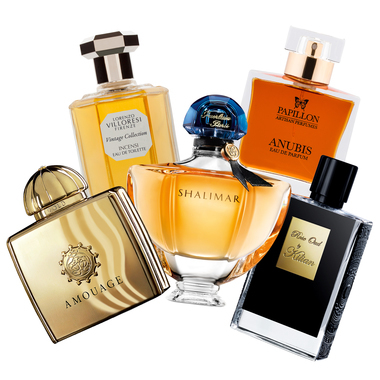
Perfume and Orientalism

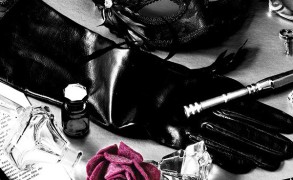
In my weekly FT column Scents of the East, I’m taking an oriental family to task. What makes perfumes “oriental”? What does this term mean? Is it any useful?

ft

The world of perfume press releases is one in which Edward Said never wrote Orientalism. Odalisques lounge in the incense-scented harems of marketers’ imaginations. The Mughals are still ruling India, and the Arabian Desert is a vast expanse of golden sands populated with handsome explorers – no oil wells in sight. There is even a fragrance family called “oriental”.


The article is no longer online, but you can continue following the discussion via Is It Time to Rename Oriental Fragrance Family?

Image via FT

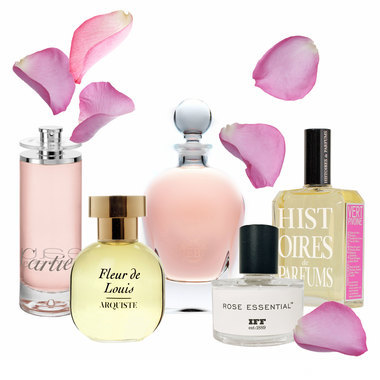
10 Pastel Perfumes for Spring

Elisa feels the lure of spring.

Part of the pleasure of browsing a makeup counter – and why I’ll always buy more makeup than I need – is the impression that I’m handling color in its pure form. Not just lipsticks but pigment: art and possibility. It’s the same flavor of childlike glee I feel when looking at a wall of paint swatches or the bulk bins in a candy store. As a kid I even organized my books in “rainbow order” on the shelves.

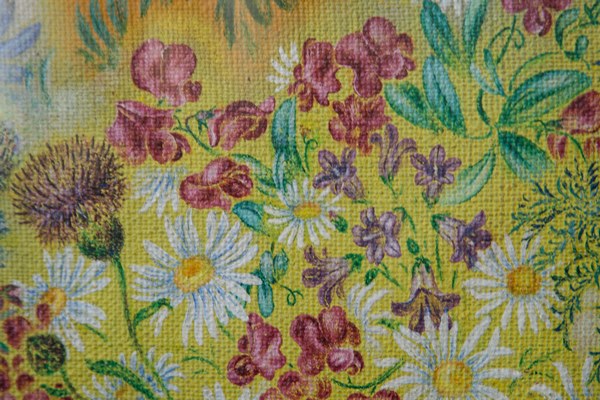
kateryna bilokur

Around March the mannequins in window displays all seem to be wearing pastels. I never buy these clothes; like bows and Peter Pan collars, pastels just don’t suit me. But I can participate in the traditional color scheme of the season with perfumes that smell like springtime shades instead.

Here are ten soft, pastel-hued perfumes (in spectral order, no less) I recommend.

Diptyque Eau Rose

I love weird roses, dark roses, spicy roses, mossy roses…I’ll take them all. But sometimes, especially in spring, a perfectly pretty, pastel-pink rose with little adornment fits the bill. Enter Eau Rose, which is dewy and fresh with a citrus lift.

Continue reading →

Postcard from Ukraine : Willow Sunday

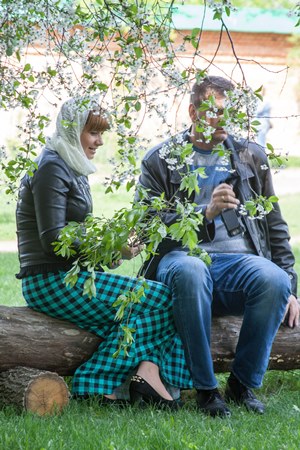
It took me a moment to connect the green fragrance reminiscent of jasmine buds and apples with the bunch of willow branches I held in my arms. I bought it at the entrance to the Mgarsky Monastery in Lubny, and I now stood in line to have my willow branches blessed by the priest who walked around the church courtyard, sprinkling people and their willow bouquets with holy water. Since palm trees don’t grow in Ukraine but willows do, the Sunday before Easter is called Willow Sunday. Mine smelled of sweet incense and willow blossoms.

willow treewillow sunday1

Continue reading →

Rosewater Essence

One of my recent FT columns is all about rosewater, a by-product of rose oil production. After the steam distillation runs its course, there remains a fragrant liquid, or rosewater. It’s used in cosmetics, food, medical preparations and home scents. Rosewater is not stable enough to be used in perfumery, but many rose oil producers have started re-distilling the rosewater and making so-called rosewater essence, or extract. It’s less expensive than rose oil and is packaged with words like sustainable and environmentally friendly, which it may or may not be. Nevertheless, it’s a curious product, and perfumers have been using more of it to create a fresh petal effect, or to soften the outlines of synthetic floral accords.

rosewater

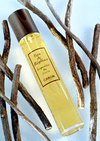
The 11th-century Persian philosopher and scientist Avicenna is credited with many contributions to astronomy, geography, psychology, logic, mathematics and physics. He also found time to delve into perfumery and devised methods to extract essential oils, experimenting on roses. If Avicenna were to step into a fragrance lab today, he would orient himself quickly enough – modern perfumery is a curious amalgam of traditional techniques with state-of-the-art technology. Indeed, rose oil is prepared in much the same way as in Avicenna’s time – through the process of steam distillation. Continue here.

Previously, I also wrote about my favorite ways with this rose-scented liquid. Do you use rosewater? 

Image via HTSI

As Seen On

Design by cre8d
© Copyright 2005-2026 Bois de Jasmin. All rights reserved. Privacy Policy