Learning Scents (or Words) : A Few Tips

Recently I was making a new series of videos on learning languages, and as I was jotting down notes on learning words, I realized that for my studies I use the same memorizing techniques that I had used to learn ingredients in perfumery school. I wonder if my language learning didn’t accelerate during my training. After all, memorizing something intangible like a scent is even harder than memorizing a new word. Either way, I would like to share my tips on retaining smells in your memory, and you can see how you can apply these techniques to memorizing anything else.
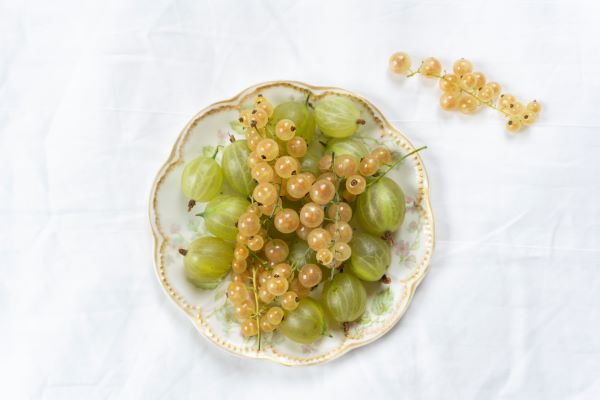
If you wish to have a set of oils or spices ready, I recommend starting with no more 3. It might seem like very little, but if you learn to memorize those three scents and learn to pick them out in a blend, you can expand your exercises to a much greater number. Polish your technique with a few scents at a time.

For instance, my recommended smells for learning would be the following three: lemon (you can use the real fruit by scratching the peel), clove (you can use spices that you have at that time), and vanilla (you can use extract). You’re likely to have them already, and they’re used a lot in perfumery. Just because they’re familiar, however, don’t assume that you know all of their facets.

I emphasize the parallels with language studies to help you find your own connections. I’m sure all of you have pursuits that require memorization, so you can rely on the same techniques for learning aromas. Your techniques might differ from mine, but it doesn’t matter as long as they are effective.
Continue reading →

Tuberose Perfumes for Men and Women – The Most Voluptuous of Flowers

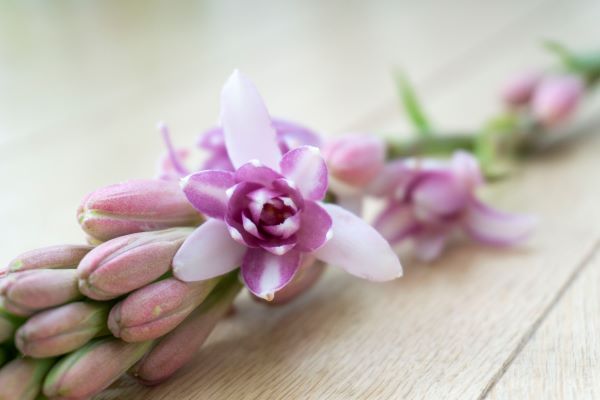
What flower evokes all things lush and sensual to you? To me, it would definitely be tuberose. This blossom has many elements that make it complex and voluptuous, from the sweetness of its fruity facets to the creaminess of its coconut facets. Tuberose contains lactones, hence the coconut effect, but it also includes indoles, aroma-molecules that lend it a particularly smoldering and intriguing character. So nuanced is tuberose absolute that with few adjustments it can be made into a proper perfume. On the other hand, so distinctive is tuberose that a clever blend of coconut and another white floral can give a believable tuberose effect to a floral bouquet.

Talking about tuberose, I think that it makes sense to expand the discussion and include a few more excellent examples as well as to highlight tuberose scents that would work for men. This note lends itself to experimentation.

Continue reading →

How To Give Perfume as Gift–Or Not

What kind of perfume do you give as a gift? In my experience, selecting the right perfume for a gift is tricky, because guessing someone’s taste is difficult. Even if your gift recipient likes roses, there are no guarantees that the rose fragrance you’ll select will appeal to them. For this reason, I generally advise against giving perfume as a gift, unless you have the other person’s wishlist.

Scented gifts, on the other hand, are my favorite kind of presents to prepare. For instance, scented soaps, candles, incense or interesting home fragrances are always welcome. Likewise, I enjoy giving and receiving food gifts, and here the limit is your imagination–tea sets, jams, honeys, spices. My favorite recent gift was a package from my Iranian friend filled with saffron, cumin, cardamom and sweet-sour dried plums. Every time I use cardamom in my coffee or sizzle cumin in oil to top a vegetable dish, I think of her.

Continue reading →

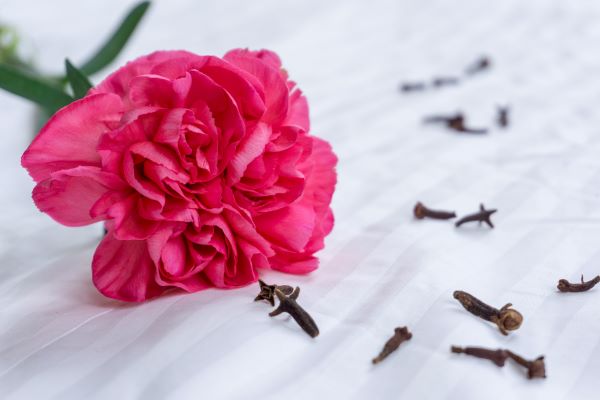
Carnations, Cloves, Eugenol : A Short History

Carnation is not the trendiest of floral notes, and yet modern perfumery would be unthinkable without it–or specifically, the carnation effect. One of the principal aroma-molecules in the essence of carnation is eugenol, and its discovery was revolutionary. In 1834, eugenol was synthesized by Carl Jacob Ettling. In 1858, it was studied and named by August André Thomas Cahours, another brilliant chemist, whose contributions to organic chemistry are numerous. If you wish to know what eugenol smells like, sniff a pot of cloves. There is a reason why Ettling turned to this spice to obtain eugenol–clove essence contains up to 90% eugenol, depending on the variety.

Eugenol was and remains important not only in perfumery, but also in pharmaceuticals, cosmetics, the food industry, and above all, dentistry. It’s known as an effective pain reliever, and to this day, it’s mixed into zinc-oxide-rosin cements for certain types of fillings. For this reason, those who have had the misfortune of experiencing root canal work associate the scent of cloves and carnations with the dentist’s office.

Continue reading →

6 Luminous Musk Perfumes

Why should summer be all about colognes and fresh florals? Why not don a plush tuberose or a bittersweet chypre? Why not explore how our dark and glamorous favorites behave when the weather grows warmer and days longer? None of the “perfume wearing rules” annoy me more than the set-in-stone seasonal suggestions. I suspect that most of them are designed to make people buy more product, rather than enjoy what they already have. The only rule in perfume is to wear what smells good to you (in quantities appropriate for the occasion, of course). A new season is a new chance to experiment, and there is nothing better than experimenting with your favorites and discovering new facets in them.

Musk perfumes, for instance, are among the most versatile. They can be modulated by the type of application. They linger. They range from heavy and warm to radiant and bright. With this in mind here is my list of summer musks–although I wear them all year round.


Continue reading →

As Seen On

Design by cre8d
© Copyright 2005-2026 Bois de Jasmin. All rights reserved. Privacy Policy