The Beauty of The Old-Fashioned

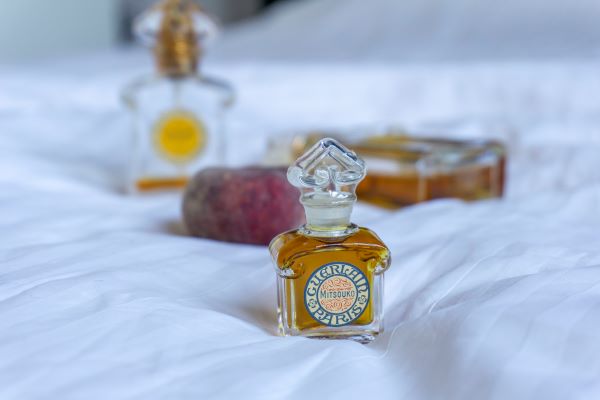
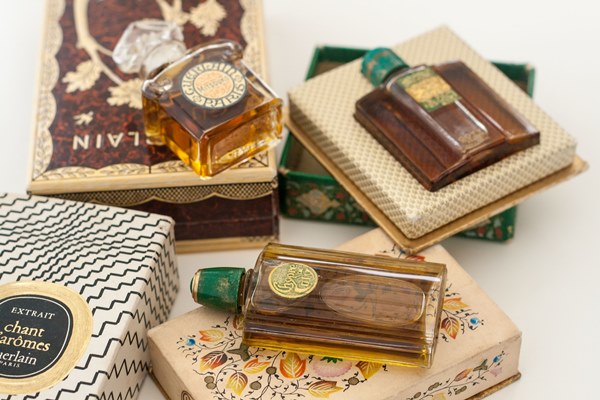
Lately I’ve become fascinated by perfumes that I’d characterize as old-fashioned. Or if you don’t like the word, vintage or retro. Despite the cliches of timeless and unchangeable, many perfumery styles become associated with the time and place that gave rise to them. The aldehydic floral perfumery exemplified by Chanel No 5 echoes the early decades of the 20th century. Bold green chypres scream the 1970s, and I dare anyone to spritz on Dior Poison and not think of the glitz and glam of the 1980s. Decades later, these styles read as evocative of another time, and yet that’s part of their appeal. If I want some escapist fun, I reach for powdery carnations, shimmering aldehydes and creamy tea roses.

There are many reasons why calling some of my favorites old-fashioned doesn’t trouble me. For one thing, working in a perfume lab, I’m so used to hearing styles described as “old” or ”new” that I don’t ascribe value judgments to these terms. Perfumers don’t usually intend it. Some styles are older than others such as chypres, and they still retain their appeal. Some new styles lose their novelty after a few seasons like the savory gourmands.

Continue reading →

Dungan Spice Blend and Summer Salad : From Bishkek Via Brussels

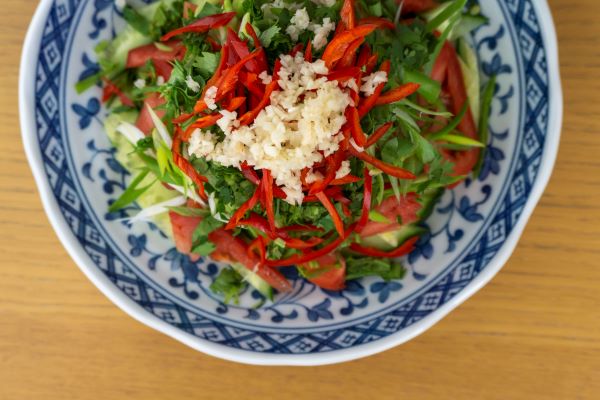
Last weekend I had a cooking class with Zulfiya Ma Tian Yu of Dungan Food. Zulfiya lives in Bishkek, Kyrgystan, but we managed to overcome the Bishkek-Brussels distance by a combination of video and WhatsApp. Thanks to  modern technology, I’ve learned the basics of this ancient cuisine. The Dungans are a community of Muslims of Arab-Chinese descent living in Central Asia, mostly in Kyrgyzstan and Kazakhstan. Originating from Western China, where the Dungans are known as Hui, this community has a distinctive identity, amalgamating various cultural influences. Its cuisine is likewise diverse, vibrant–and different from the cuisines of their immediate neighbors.

Imagine the sophisticated seasonings of Persian cuisine, intricate Chinese techniques and the robust Central Asian palette–and you get an idea of what Dungan food is like. There are noodle dishes served with an array of dozens of salads and sauces, dumplings filled with lamb and pumpkin, and paper-thin crepes for wrapping stir-fries of garlic chives and pepper. Each meal is served with plenty of vegetables, and everything is cooked just enough to enhance the natural flavors.

Continue reading →

The Beautiful Lactones : Of Peaches, Cream and White Flowers

What are lactones and why are they so enticing? As their name hints, lactones are organic compounds with a milky, creamy scent. Lactones lend their characteristic scent to peaches, milk, tuberose and even spicy vegetables like celery and lovage. They occur in white meat, which is one of the reasons why prosciutto and mozzarella or prosciutto and fruit make for such a delectable combination.

With their voluptuous qualities, lactones are well-suited to perfumery and they are among the most commonly used materials. The most famous example of the use of lactones is Guerlain Mitsouko. As I’ve explained in my previous article, in 1919 Jacques Guerlain experimented with gamma undecalactone, which had been discovered only a few years earlier. He found that when he wove this peach skin-redolent material into a dramatic mossy-woody accord popularized by Coty Chypre in 1917, the effect was that much more vivid and luscious. The rest, as they say, is history.

Continue reading →

Guerlain Eau de Cologne du Coq, Eau de Fleurs de Cédrat and Eau de Guerlain

44444

With the start of summer it seems natural to reach for a cologne. This style of fragrances based on citrus is uplifting and bright, and wearing a cologne is a low-commitment affair since it lasts on skin for only a few hours, leaving behind a memory of freshness. Of course, these days there are many different colognes, some promising an all-day citrus blast and others treating the most un-cologne-like notes like sandalwood, roses and musk in the style’s gossamer lightness. For my part, I recommend visiting three classics from Guerlain: Eau de Cologne du Coq, Eau de Fleurs de Cédrat and Eau de Guerlain.

Not only does the trio offer a range of styles, it gives a great overview of the house’s signature and the way it evolved over time. The fragrances were created by three perfumers representing different generations of the Guerlain family–Aimé Guerlain with his fin-de-siecle sensibilities, Jacques Guerlain renowned for his technical mastery and Jean-Paul Guerlain, the renegade. One need not have all three colognes in one’s wardrobe, but each is distinctive enough to be worth comparing.

Continue reading →

The Simple Magic of a Soap Bar

For many people around the world soap is the only scented product they’d use. Fine fragrances are out of their reach. I remember my grandmother Dasha using strawberry-perfumed soap to scent her clothes and linens. Dasha was frugal, and she wouldn’t dream of spending money on anything but the most basic clothes and accessories. A fragrant soap bar, however, was her only indulgence.

When I began my perfumery training, soap projects attracted me because I imagined that my creations would delight someone like Dasha–a person reluctant to spend money but who enjoyed scents. Eventually I too became a soap lover and whenever I traveled, I first visited local pharmacies and markets to see what kind of detergents people used. These days I have a special soap basket loaded with soaps from around the world. They reflect local tastes and traditions, such as the birch tar soap from Siberia, rice and turmeric soap from Thailand or pomegranate scented soap from Iran. The little bars of fat, solidified by being treated with lye, delight me as much as fine perfumes.

Continue reading →

As Seen On

Design by cre8d
© Copyright 2005-2026 Bois de Jasmin. All rights reserved. Privacy Policy