Postcard from Uzbekistan : Desert in Bloom

Every spring the Kyzylkum Desert lives up to its name, which means red sand, by turning crimson. Except it’s not the sand that gives it its vibrant hues, but the wild poppies. Located in Central Asia and shared between Uzbekistan, Turkmenistan and Kazakhstan, it encompasses the region historically called Sogdiana or Transoxiana. Traveling in Uzbekistan for my new research project into the cultural history of aromatics has been full of such discoveries. This land may be associated for many people with its recent Soviet past, but what are 70 odd years of Soviet rule in a place that counts its history in the thousands of years. Even if the recent past left deep scars, from social to environmental, the more ancient traditions and customs remain.

As do the scarlet flower fields of the Kyzylkum Desert. Alexander the Great crossed it. And so did Genghis Khan and Tamerlane. The remnants of Alexander’s fort still stand in the desert, their ancient ramparts still imposing enough. And the lines of the Persian poet Ferdowsi came to my mind.

Continue reading →

Roses and Honey

Poltava, in central Ukraine, is famous for its honey. Every year the city and its environs host fairs celebrating honey in all its forms, and whenever I visit my grandmother, who is a Poltava native, I enjoy this sweet treat in gingerbreads, cakes, drinks and even savory dishes. One of the most beloved local pairings is first-of-the-season honey drizzled over cucumbers.


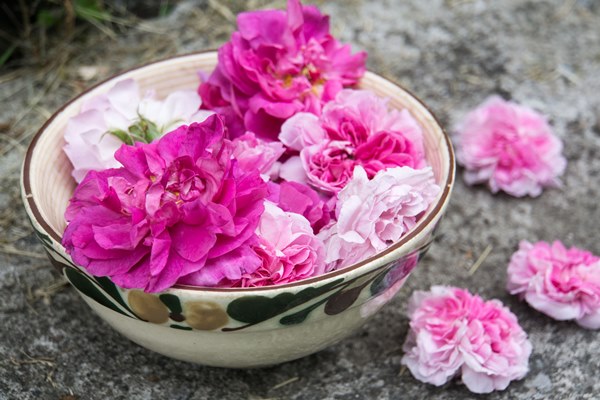
On a recent visit, I discovered yet another way to eat honey – infused with roses. It was heaven. So, for my recent FT column, The Fragrance of Honey and Roses, I’ve decided to recreate this combination and to find fragrances that are build around the rose-honey accord.

Continue reading →

Recommend Me a Perfume : May 2019

Are you looking for a new fragrance? Our “Recommend Me a Perfume” thread is open this week. You can use this space to find perfume recommendations, to share your discoveries and favorite scents, and to ask any questions about scents, aromas and flavors.

How does it work: 1. Please post your requests or questions as comments here. You can also use this space to ask any fragrance related questions. To receive recommendations that are better tailored to your tastes, you can include details on what you like and don’t like, your signature perfumes, and your budget. And please let us know what you end up sampling. 2. Then please check the thread to see if there are other requests you can answer. Your responses are really valuable for navigating the big and sometimes confusing world of perfume, so let’s help each other!

To make this thread easier to read, when you reply to someone, please click on the blue “reply” link under their comment.

Photography by Bois de Jasmin

Wind Through Green Leaves Aoarashi

Imagine right now standing under a tree and hearing the wind rustling through its leaves. If you enjoy this vision, I would like to share a Japanese poem with you.

Wind blowing through green leaves
I see a shrine
And I pray

青嵐神社があったので拝む
Aoarashi Jinja ga atta node Ogamu

Japanese haiku are full of seasonal words, which serve as a guide to the reader. For instance, this charming poem by Ikeda Sumiko (池田澄子, born in 1936) contains the word aoarashi.  It means wind blowing through green leaves and it’s a seasonal word for the fifth month.

Continue reading →

Salt and Flowers

A Japanese friend once served me a cup of sakurayu, a salted cherry blossom tea that she brought from Kyoto. The flowers unfurled slowly in the hot water, turning the liquid a shade of pale pink and infusing it with the aroma of almond and apricot. This springtime drink made me wonder what it is about the combination of salt and flowers that makes it so intriguing. The topic of salt and flowers is the subject of my FT column, Magic of Salt. I explore salty effects in perfumery and the way they can uplift floral notes.

Salt has its own mild scent and, depending on its processing and provenance, it ranges from bitter and iodinated to flinty and flowery. However, the magic of salt is its ability to volatilize the aromas of other ingredients. You can experiment by cutting a tomato in half and smelling it raw. Then sprinkle it liberally with salt, wait for a few minutes and have another inhale. Even if your tomato is an uninspiring greenhouse variety, once salted, it will have a more pronounced perfume. To continue reading further, please click here.

Continue reading →

As Seen On

Design by cre8d
© Copyright 2005-2026 Bois de Jasmin. All rights reserved. Privacy Policy