Perfume 101: 517 posts

Here you can find how to guides to selecting, testing and enjoying scents. Also includes are the lists of our top favorite perfumes for different occasions and articles covering all range of topics related to fragrance. If you’re curious to step inside a perfume lab (or even become an industry professional), this group of essays will be of interest.

The Beautiful Lactones : Of Peaches, Cream and White Flowers

What are lactones and why are they so enticing? As their name hints, lactones are organic compounds with a milky, creamy scent. Lactones lend their characteristic scent to peaches, milk, tuberose and even spicy vegetables like celery and lovage. They occur in white meat, which is one of the reasons why prosciutto and mozzarella or prosciutto and fruit make for such a delectable combination.

With their voluptuous qualities, lactones are well-suited to perfumery and they are among the most commonly used materials. The most famous example of the use of lactones is Guerlain Mitsouko. As I’ve explained in my previous article, in 1919 Jacques Guerlain experimented with gamma undecalactone, which had been discovered only a few years earlier. He found that when he wove this peach skin-redolent material into a dramatic mossy-woody accord popularized by Coty Chypre in 1917, the effect was that much more vivid and luscious. The rest, as they say, is history.

Continue reading →

Guerlain Eau de Cologne du Coq, Eau de Fleurs de Cédrat and Eau de Guerlain

44444

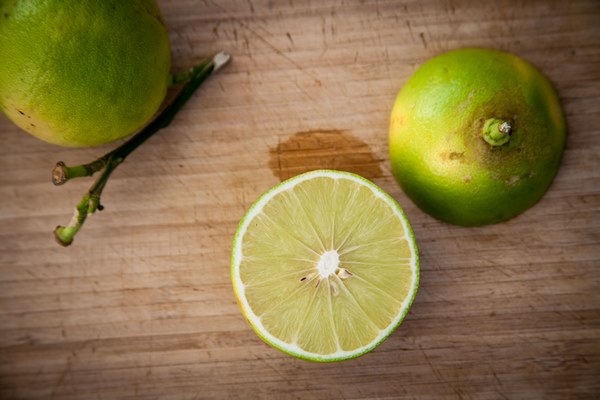
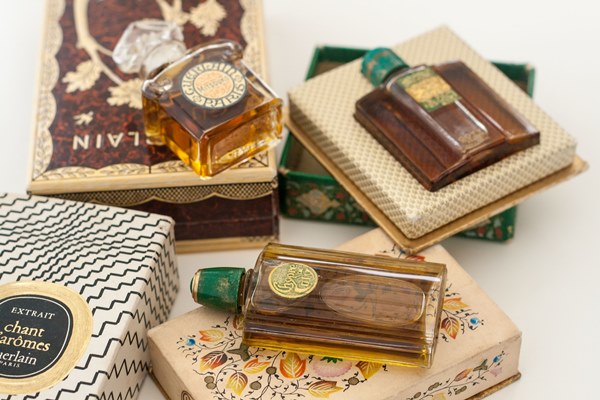
With the start of summer it seems natural to reach for a cologne. This style of fragrances based on citrus is uplifting and bright, and wearing a cologne is a low-commitment affair since it lasts on skin for only a few hours, leaving behind a memory of freshness. Of course, these days there are many different colognes, some promising an all-day citrus blast and others treating the most un-cologne-like notes like sandalwood, roses and musk in the style’s gossamer lightness. For my part, I recommend visiting three classics from Guerlain: Eau de Cologne du Coq, Eau de Fleurs de Cédrat and Eau de Guerlain.

Not only does the trio offer a range of styles, it gives a great overview of the house’s signature and the way it evolved over time. The fragrances were created by three perfumers representing different generations of the Guerlain family–Aimé Guerlain with his fin-de-siecle sensibilities, Jacques Guerlain renowned for his technical mastery and Jean-Paul Guerlain, the renegade. One need not have all three colognes in one’s wardrobe, but each is distinctive enough to be worth comparing.

Continue reading →

Revolutionary Perfume : A Brief History of Chypre

55555

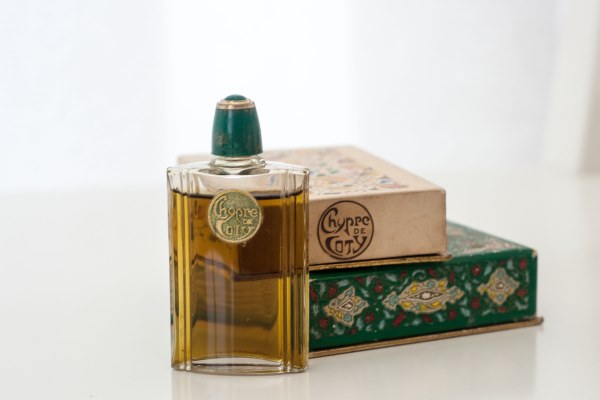
1917 was the year when the Bolshevik Revolution took place. It was also the year when another revolution happened. It wasn’t bloody, its scale was small, but for the history of perfumery it was as galvanizing as the events in Russia for the rest of the world. This revolution was the creation of Chypre by François Coty. The name Chypre referred to the island of Cyprus, which had been famous for its fragrant moss since antiquity, and while chypre-style fragrances, warm and moss-laden, were popular long before Coty’s creation, his Chypre of 1917 was different.


For one thing, Coty wasn’t afraid of making bold statements. To give a heavy note of oakmoss radiance, he used a novel aroma-chemical called isobutyl quinoline. Pure, it smelled pungently of leather and burned rubber, but when used as part of an accord with bergamot, dry woods and moss, its effect became sensual and luminous. Coty then increased the proportion of green notes and added a delicate floral twist. Chypre evoked the Mediterranean sea breeze and lemon orchards and reminded you that even on the most sunlit of days, shadows are present. Dark leather and inky moss provided the dramatic contrast in his composition.

Continue reading →

15 Years of Bois de Jasmin : The Essentials

What is the place of art in difficult times? The world has changed within a matter of weeks in a way that most of us couldn’t have envisioned as we celebrated the start of 2020, and it’s right that we recalibrate our priorities and ask complex questions. Most of my work these days involves research into health and science topics, but as a writer, I grapple with the same dilemmas that my fellow writers whose topics cover art and culture are facing. Where does it all fall on the priority scale?

Last year I traveled to India to research a story about Kashmiri shawl weaving. I knew about the situation in the region that has been under a lockdown since August 2019, and I had no illusions that my research would be easy. Truth be told, I wondered whether I should have written about something other than the making of pretty shawls. I could have written about Kashmir’s turbulent history, military conflict, economic problems or societal changes.

What I didn’t anticipate was how thrilled artisans would be that I was writing about their culture and their crafts. They insisted again and again on the paramount value of arts and crafts, despite the severity of the situation in the Kashmir Valley. “If we don’t preserve our culture, what is the point of anything?” Asaf Ali, the founder of a small artisan venture, Kashmir Loom, told me during our interview. When I finally wrote my story, I realized that it was about art, but also about Kashmir’s turbulent history, military conflict, economic problems and societal changes.

Continue reading →

Putting Scents Into Words : Smelling Exercises

Describing aromas can be difficult. We’re used to associating a scent with something concrete–an orange, a rose, a steaming bowl of pasta, so when we encounter even a familiar smell disconnected from its source, we are lost for words. Orange smells like an orange, right? Yet, the more one smells, the more one tries to put scents into words, the easier it becomes. In this post, I would like to put together the videos I’ve recorded of basic smelling exercises that teach how to sharpen one’s sense of smell and to put scents into words. I’d like to have everything in one place for reference and also to add extra notes to each demo.

Why does putting scents into words matter? First, by describing a smell to yourself, you memorize it more easily. This scent memory bank, or olfactory vocabulary, if you will, will help you to recognize scents faster and to recall them at will. Second, any sensory experience is enriched when more than one sense is stimulated, and the ability to describe smells will make your olfactory perceptions richer and will heighten your enjoyment overall, be it the enjoyment that comes from savoring a glass of wine, a piece of cake or from taking a walk in the park. So, let’s start!

Continue reading →

As Seen On

Design by cre8d
© Copyright 2005-2026 Bois de Jasmin. All rights reserved. Privacy Policy