Perfume 101: 517 posts

Here you can find how to guides to selecting, testing and enjoying scents. Also includes are the lists of our top favorite perfumes for different occasions and articles covering all range of topics related to fragrance. If you’re curious to step inside a perfume lab (or even become an industry professional), this group of essays will be of interest.

How To Give Perfume as Gift–Or Not

What kind of perfume do you give as a gift? In my experience, selecting the right perfume for a gift is tricky, because guessing someone’s taste is difficult. Even if your gift recipient likes roses, there are no guarantees that the rose fragrance you’ll select will appeal to them. For this reason, I generally advise against giving perfume as a gift, unless you have the other person’s wishlist.
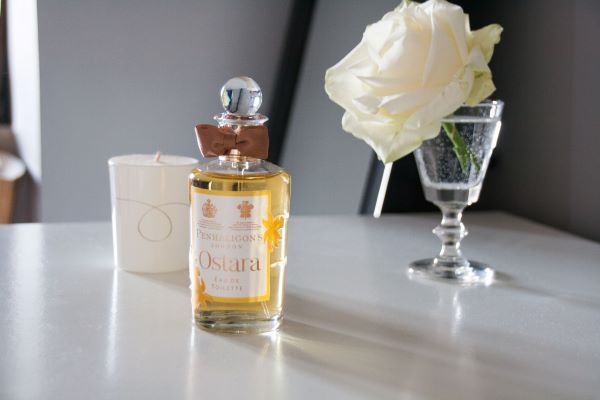
Scented gifts, on the other hand, are my favorite kind of presents to prepare. For instance, scented soaps, candles, incense or interesting home fragrances are always welcome. Likewise, I enjoy giving and receiving food gifts, and here the limit is your imagination–tea sets, jams, honeys, spices. My favorite recent gift was a package from my Iranian friend filled with saffron, cumin, cardamom and sweet-sour dried plums. Every time I use cardamom in my coffee or sizzle cumin in oil to top a vegetable dish, I think of her.
Continue reading →

Carnations, Cloves, Eugenol : A Short History

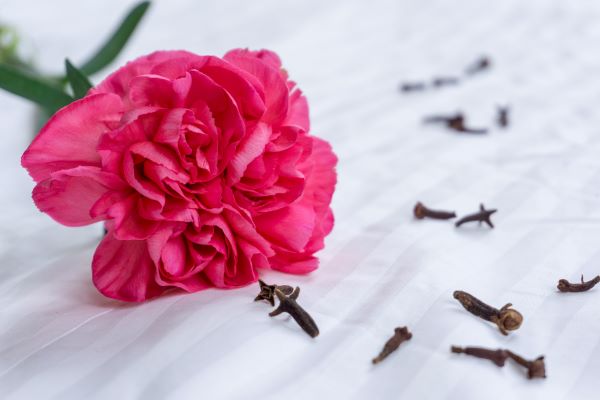
Carnation is not the trendiest of floral notes, and yet modern perfumery would be unthinkable without it–or specifically, the carnation effect. One of the principal aroma-molecules in the essence of carnation is eugenol, and its discovery was revolutionary. In 1834, eugenol was synthesized by Carl Jacob Ettling. In 1858, it was studied and named by August André Thomas Cahours, another brilliant chemist, whose contributions to organic chemistry are numerous. If you wish to know what eugenol smells like, sniff a pot of cloves. There is a reason why Ettling turned to this spice to obtain eugenol–clove essence contains up to 90% eugenol, depending on the variety.

Eugenol was and remains important not only in perfumery, but also in pharmaceuticals, cosmetics, the food industry, and above all, dentistry. It’s known as an effective pain reliever, and to this day, it’s mixed into zinc-oxide-rosin cements for certain types of fillings. For this reason, those who have had the misfortune of experiencing root canal work associate the scent of cloves and carnations with the dentist’s office.

Continue reading →

6 Luminous Musk Perfumes

Why should summer be all about colognes and fresh florals? Why not don a plush tuberose or a bittersweet chypre? Why not explore how our dark and glamorous favorites behave when the weather grows warmer and days longer? None of the “perfume wearing rules” annoy me more than the set-in-stone seasonal suggestions. I suspect that most of them are designed to make people buy more product, rather than enjoy what they already have. The only rule in perfume is to wear what smells good to you (in quantities appropriate for the occasion, of course). A new season is a new chance to experiment, and there is nothing better than experimenting with your favorites and discovering new facets in them.

Musk perfumes, for instance, are among the most versatile. They can be modulated by the type of application. They linger. They range from heavy and warm to radiant and bright. With this in mind here is my list of summer musks–although I wear them all year round.


Continue reading →

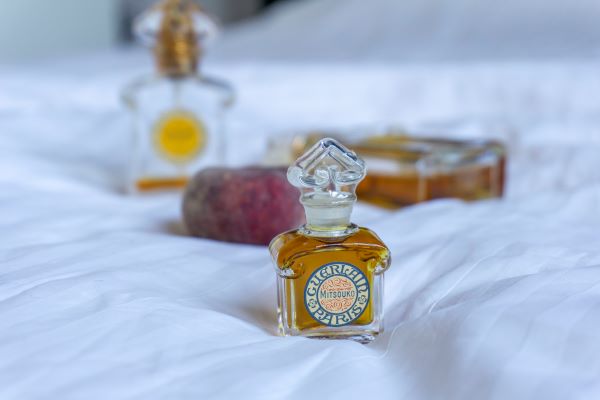
How to Smell Peaches in Guerlain Mitsouko

When I wrote my article about lactones, I explained that Guerlain Mitsouko was one of the first perfumes to use these compounds redolent of peach skin and cream. Many of you then commented that you found it difficult to detect lactones in Mitsouko. This difficulty is not surprising, since the peach skin note in Mitsouko is not intended to be a dominant one. Instead, it offsets the darkness of moss and woods and harmonizes the warm drydown and the floral heart of the perfume.

In general, none of the Guerlain classics are easy to take apart note by note; this is not like modern niche perfumery where you can tell the percentage of Iso E Super at first sniff. The idea of the grand parfums like Mitsouko wasn’t to recreate a smell of peach or moss, but to evoke a mood, to tell a story and to tease the senses. I like the streamlined modern perfumes for other reasons, but if I want baroque complexity, Guerlain classics are my first port of call.

Like other perfumers, I spent months of my training recreating important classics without recourse to gas chromatography–with only my nose to guide me. So here I propose a technique that will help you identify the peach note in Mitsouko.

Continue reading →

The Beauty of The Old-Fashioned

Lately I’ve become fascinated by perfumes that I’d characterize as old-fashioned. Or if you don’t like the word, vintage or retro. Despite the cliches of timeless and unchangeable, many perfumery styles become associated with the time and place that gave rise to them. The aldehydic floral perfumery exemplified by Chanel No 5 echoes the early decades of the 20th century. Bold green chypres scream the 1970s, and I dare anyone to spritz on Dior Poison and not think of the glitz and glam of the 1980s. Decades later, these styles read as evocative of another time, and yet that’s part of their appeal. If I want some escapist fun, I reach for powdery carnations, shimmering aldehydes and creamy tea roses.

There are many reasons why calling some of my favorites old-fashioned doesn’t trouble me. For one thing, working in a perfume lab, I’m so used to hearing styles described as “old” or ”new” that I don’t ascribe value judgments to these terms. Perfumers don’t usually intend it. Some styles are older than others such as chypres, and they still retain their appeal. Some new styles lose their novelty after a few seasons like the savory gourmands.

Continue reading →

As Seen On

Design by cre8d
© Copyright 2005-2026 Bois de Jasmin. All rights reserved. Privacy Policy