Perfume 101: 517 posts

Here you can find how to guides to selecting, testing and enjoying scents. Also includes are the lists of our top favorite perfumes for different occasions and articles covering all range of topics related to fragrance. If you’re curious to step inside a perfume lab (or even become an industry professional), this group of essays will be of interest.

The Art of Perfume Course : Marie-Antoinette’s Travel Case

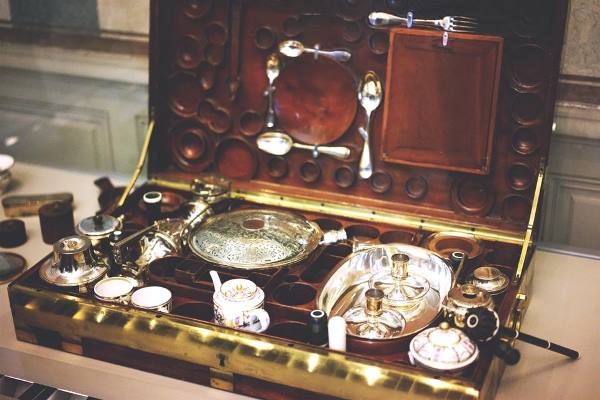
What would you pack if you had to flee for your life? If you were Marie-Antoinette, you would commission a case that would allow you to write, sew, picnic, and perfume yourself with ease. At the International Perfume Museum (Musée International de la Parfumerie) in Grasse, you can see the very item made to the queen’s specifications before she fled to Varennes in 1791. Legend has it that she was given away by the scent of her rich perfume, but if this travel case is any indication, the royal couple didn’t travel light.
After we visited Edmond Roudnitska’s house as part of my Art of Perfume course, we headed to Grasse. Once upon a time, Grasse used to grow the bulk of the flowers used in the fragrance industry, but today it plays a mainly symbolic role. Its environs produce the famous rose de mai, jasmine, lavender and tuberose, but the combination of high real estate value, steep labor costs and climatic change has affected aromatic agriculture in the region. Nevertheless, it’s a charming town located in one of the most beautiful areas of Provence. It also boasts the best perfume museum in the world.
Continue reading →

What Does The Scent of Books Reveal?

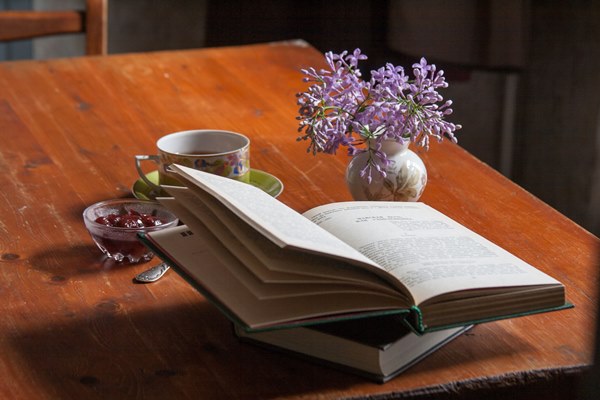
My Proustian madeleine is a piece of furniture. One of the first things I do when I arrive at our house in Poltava is to pry open the stubborn glass doors of the old bookcase and take a deep inhale. Even before I knew how to read, I loved smelling the leather bound volumes standing in neat rows on its shelves, so it’s true that my love of reading and my interest in aromas developed in tandem. Inside, the bookcase smells of vetiver roots, vanilla and sesame biscuits.

I’m not being whimsical with my descriptions, however. A ground breaking project by researchers at the UCL Institute for Sustainable Heritage explored odor descriptions as they relate to the chemical composition of books and created a “historic book odor wheel” to link the scents with the aromatics present in decaying paper. It’s amazing to see how many aroma-molecules books and perfumes have in common, from limonene (zesty, lemon-line odor) to hexanal (freshly cut grass) and vanillin (sweet, vanilla).

Continue reading →

The Art of Perfume Course : Grasse and Gardens

The first day of our perfumery course started at the Edmond Roudnitska garden and the Art et Parfum studios. I intended to give an overview of perfume techniques and to analyze some of the greatest perfume masterpieces, and this corner of Provence was the perfect start. Roudnitska founded Art et Parfum a year after the end of WWII, and this 70 year old enterprise is still thriving under the guidance of Michel Roudnitska, Edmond’s son and student.

Roudnitska’s garden is a beautiful place to visit, especially during the spring months when every leaf looks fresh and dewy and every blossom seems like a gem, but it’s not a museum to the great master. Besides Michel, three other perfumers work out of the studio–Céline Ellena and Eric and Jean-Claude Gigodot. Céline Ellena moves her hands when she talks as if conducting an invisible orchestra, and she’s utterly spellbinding. She shared her thoughts on perfumery and what makes her work as an independent creator both challenging and exciting.

Continue reading →

Woods : Scents and Words

For our edition of scent diary today, I’ve selected woods as our theme. You can describe your favorite perfume that contains woods such as cedarwood, sandalwood, rosewood, etc. Although it’s a leaf, patchouli is classified as a woody note. Or you can pay attention to your environment throughout the day and see if you can notice a woody aroma–coffee, cloves, pepper also have nuances reminiscent of woods.

One of my favorite woods is cedarwood, a wood redolent either of fresh sap and violet petals or of pepper and soft smoke. In perfumery, the note called cedarwood usually comes from a type of juniper, although the precious Atlas cedarwood is also used for its plush honeyed effect. Another popular cedarwood is a synthetic called Iso E Super. To experience it unvarnished, you can try Escentric Molecules Molecule 01, which is a solution of Iso E Super, or Hermessence Poivre Samarcande, which overdoses Iso E Super.

Extra Reading: Perfumes with Cedarwood Notes

Photography by Bois de Jasmin

The Shifting Contexts of Perfume

Could other factors, apart from the aroma itself, influence our perception of perfume? Yes, of course, and this is not limited to fragrance. Elisa explores the topic.

A few years ago, I went to a nearby wine shop to stock up for a weekend in the mountains with some old college friends. A representative from a local winery intercepted me in the red blends aisle and implored me to try a bottle of his family’s wine. Colorado is not known for its vineyards, but I went along in the spirit of adventure, bonhomie, and perhaps a touch of pity.

When we got to the mountains, I warned my friends (occasional wine snobs) that I couldn’t vouch for the quality of the local wine. Since we were all sure it would be bad, we saved it until the end of dinner, a couple of bottles in. When we finally opened and tasted it, we were blown away—it was utterly unusual, with the complexity and creaminess of a good Bordeaux but some additional, unplaceable quirk that made it compulsively drinkable. I was sad when it was gone.

Continue reading →

As Seen On

Design by cre8d
© Copyright 2005-2026 Bois de Jasmin. All rights reserved. Privacy Policy