Perfume 101: 517 posts

Here you can find how to guides to selecting, testing and enjoying scents. Also includes are the lists of our top favorite perfumes for different occasions and articles covering all range of topics related to fragrance. If you’re curious to step inside a perfume lab (or even become an industry professional), this group of essays will be of interest.

Things I Learned in 12 Years of Bois de Jasmin

12 years is quite a milestone for a project that I started as a political science graduate student wanting a creative outlet beyond politics and economics. I picked a name, Bois de Jasmin, Jasmine Forest, fantasing of a place where I would rather be instead of a small university town, and wrote a review of Guerlain Jicky, a fragrance created in 1889, the same year the Eiffel Tower officially opened in Paris. The tower received scathing criticism–“a metal asparagus,” as one reviewer called it, while Jicky was praised as avant-garde. So I wrote about perfume classics and the time during which they were created, Balanchine ballets and the links between scent and painting. I was having fun and I thought of Bois de Jasmin as a much needed diversion. Little did I suspect that soon enough it would inspire me to make even greater changes.
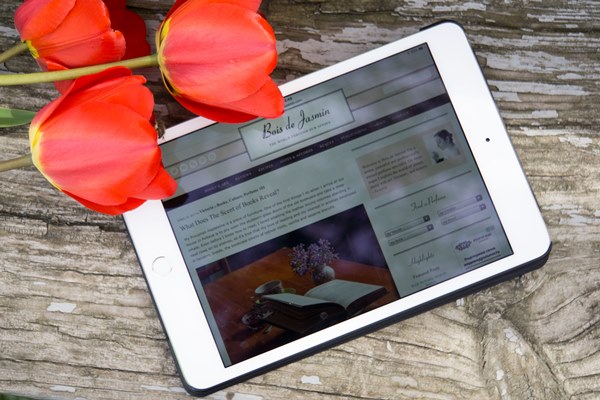
When I started thinking and writing about perfume, I rebelled against the idea of olfaction as a superfluous sense. “To which organic sense do we owe the least and which seems to be the most dispensable? The sense of smell. It does not pay us to cultivate it or to refine it in order to gain enjoyment; this sense can pick up more objects of aversion than of pleasure (especially in crowded places) and besides, the pleasure coming from the sense of smell cannot be other than fleeting and transitory,” said Kant. I was discovering exactly the opposite. Paying attention to my sense of smell helped me make connections that I ordinarily wouldn’t have noticed.  It inspired me to study new subjects, travel and even learn new languages. Using my nose more often made my world infinitely richer.
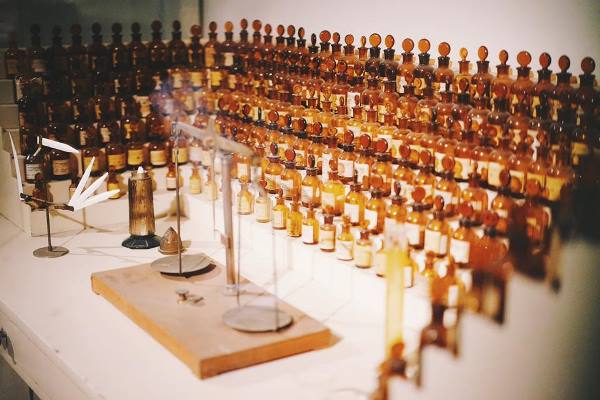
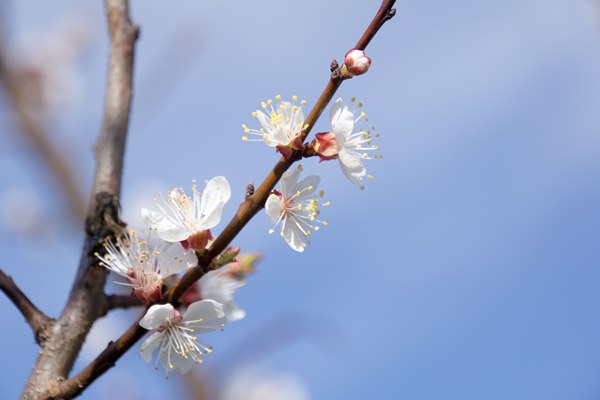
Continue reading →

Jean Carles on Olfactory Training and Perfumer’s Organ

“Perfumery is an art, not a science, as many seem to believe. A scientific background is not necessary for the perfumer; scientific knowledge may even sometimes prove an obstacle to the freedom required in perfume creation,” wrote Jean Carles (1892-1966), the perfumer whose fingerprint is on Miss Dior, Carven Ma Griffe, Dana Tabu, Schiaparelli Shocking, and my absolute favorite, Elle… Elle by Lucien Lelong.

“The creative perfumer should use odorous materials in the same way that a painter uses colors and give them opportunity for maximum development and effect, although it is understood that potential reactions such as discoloration within the ultimate formulation and also the stability of the perfume should be given due consideration. This is about the only use the perfumer will be able to make of his scientific training, if any.”

Today many would disagree with Carles’s dismissal of a scientific background, especially when a perfumer is expected to create fragrances for a variety of products, from laundry detergents to candles. Carles himself approached perfumery in a scientific manner, laying out the techniques in his influential “A Method of Creation and Perfumery” published in 1961. All perfumer trainees, myself included, studied according to his theories of smelling and composition.

Continue reading →

Scents of Evanescence

I often come across comments that many spring flowers are unscented. Tulips, cherry blossoms, and snowdrops fall into that category. But are they really? Tulips smell of earth, green sap and unripe apples. Cherry blossoms have a mild bitterness that contrasts with their frothy looks. Snowdrops smell green, dewy, with a curious musty note. Their aroma is mild, lacking the generous sweetness of late spring-early summer blooms, but they’re hardly unscented.

These watercolor fragrances are among the treasures of spring. Taking a bit of effort to discover them makes their delicate beauty more memorable. Even more so when you find them in an urban setting.

Continue reading →

Cherry Blossom Haiku

The sky shifts with the cherry branches above my head. I’m lying on the grass staring at the blossoms. This idyllic scene would be straight out of a Japanese silk painting were it not for the fact that I’m dressed for garden work and the reason I’m in a reclined position is because I’m exhausted after weeding the garden. But as the petals fall on my face, I forget about the back pain and think of my favorite haiku by Matsuo Basho, the 17th century Japanese poet.

How many, many things
They call to mind
These cherry-blossoms!

Haiku weaves vivid images, and cherry blossom themed poems have an element of contemplation and bittersweetness that is compelling. The sight of blossoms, so exquisite and so evanescent, is a reminder of the transience of things, and while it can be melancholy, it’s also reassuring. Everything passes–and then returns.

Continue reading →

Three Ultimate Iris Perfumes

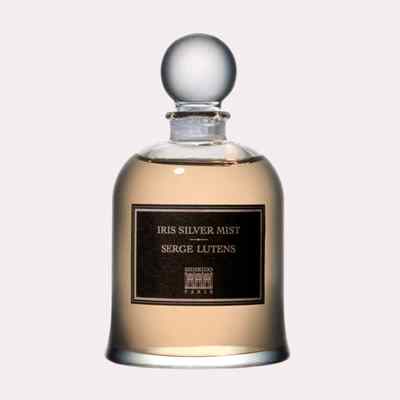
Once, as I was telling Maurice Roucel how much I loved his Iris Silver Mist, a perfume he created for Serge Lutens, he laughed and explained that Lutens kept asking again and again for more iris, so he ended up using all the iris aromatics in the catalogue of his company and essentially “mixing them together.” Roucel can be refreshingly self-deprecating about his work, but I knew that achieving the precise harmony of Iris Silver Mist took much more than just blending all irises in sight. For me, it evokes the cool, frozen beauty of this complex note in a way that few other iris perfumes can.

In my recent FT column, I examine three iris classics, describing what makes them compelling and memorable. Above all, iris as an ingredient deserves attention because it’s one of the most layered, rich but difficult materials available to perfumers.

The first time I smelled iris essence, I stood for a few minutes with a perfume blotter under my nose before I regained my senses. In an instant it conjured up frozen petals and snow-covered trees, and while this image of a winter garden was vivid, I couldn’t easily describe the fragrance. It was like nothing I had encountered before, and pinning down its radiant but surprisingly potent scent proved difficult. To continue, please click here.

What are your ultimate iris perfumes?

As Seen On

Design by cre8d
© Copyright 2005-2026 Bois de Jasmin. All rights reserved. Privacy Policy