December 21, 2010 by in Food & Fragrance, Spices
Dry Perfume for Gingerbread : Spice Blends
For some people the frankincense and myrrh of Christmas high mass evoke the memories of holidays, but for me these memories are evoked by the smell of spices. In the Soviet Ukraine of my childhood, the New Year’s Eve celebration replaced the religious holiday and turned Christmas traditions into customs with which to usher in the new year. The children on the other side of border received their presents from Santa Claus on December 25th but my present was delivered on Jan 1st by the socialist Ded Moroz (Grandfather Frost) whose red nose and coterie of pretty Snowmaidens gave him a decidedly rakish air.
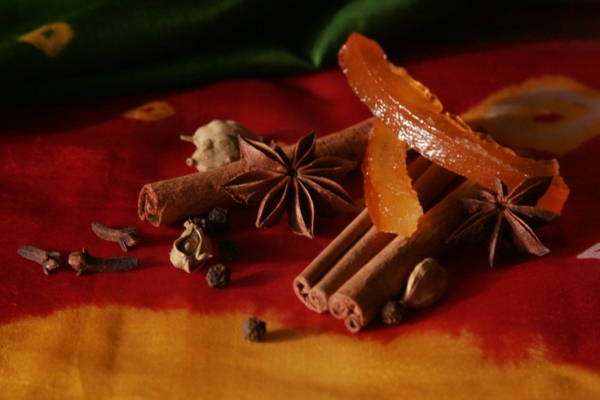
As much as I was looking forward to the excitement of opening the gifts, I was even more excited to help with the holiday baking. The moment my grandmother reached for her box of spices it was a clear sign that we were going to fashion flour and sugar into something special—crisp gingerbread, honey and walnut cakes layered with lemony sour cream filling, cinnamon flavored poppyseed strudels, flaky millefeuille with vanilla custard… The words ‘special’ and ‘spices’ share the same root in most languages for a very good reason—spices are indeed exceptional in the fragrant potential they contain. Even now, when I can easily find any spice and no longer have to ration my use of vanilla or saffron, I am just as moved by their fragrance as I was as a child.