Victoria: 2668 posts

An Anemone Walk

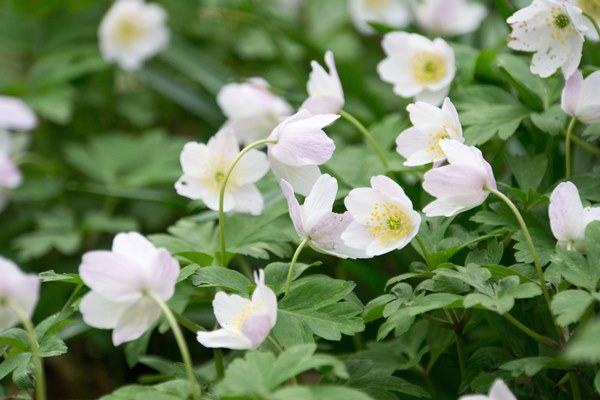
A few kilometers south of Brussels lies the Hallerbos (Bois de Hal in French), also known as the bluebell forest. I’ve written about it previously and shared photos of its turquoise tinted valleys during the bluebell season which starts around mid-April. This year, however, I went to the forest earlier to see the anemones.

Although less striking in color than bluebells, woodland anemones have a graceful beauty. Their flowers are white, with delicate pink veining and as they turn to follow the sun, they look opalescent.

Continue reading →

10 Perfumes For a New Spring

Spring is the time when I crave to make a change–and when it seems that anything can be possible. I make plans to visit new places, learn new things, read more widely, research a completely new topic like Renaissance cuisine or Leonard Foujita’s paintings or the poetry of the late Tang period. I similarly want to push my horizons with new scents.

Neela Vermeire Niral

A chord of violet powder and rose petals, Niral starts as a flower fit for a Victorian corsage, but beneath the softness and candied violet sweetness lies the darkness of sandalwood. A cool touch of angelica, one of the materials that currently intrigues me, gives a sleek shape to this opulent composition. A blood relative of Mohur, the other plush perfume from Neela Vermeire’s line, and also of L’Artisan Parfumeur Traversée du Bosphore. Created by Bertrand Duchaufour, who is able to interpret the French-Indian vision of the house’s founder without recourse to cliches.

Continue reading →

Pysanka Easter Egg Museum in Kolomyia, Ukraine

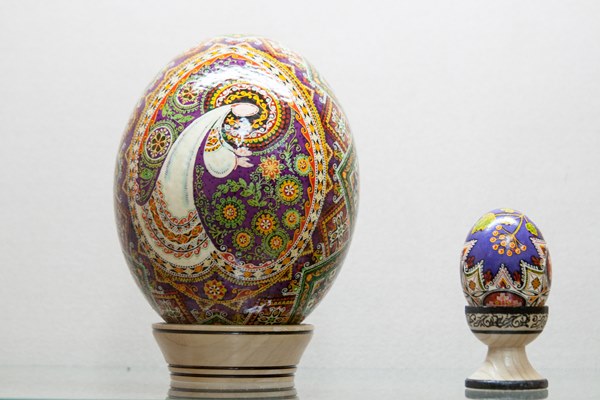
Decorating eggs is an ancient tradition, still alive in many countries, from Iran to Greece, but in Ukraine it becomes an art form–and a national obsession. Pysanka, as the decorated egg is called, from the word “pysaty”, “to write,” is  one of the most important traditional arts in Ukraine. Today pysanka (plural is pysanky) is prepared around Easter, although decorated eggs were also used to be given as birthday gifts and wedding presents. Each region has its own set of symbols, colors and patterns, while each master adds their own signature touch.

It’s not surprising then that Ukraine should have a museum dedicated to the pysanky. The Pysanka Museum in the western Ukrainian city of Kolomyia is one of the most fascinating museums I’ve visited. The museum was a labor of love of the local community that collected the best examples of its pysanka masters and preserved them in the Kolomyia church of the Annunciation. In 2000, the museum was formally opened, allowing for preservation of the fragile masterpieces, as well as for hosting workshops and lectures. Walking through its halls filled with more than 1000 pysanky is a mind-blowing experience. It’s hard to believe that such intricate designs are made by human hands.

Continue reading →

Vintage Violets

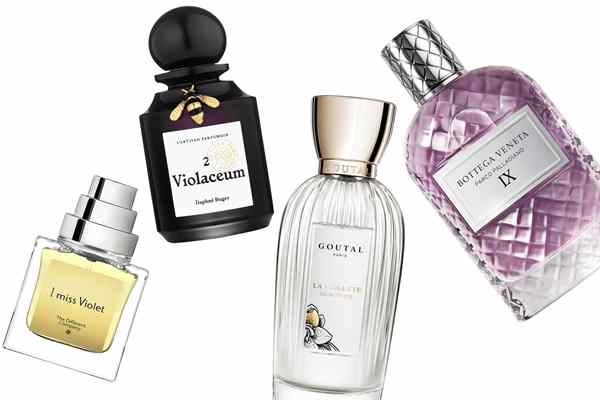
Despite its reputation for being dainty and demure, violet has a complex scent with a fascinating history. This perfume note is the subject of my latest FT column, Vintage Violets.

I explain how this flower became one of the favorite scents during the Victorian era and what made it even more popular–and ubiquitous–in the 20th century. Then I describe some of my favorite violets, both the sweet and powdery ones associated with the Romantic era and the modern green ones.

To read the article post-the FT website update, please click here.

As always, I’d love to hear about your favorite violets.

Image via FT

Easter Eggs Colored With Onion Skins

I see the Easter color palette as yellow, violet, green, and sienna. Yellow is from the saffron tinted paska, a vanilla scented brioche we traditionally make for Easter Sunday. Violet is from the candied flowers we use to decorate it. Green is from the dill and cucumber salad that must accompany the roast pork. Sienna, on the other hand, is from the color of Easter eggs. It’s a rich hue, between the reds of Sienna frescoes and the brown of sandalwood. This color is completely natural and making it is very easy. All you need is a few handfuls of onion skins.

My grandmother starts collecting onion skins a few months before Easter, but she colors dozens of eggs. Most of us need no more than a few onions, although the more skins you have, the darker the color will be. It also follows that the darker the onion skins, the more intense the shade of sienna.

Continue reading →

As Seen On

Design by cre8d
© Copyright 2005-2026 Bois de Jasmin. All rights reserved. Privacy Policy