Victoria: 2669 posts

Fragrance Regulations Q and A: “Like an Atomic Explosion”

Edit February 13, 2014:  the EU proposal  has been significantly modified in comparison to the original SCCS document released to public in December 2012. The summary of the amended proposal can be found at ec.europa.eu.  Apart from three bans (Lyral, atranol and chloroatranol), the rest of the restrictions match the current IFRA standards. For the time being, there are no new bans or significant new restrictions on other materials, including naturals. As new information becomes available, this article will be updated.

“If this law goes ahead I am finished, as my perfumes are all filled with these ingredients [to be restricted],” said Frédéric Malle, who owns high-end perfume company Editions de Parfums Frédéric Malle. The impact on luxury perfume brands as a whole would, he said, be “like an atomic explosion and we would not have the means to rebuild ourselves.”

materials

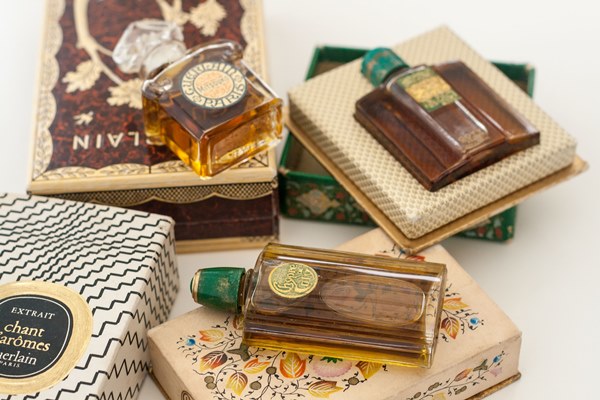
The recent Reuters article, EU threat spotlights perfume makers’ secrets, continues to explore the topic of raw material regulations and reformulations. Not again, you might think, since there was much talk about it already, but the issue of further restrictions on the usage of raw materials is sending so many waves through the industry that it’s hard to avoid. To summarize, the Scientific Committee on Consumer Safety (SCCS), an advisory body for the European Commission, has proposed to ban several key perfumery materials such oakmoss and Lilial and to extend the existing list of 26 allergens to more than 100. The regulations haven’t yet been adopted, and the final decision will be made next year.

I talked about the issues with escalating regulations in Is Chanel No 5 Being Banned?, and my post generated so many questions and emails that I decided to compile my answers here. The main impact from regulations is on the industry, but as fragrance consumers, we also lose out as our favorite fragrances are reformulated beyond recognition or discontinued. Also, I question the wisdom of replacing materials with a long history of usage with newly developed ingredients, the side effects of which may not become clear until decades down the road. These are good reasons to stay informed about the current situation.
Continue reading →

Belgian Gingerbread Treasure : Speculoos (Speculaas)

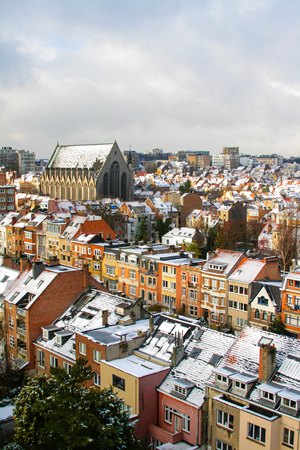
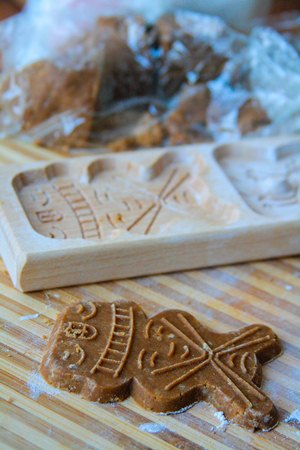
It’s called spéculoos in French, speculaas in Dutch, and Spekulatius in German, but by whatever name you call this fragrant gingerbread cookie, it will always evoke the scent of holidays in this part of the world. Speculoos may look humble, but take one bite, and you will know why it’s a favorite among Belgians. Perfumed with cinnamon, clove and cardamom, the cookie tastes of butter and caramel, and it’s impossible to have just one.

For me, speculoos is one of the quintessential Belgian tastes. Of course, there are also fries and waffles, but speculoos have their place of honor in this small country of 10 million, bridging the cultural divide between Dutch-speaking Flanders in the North and Francophone Wallonia in the South. Speculoos are eaten all over the Benelux region, with some areas such as Hasselt specializing in their own unique versions. Traditionally, the cookies were baked to celebrate Saint Nicholas Day on December 5th in the Netherlands and December 6th in Belgium, but today you can find them at bakeries all year round. In Paris you will be served your expresso with a square of dark chocolate, but your lait russe (café au lait) in Brussels will arrive with speculoos on the side.

Continue reading →

Tom Ford Jardin Noir Cafe Rose : Perfume Review

44444

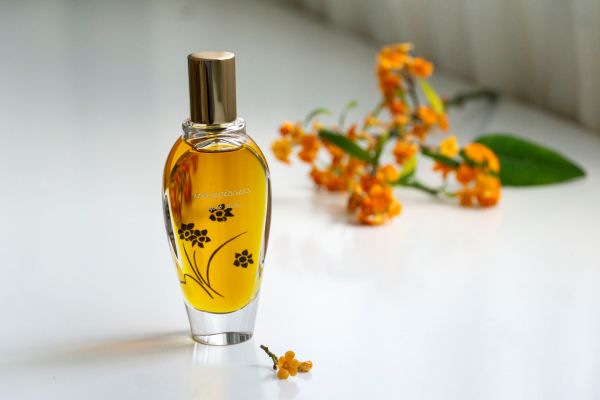
After my mixed experience with Lys Fume, I approached the rest of Tom Ford’s Jardin Noir collection reluctantly. As I wore the fragrances  over these past few months, I grew to like them very much, especially Ombre de Hyacinth and Café Rose. While Tom Ford promised that Jardin Noir would be abloom with twisted, dark florals, the collection is neither twisted nor dark. Instead, it features elegant, polished fragrances on four different themes: lily, daffodil, hyacinth, and rose. The lack of drama is a minus, especially given the concept of this quartert, but these interpretations of classical florals are so smooth and refined that they are worth sampling.

Café Rose was created by perfumer Antoine Lie, who also worked on Azure Lime and Violet Blonde for Ford.  It is the darkest perfume from Jardin Noir, but it has a distinctive Middle Eastern flair. The woods are so pronounced that they compete with rose for top billing, while the incense gives the perfume an exotic twist. The main reason I enjoy Café Rose is for its contrast–it feels sophisticated, but at the same time, it has a flamboyant air. Too much elegance can be boring, after all.

Continue reading →

Guerlain L’Heure Bleue at 100

Perfumer & Flavorist’s December issue includes my article L’Heure Bleue at 100. It talks about the recent celebration of this Guerlain classic’s centenary held by the French Society of Perfumers in Paris. I touch a bit upon the history of this perfume and include quotes from perfumers who consider L’Heure Bleue to be an inspiration. Perfumer & Flavorist is a magazine aimed at the professional audience, but if you are curious about raw materials, you should check their article archives for some fascinating research.

According to Guerlain’s archives, Jacques Guerlain was inspired to create L’Heure Bleue in 1912 during a walk along the Seine when he noticed the vivid blue color of the sky as dusk fell over the city. “I felt something so intense, I could only express it in a perfume,” he later wrote in his notes. To read more, please follow this link.

What are your thoughts on Guerlain L’Heure Bleue?

Serge Lutens La Fille de Berlin : New Fragrance and Book

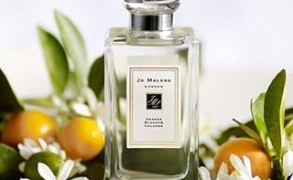
Serge Lutens is releasing a new perfume in the export collection called La Fille de Berlin. It’s based on an accord of roses and pepper.

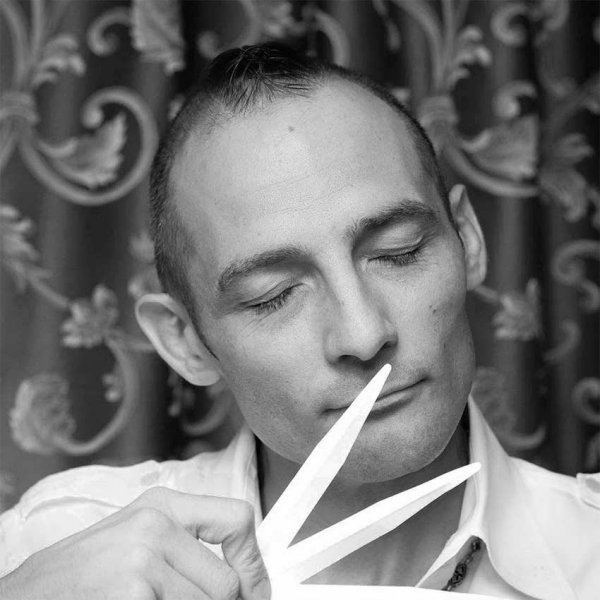
Those who love Serge Lutens’s photography will be excited to know that the fragrance launch is accompanied by Lutens’s new book, Berlin à Paris. This book is described as “a 176-page journey through an imaginary world inhabited by striking personalities with bold expressions, in a sui generis of its own. The focal point of each image is the model – the sole subject and true aim of each shot – for whom Serge Lutens designs objects, accoutrements, jewellery, staging, hairstyles and makeup with a view to portraying a desired expression. Taken between 1967 and 2008, the photos in the book transport us to a visit where dreams grapple with fantasy.”
If you’re in Paris between now and December 21st, don’t miss the exhibit of his work at the Galerie Marcilhac. The exhibit includes 30 photographs that appear in Berlin à Paris. Galerie Marcilhac, 8 rue Bonaparte, 75006 Paris, www.marcilhacgalerie.com

La Fille de Berlin Eau de Parfum, 50 ml/€78. It will be available in March 2013, with limited availability at Serge Lutens boutiques in February. The book is €100, and it can  be found at Electaweb.

Via Vogue.

As Seen On

Design by cre8d
© Copyright 2005-2026 Bois de Jasmin. All rights reserved. Privacy Policy