Victoria: 2668 posts

Writing About Perfume as the World Burns

One summer evening in Kharkiv, I was writing a perfume review when the air raid sirens began. The sound was now part of the city’s fabric, as ordinary and as terrible as the smell of bread from the bakery on the corner. I paused, listened for the thud that might follow, and then turned back to my draft. A question pressed against me: What am I doing, writing about perfume as the world burns?

It’s a question I’ve asked myself many times over the past years. Perfume can seem like a frivolity, a luxury for calmer days. But the more I’ve lived through, the more convinced I am that it is not just a product. Perfume is a cultural layer, a record of our rituals, desires, migrations, and exchanges. It carries the memory of places and the touch of history on the skin. Every bottle is both a work of art and a fragment of anthropology.
Continue reading →

Marc-Antoine Barrois Aldebaran : Perfume Review (and a warning)

33333

I first encountered Marc-Antoine Barrois Aldebaran—a bold new tuberose fragrance by Quentin Bisch—in a small perfume shop in Ternopil, western Ukraine. The concept of buying decants is incredibly popular in Ukraine, and it makes high-end perfume exploration more accessible. I had read about Aldebaran’s launch and, being a devoted lover of tuberose, was immediately curious. Could it rival my benchmark, Frédéric Malle’s Carnal Flower?

I bought a small sample, tucked it into my bag, and tested it later that evening. One spray. That was enough. Aldebaran doesn’t bloom—it detonates.

This is not the “strawberries-and-cream” tuberose of Robert Piguet Fracas, nor the dewy green tendrils of Diptyque Do Son or the fruity-lactonic flirtation of Gucci Bloom. No. Aldebaran leans into the metallic, rubbery, mentholated side of the flower—amplifying its natural pungency, its blue-white chill, and even that faint, gasoline-like bite that tuberose can sometimes hide beneath its petals.

Continue reading →

The Scented Archive: Why Smell Belongs in Our History

We rarely think of scent as part of archives and historical records. The past is treated as visual, textual, factual — something we read or look at. But our lives are full of smells: the minty tang of toothpaste, burnt toast, the brine of sweat on public transportation, the coolness of a florist shop we pass on the way to work. These are not incidental. They are the scaffolding of memory. What we forget with our minds, the nose remembers.

I think often about this partial amnesia. What has been lost because it couldn’t be catalogued? How many women’s lives, marked by the scent of boiled milk, starch, soap, lily of the valley, have slipped away without trace? How many communities vanished, taking with them their voices, customs, foods — and scents. In Ukraine, I witnessed towns being flattened, homes scorched, and with them the quiet archives of everyday life. And elsewhere too, in places like Gaza, Sudan, Yemen, Syria, wars and displacements continue to erase not only histories but atmospheres, the very breath of places.

Continue reading →

How to Smell a Place: A Guide to Scent Mapping

Summer is the season of movement. As many of us travel, whether across countries or just to the next neighborhood, I’d like to offer a different way to mark the journey: not with photos or souvenirs, but with scent.

For years, I’ve made it a habit to map a place by its smells. This practice has changed how I travel. It slows me down. It sharpens my attention. And later, when memory fades, recalling scents brings everything back with astonishing clarity. I only have to imagine the honeyed aroma of orange blossoms to transport myself to Marrakesh. This memory then pulls on another one, and I delve into the fragrances of sun-warmed clay in a small oasis town, stone-roasted bread, and effervescent Moroccan cumin. In my mind, I travel again, going further and further.

Scent is the most ephemeral souvenir, but also the most faithful. Here’s how to begin building your own olfactory map.

Continue reading →

Scents of Belonging: Perfume and the Geography of Memory

Can scent be tied to national identity? I received this question during a recent interview and the question stayed with me long after the conversation ended. It made me think about how we define ourselves, not only through language or landscape, but through something as invisible and visceral as smell.

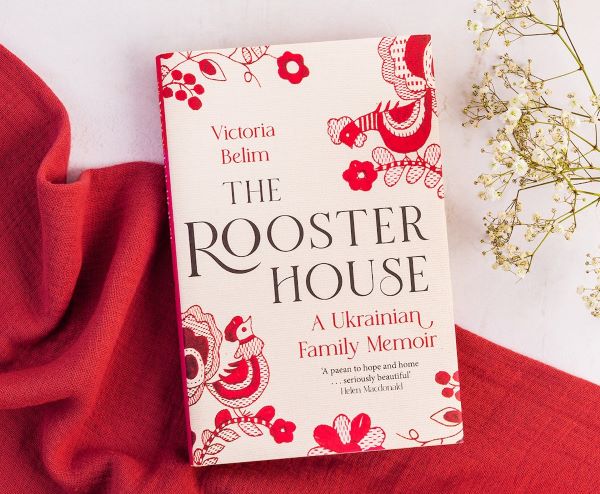
My own story is layered. I was born into a family marked by complexity: Ukrainian, yes, but woven with many diasporic threads, braided through decades of dislocation, migration, and return. I didn’t fully grasp just how intricate this tapestry was until I began researching my family history for The Rooster House. Even after the book was already on shelves, I uncovered new archives and met relatives I hadn’t known existed. That’s how I learned that my mother’s side of the family had Roma and Jewish roots, and that my father’s lineage traced back to Tatarstan.

Since moving from Ukraine to the United States at the age of fifteen, I’ve lived in many places. Brussels has been my home for more than a decade. And yet, the place I return to is always Ukraine. That’s where the smells of my childhood reside. And that’s where scent has always felt like a language I understood instinctively.

Continue reading →

As Seen On

Design by cre8d
© Copyright 2005-2026 Bois de Jasmin. All rights reserved. Privacy Policy