Culture: 426 posts

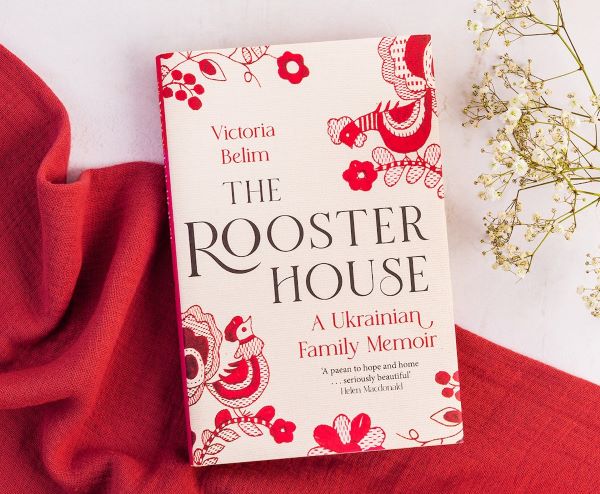
Art, travel, books, history. About my book, The Rooster House.

Jenever Belgian Liquor : Juniper, Rose, Lavender

Museums where you can exercise your sense of smell are few and far between. As anyone who has tried to convince a gallery to add a fragrance exposition knows, it can be a difficult undertaking. “Not enough funding” is a common excuse. One is left treating the aisles of Sephora as the august halls of perfume education. Or so it seems at first, because besides museums featuring fragrance, there are numerous venues that feature scent. For instance, any museum dedicated to wine or spirits would have a smelling bar and an explanation of aromatics. That you can later taste the stars of the exhibit only adds to the appeal.
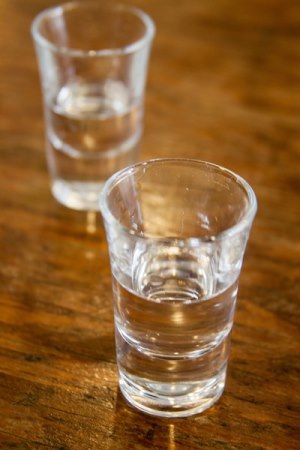
lavender2jenever2

During my research on the lavender farm in Limburg, I discovered that Hasselt, the province’s capital, has a jenever museum. Jenever, also known as genièvre, genever or peket, is an ancestor of gin, a local spirit made out of grain and flavored with juniper and other botanicals, and it has been made in the region since the 13th century. Wine and brandy distilled from grapes have traditionally been expensive, while the surfeit of corn brought from the New World made aqua vitae distillers eager to experiment. The result was a drink described as “banishing cares and making the heart courageous.”

That this 75 proof liquor has such an effect is easy enough to believe. Jenever might have started out as medicine, but instead of using sugar to mask the rough taste of the alcohol base, pharmacists chose a much more interesting approach by flavoring it with spices, herbs and flowers. Eventually, locally grown juniper started to dominate the composition, while jenever moved from the pharmacy shelf to the cafe.

Continue reading →

Perfumes To Smell, Books To Read : Autumnal Lists

This time of year makes me prone to bouts of melancholy. I don’t like to bid goodbye to summer vacation, August peaches and picnics in the park. Since my school recollections are filled with the institutional smells of many children in confined spaces, burned milk, wet chalk and blackboards cleaned with a musty rag, I can’t get excited about the whole “back to school” thing either. My memory refuses to budge from this Dickensian vision even when prompted by the delicious smells of sharpened pencils and ink; I hated school until I started college.  I get out of my funk once the fall gets further under way and I notice the walnut sweetness of fallen leaves in the morning air and become grateful for any rose still blooming along Brussels’ chestnut lined avenues. But in the meantime, I just make the best of the transition and come up with lists.


brussels-fall1

Lists are somewhat of an obsession. I’ve been an inveterate list maker since my childhood. My mom treasures a compilation of “books I am going to write” that I came up with at the age of 12. They include “The History of India,” “The History of Greece” and “Constantinople, Jewel of the Byzantine Empire.” (Why on earth did I study political science at the university and not history, I now wonder.) I’m less ambitious these days and instead I just make lists of dishes to cook, places to explore in Brussels, perfumes to try or books to read.

Continue reading →

The Belgians : An Unexpected Fashion Story

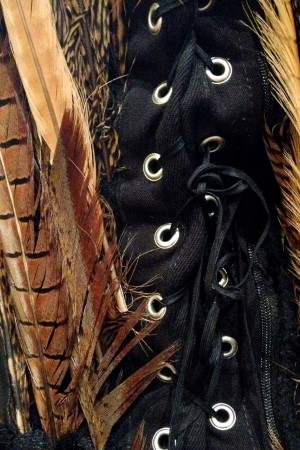
Belgians seem to be as surprised as anyone else that their small country could produce a seismic shift in fashion, starting with the success of the original Antwerp Six in 1986. This explains the title of a new exhibition at the Bozar Centre for Fine Arts in Brussels, The Belgians: An Unexpected Fashion Story (on display till September 13). But as I walked through the exposition in tribute to the Belgian fashion scene, I wondered if it really should be so unexpected. After all, Belgium is a politically complex case, balanced precariously and unsteadily between Flemish and Wallonian interests. It has a rich, if sometimes combustive, blend of cultures, influences, and languages. In moments of crisis and stalemate, the inspiration and yearning for change take on different forms–consider the blossoming of the avant-garde movement at the turn of the 20th century.

the-belgians1athe belgians1

Belgian fashion is anything if not avant-garde. It makes a powerful statement, it casts conventions aside, it makes you look at things in a new way. It can be an experience that is both disconcerting and inspiring, and living in Belgium I have come to see it as an essential part of local culture. Fashion is taken seriously here, although not in the sense of social expectations of looking a certain way that exists in Paris or New York. It’s an idea. It’s an art form. You can wear it, if you want, or you can simply admire it. Which is what I usually do when I head to Rue Antoine Dansaert, a dynamic part of Brussels and a place for fashion pilgrimage. Young and established designers have their boutiques there, and although I rarely buy anything, I go to the stores for a dose of beauty–or a jolt–and I treat them like museums.

Continue reading →

Belgian Lavender

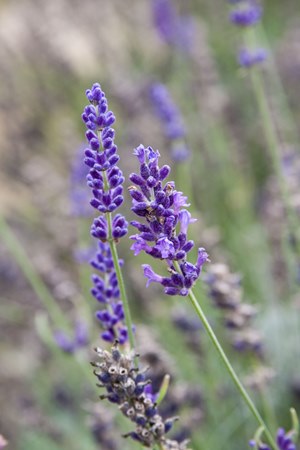
The Belgian province of Limburg is an expanse of green fields punctuated by neat red brick towns. Although Brussels is a much more laid-back and calm city in comparison to London, Paris or Berlin, as I stroll through the woods near Hasselt, Limburg’s capital, I feel as if I just left a bustling metropolis. It’s all serenity, stone church spires and the soft rustle of leaves in the trees lining the river. And the rich perfume of lavender.

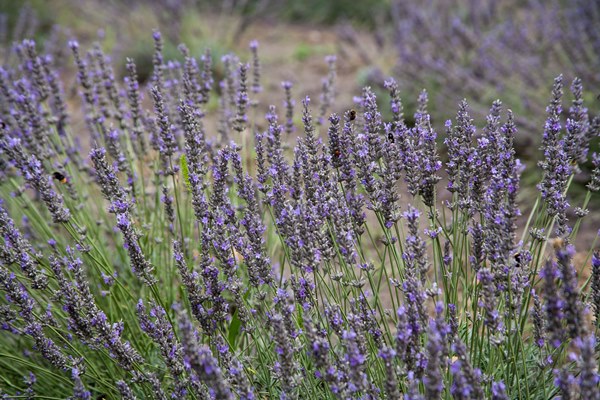
lavender1

Although lavender is usually associated with Provence, there is a 4 hectare farm near Herkenrode in Limburg, and it’s open for the summer. “Yes, we have lavender in bloom, and it’s a genuine variety, not lavandin,” I was told by a lady at the nursery. “Please visit before we harvest it.” The following weekend my husband and I drove one hour to Limburg to see the lavender fields of Belgium.

Continue reading →

Infuriating Things

Sei Shonagon has been my companion for many years. She was an opinionated 11th century Japanese lady-in-waiting, and she wrote what has become the embodiment of Japanese classical prose, The Pillow Book. I’ve already written about this quirky collection and its author and quoted one of my favorite lyrical passages about things that make one’s heart beat faster. Reading her enchanting descriptions of dew on chrysanthemums, first plum blossoms or the color of incense smoke is an instant escape from my routine, and while the world of Sei Shonagon wasn’t a cherry blossom tinted fantasy—a woman’s life at court was one of ennui and seclusion—the genius of the writer is to make you think otherwise. “Delightful” is one of the most frequently used words throughout the book.

pillow book-tea

Lyricism and refinement aside,  I’m drawn to Sei Shonagon for a far earthier reason—her flaws. She complains about her fellow ladies-in-waiting. She whines about her lovers whose morning departure is not as elegant as she would like it to be. She can be a snob. She finds it unseemly that the snow falls on the houses of common people—“moonlight shining into such houses is also a great shame,” she adds. She has a dry sense of humor. She’s vulnerable and prone to bouts of melancholy. She’s merely human. Despite her living more than a thousand years ago, she doesn’t come across as a museum piece.

Continue reading →

As Seen On

Design by cre8d
© Copyright 2005-2026 Bois de Jasmin. All rights reserved. Privacy Policy