Culture: 426 posts

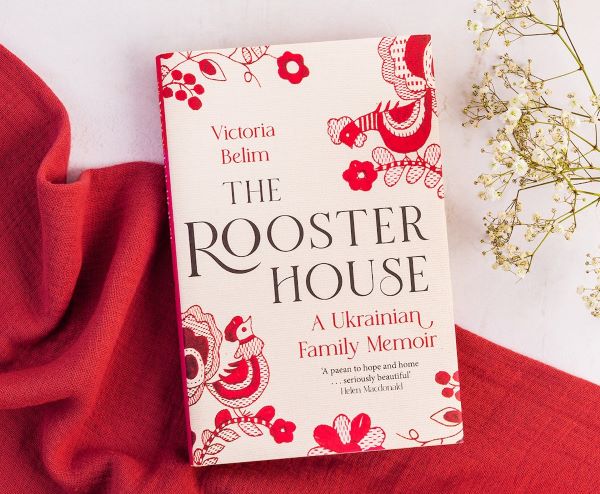
Art, travel, books, history. About my book, The Rooster House.

Petrykivka : Ukraine’s Vibrant Treasure

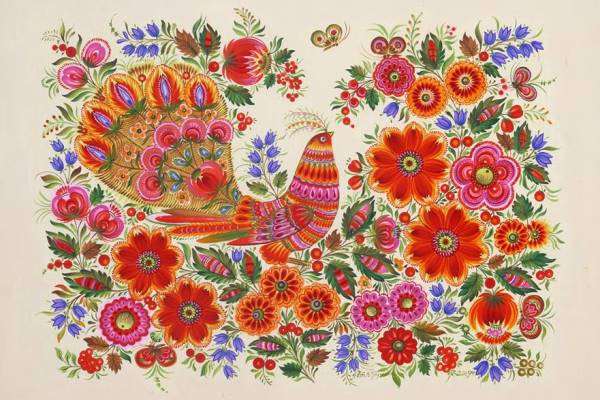
A petrykivka artist’s most important tools are her hands and her cat. To paint the intricate, colorful motifs of this traditional form of Ukrainian folk art, it’s essential to combine bold strokes with delicate ones. The tip of one’s finger might be used to create a cluster of round berries, a mass of dahlia petals or a tangle of oak leaves. But for the fine tendrils and feathers adorning roosters and cuckoo birds, classical symbols with complex meaning, a painter turns to a brush made of cat hair. “The cat first has to agree to give you some fur,” says Natalia Rybak, the artist at the Petrykivka Center for Folk Art, as she shows me the local art collection. “Not all do.”
petrykivka

Petrykivsky painting or “petrykivka” is one of many forms of ancient Ukrainian decorative arts. Its name is derived from the place of its origin, the village of Petrykivka in Dnipropetrovsk region, and it is closely tied to the Cossack tradition. Cossacks were members of the democratic communities that since the 15th century started forming into a loose federation in southern-central Ukraine. Independent from the neighboring states, the Cossack federation offered social freedoms and protection, thus drawing an ever increasing number of people from other regions to its villages. South-east of Kyiv, Petrykivka was established in the 17th century as the wintering ground for the Cossack divisions that spent the rest of the year in the areas around the lower Dnieper River. Even after the Cossackdom was destroyed by the Russian tsars in the 18th century, many former strongholds, such as Petrykivka, retained enough autonomy to develop their traditional crafts.
Continue reading →

Saraban : Persian Spiced Hazelnuts

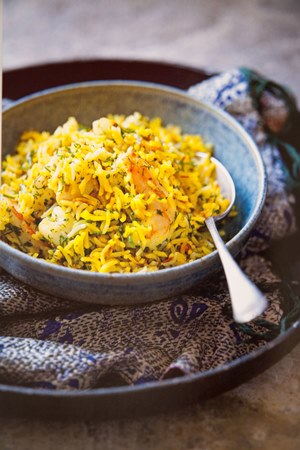
Saffron, pistachios, apricots, pomegranates, angelica seeds… When my inspiration for scent pairings starts to wane, I flip through my favorite Iranian books and think of the vibrant combinations of Persian cuisine. It’s one of the world’s most sophisticated, with complementary and contrasting flavors used in a single dish. There are rice pilafs steamed until every grain is separate and glossy and then embellished with saffron scented butter and rosewater. Poultry is cooked with fruit and sweet and sour sauces. Meat is grilled in a variety of ways and vegetables star in everything, from soups to jams. Even something as simple as a yogurt cucumber salad is served topped with a flourish of golden raisins, walnuts and herbs. Every mouthful is an adventure. Every taste is a surprise. It’s a cuisine custom-made for perfume lovers.

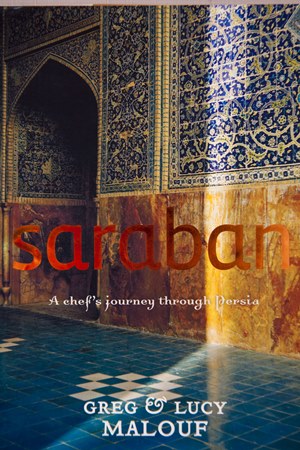
saraban1bsaraban1a

If your perspective on Iran comes from the news, then you’re likely to associate it with the brutal events of the 1979 Islamic revolution, religious intolerance and reprehensible treatment of women. Persia, on the other hand, may connote the orientalist visions of roses and nightingales. As Greg and Lucy Malouf note in their marvelous book on Persian cuisine, Saraban: A Chef’s Journey Through Persia, “there is an element of truth and exaggeration in each version, but they are, of course, one and the same place… This duality, these contrasts, the opaqueness–once we arrived in Iran, we realised that they all contribute to a very real sense of mystery, and of reward.”

Continue reading →

Perfume Muse Audrey Hepburn

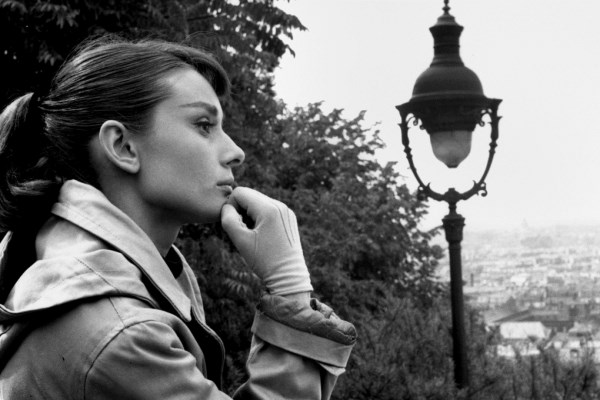
Audrey Hepburn has been a muse for film directors, couture designers, and makeup artists. She also inspired perfumers, and while Givenchy L’Interdit was created especially for her in 1957, many a fragrance creator mentions the actress and fashion icon with reverence. I can understand it, because there is something about Audrey that I find touching and poignant. It’s not just her elegance or sense of style; it’s also her grace, warmth and a certain fragility. Audrey charms as much as she intrigues me.
audrey1

This year, the National Portrait Gallery in London is celebrating Audrey’s legacy with an exhibition showcasing Audrey’s life and career through photos. It spans her childhood in Holland and early years as a dancer in London. It then tracks her rise to fame in Hollywood and concludes with her work as a Goodwill Ambassador for UNICEF. Audrey worked with some of the best photographers, including Cecil Barton, Irving Penn, and Richard Avedon, and many of her images can be counted as part of pop culture–think the famous Holly Golightly half turn with a cigarette holder. What’s fascinating about the exhibit is the inclusion of rare images and personal photographs donated by Audrey’s sons, Luca Dotti and Sean Hepburn Ferrer.


Continue reading →

Anosmia : Living Without Scents

Whenever I read about hackneyed surveys asking, “which sense would you give up,” and see respondents blithely give up their sense of smell as “the least useful”, I get a cold shiver down my spine. Anosmia is the condition of having no sense of smell, usually as a result of trauma, and it has few cures. It leaches color, texture and pleasure out of life, even more than the loss of hearing or sight does.

anosmie

Anosmia, like many other subjects related to brain and olfaction, is still poorly understood, but what’s without doubt is the suffering it causes. “The biggest shock of my life was tasting chocolate after my accident and discovering that it was the most vile thing ever. Sticky, bitter, pasty,” commented a friend who lost his sense of smell after a motorcycle crash. He also complained that making love was not the same when you couldn’t smell someone’s skin. Everything that brought joy previously now seemed blander, duller, poorer.

Continue reading →

Madame Carven and Ma Griffe

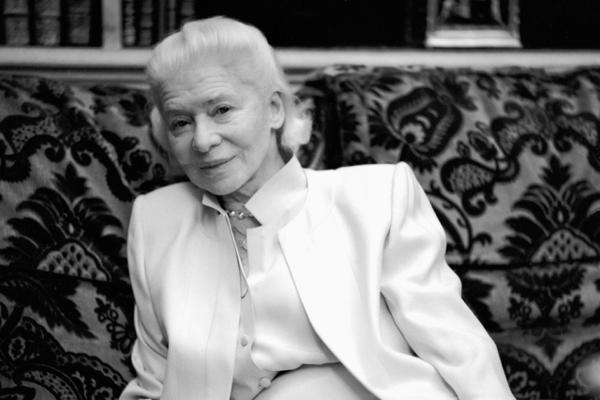
She dressed Edith Piaf and Leslie Caron. She created uniforms for more than a dozen airlines and dressed French traffic police. When she launched a fragrance, she provocatively named it Ma Griffe, which can mean either “my signature” or “my claw” in French. She was a force and a character. She was Carmen de Tommaso, or as she was better known in the world of haute couture, Madame Carven. Yesterday Madame Carven passed away at the age of 105, leaving behind an incredible legacy, both in the world of fashion and fragrance.

madame carven

De Tommaso was introduced to couture by her aunt Josy Boyriven–the last three letters of whose name, “ven”, got joined with “car” of Carmen to form “Carven”–and she started designing both out of fascination and frustration. She was dismayed by the limited choices for petite women and the lack of attention from the fashion masters.

Continue reading →

As Seen On

Design by cre8d
© Copyright 2005-2026 Bois de Jasmin. All rights reserved. Privacy Policy