How I Learn Languages 2 : What Languages To Study

I didn’t anticipate the interest that my first article on my language learning strategies would generate. Your comments and emails sharing your experience with studying were fascinating and full of great tips. Above all, many of you asked me questions such as the resources I use for reading, writing, and listening, how I maintain all of my languages, how many languages one could study at the same time, and so on. I’m glad to reply to them all.

I learn languages for a variety of reasons. Some I’ve learned because I moved to the countries where they were spoken. Some I’ve studied for my degree in Political Science and to facilitate research. I’ve also learned languages as I traveled or wanted to understand better the cultures that fascinated me.  In the this article on the languages topic, I’ll discuss how to decide what languages to study. It may sound like a straightforward decision, but how you take it will determine your success and your ability to persevere with studying a new language.

Do Not Study a Language Just Because It’s Popular

Let’s bracket the real issue of needing to study a language for work or to adjust to a new country. Today I want to talk about a situation where you’re simply picking a language to learn and are not sure whether you should study French or Italian.  First, think about what language you would like to speak? Hearing what language do you feel your heart skip a beat? What language do you find beautiful? What language belongs to a culture (cultures) you find fascinating?

Continue reading →

Recommend Me a Perfume : February 2019

Our “Recommend Me a Perfume” thread is open this week. You can this space to find perfume recommendations, to share your discoveries and favorite scents, and to ask any questions about scents, aromas and flavors.

How does it work: 1. Please post your requests or questions as comments here. You can also use this space to ask any fragrance related questions. To receive recommendations that are better tailored to your tastes, you can include details on what you like and don’t like, your signature perfumes, and your budget. And please let us know what you end up sampling. 2. Then please check the thread to see if there are other requests you can answer. Your responses are really valuable for navigating the big and sometimes confusing world of perfume, so let’s help each other!

To make this thread easier to read, when you reply to someone, please click on the blue “reply” link uner their comment.

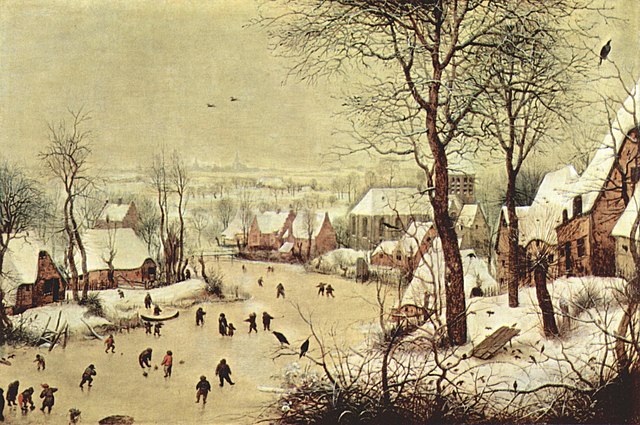
Winter landscape with skaters and bird trap, 1565, by the Flemish painter Pieter Bruegel the Elder, located in the Royal Museums of Fine Arts of Belgium in Brussels.

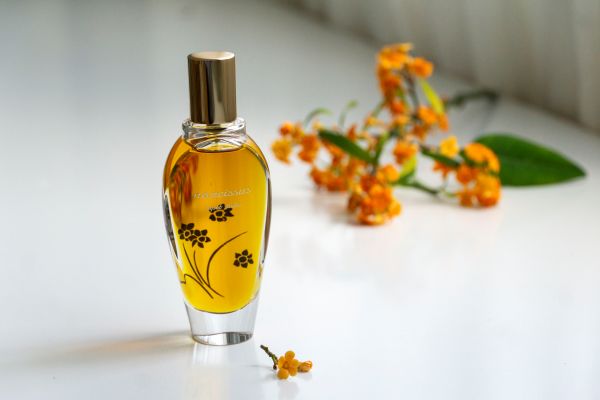
Scented Orchids : A Kaleidoscope of Perfume

Andy wrote this article a couple of years ago after his visit to Longwood Gardens in Pennsylvania, and I kept looking for a chance to share it with you. Now in the middle of grey winter days, an invitation to contemplate scented orchids seems particularly welcome.

What does an orchid really smell like? In the world of perfumery, the answer is fairly limited—orchid is usually portrayed using a note that is spicy, exotic, and floral like Tom Ford Black Orchid or Jo Malone Dark Amber & Ginger Lily, often accented by woodsy, powdery, or vanillic nuances. In reality, though, orchids possess far too wide a range of scents to be classified using any of these descriptions. Orchids are a particularly diverse class of plants, found on every continent, except Antarctica, growing in rainforests, deserts, and marshes, on mountains, valleys, and plains, and taking root in just about every type of climate imaginable.

Orchids are highly adapted to their environments, which is reflected in the fact that most species of orchids have co-adapted with their pollinators to exhibit flowers that are shaped, colored, and scented to attract a specific species of insect or bird. This explains why an orchid species like Orphrys exaltata, which is pollinated by male bees, carries a sweet scent that mimics female bee pheromones, and why an orchid species like Bulbophyllum graveolens, which is pollinated by carrion flies, smells like rotting meat. Fortunately for human noses, though, most cultivated orchids smell pleasant, with odors that span the range of fruity, floral, and all other notes in between.

Continue reading →

Smoke and Fire : Spellbinding Dark Perfumes

The smoky aromas of bonfires, roasted chestnuts, frankincense and lapsang souchong tea are among the most complex, and I know quite a few individuals who fantasize about a fragrance that smells like a smoky charcoal-grilled steak. There is a difference, however, between enjoying a scent in its proper context – charred ribeye at a barbecue or burning leaves in an autumnal park – and wearing a fragrance that reprises such odors. For this reason, perfumery interpretations of smoke tend to blend it into a more familiar setting of woods, spices and resins. In my FT Magazine column, Smoky Perfumes, I explore how smoky notes are used in fragrance and what effects they produce.


One of the best introductions to a smoky perfume is L’Artisan Parfumeur’s Passage d’Enfer (£105 for 100ml EDT). Perfumer Olivia Giacobetti is known for her ability to create olfactory watercolours – airy, transparent compositions. Passage d’Enfer combines lilies and incense, filling the spaces between the white, cool petals with smoke. Giacobetti’s touch is light, and the perfume remains soft and radiant, from the smoky opening to the vanilla- and cedarwood-accented drydown. To continue reading, please click here.

What about you? Do you find smoky fragrances appealing?

Image via FT HTSI

How I Learn Languages

The KGB blacklisted my stepfather, making it impossible for him to travel outside the Soviet Union. He satisfied his wanderlust by reading and learning languages. I remember our bookshelves filled with self-study books and dictionaries: English, French, Italian, German, Bulgarian, Serbian/Croatian, Czech. I opened them at random and the more unfamiliar they looked, the more I wanted to learn and enter the universe of new languages. It felt exciting and liberating.

That exhilarating feeling of discovery has remained with me, and it drives me to learn new languages. I speak, read and write 18 languages and am currently learning my 19th. Besides English, these languages include French, Italian, Persian, Indonesian, Japanese, Russian, Ukrainian, Turkish, Vietnamese, Urdu, Bulgarian, German, Hindi, Uzbek, Portuguese, Albanian, Serbo-Croatian–and learning Mandarin. Most of these I’ve learned in the past few years when I figured out a method that worked for me. I’m often asked by many of my friends and readers to put together my strategy for studying languages, and so I’ve jotted down certain rules and important elements that make my learning efficient. Once I started writing, I realized that I could come up with a whole book on the topic, but since my goal today is to summarize my approach in an article, I’ll leave the comment field for any additional questions and clarifications. Please feel free to ask your specific recommendations and share your experience with learning languages.

Continue reading →

As Seen On

Design by cre8d
© Copyright 2005-2026 Bois de Jasmin. All rights reserved. Privacy Policy