The World in a Haiku

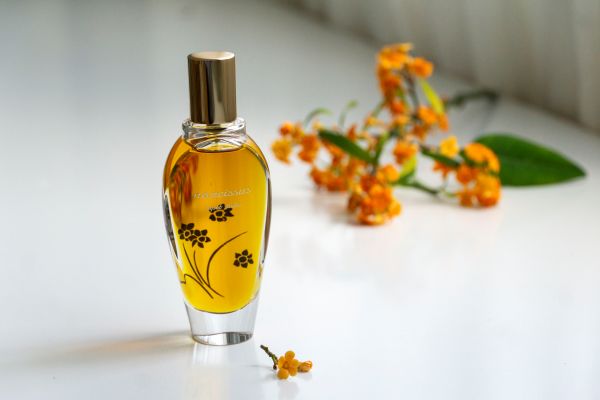
Silent the old town
the scent of flowers
floating
And evening bell
-Matsuo Bashō (1644-1694), translated by Jane Reichhold

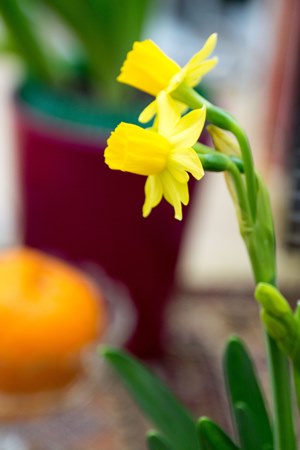
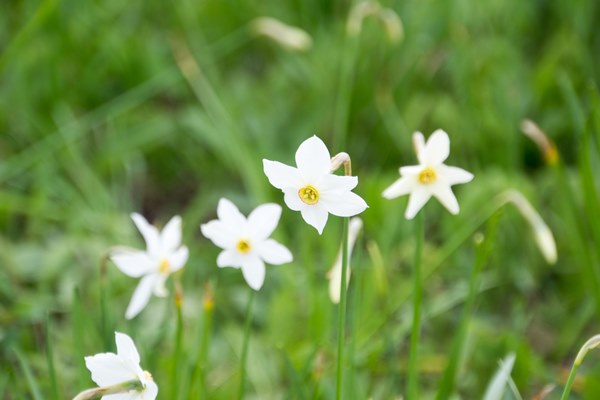
Haiku condenses. Haiku magnifies. If haiku speaks of a flower, it doesn’t compare the poet to a flower or the world to a flower. It says, the world is a flower. The world is in the flower petal. The details are refined by the poet’s imagination, who pours the whole experience into seventeen syllables. Haiku is the essence.


Discontented
Violets have dyed
The hills also
-Shiba Sonome (17th century), translated by Earl Miner and Hiroko Odagiri.

Continue reading →

Leather Scents with a Soft Focus

Although classical leather notes in perfumery are dark and dramatic like Robert Piguet Bandit and Grès Cabochard, this theme offers many variations, including the soft and creamy ones. In my recent FT column, Leather Scents with a Soft Focus, I describe different ways in which leather can be interpreted. I also talk about my idiosyncratic behavior at the vintage shops.


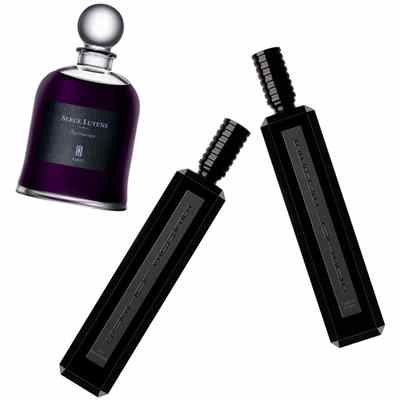
Unconventional is the leather collection of Serge Lutens. The line has a number of fragrances with leather accents, whether Sarrasins, with its interplay of leather, jasmine and musk or Fumerie Turque, which weaves leather into tobacco leaves and rose petals. Cuir Mauresque, however, makes this tanned note the star player. It is buttery and rich, oscillating between the darkness of amber and the spicy bite of clove. What makes its leather tender and luminous is the clever addition of orange blossom and mandarin. Inspired by the old tradition of perfuming gloves with fragrant pomades, Cuir Mauresque conjures up vintage handbags and well-worn armchairs in old libraries. To continue reading, please click here.

Where do you fall on the leather spectrum, dark or light?

Image via FT

Rose Retreat in Bulgaria and Perfume Workshop

I’m partnering with Silvia Yonkova of Roseoverdose, to teach a rose accords workshop during the Rose Retreat of 2019. 50% of the roses grown for perfumery come from the Rose Valley in Kazanlak, Bulgaria, and Silvia’s family has been in the rose growing business for generations. During the Rose Retreat, you’ll have a chance to participate in the rose harvest and study different types of roses. My one-day workshop will cover some of the most iconic rose perfumes and teach you to create fragrance accords.

The Rose Retreat will take place on May 20th-24th, 2019. You can find more information and book a spot via Roseoverdose.com.

Continue reading →

Lateral Cooking by Niki Segnit : Unlocking the Secrets of Flavors

Why does pork pair well with peaches? Why does jasmine uplift the aroma of green tea? And why does chocolate and coffee marry so well together? Great cooking is based on an understanding of flavors and the way in which different ingredients can pair together.  Yet, it’s a skill that can seem elusive, especially to those who are new to cooking.  While there are numerous resources with excellent recipes, few of them teach novices how to approach flavors and techniques. This is an especially unfortunate oversight since one of the easiest ways to improve one’s cooking—and to enjoy the process more–is to cook using one’s nose and palate to their fullest.

This is a subject the food writer Niki Segnit explored  in her 2010 book The Flavour Thesaurus. Covering a wide range of ingredients, from almonds to washed rind cheeses, the author deftly intertwines food science and her own experience to unlock the mystery of aromas and tastes. The book suggests hundreds of combinations and explains why, for instance, coriander and blueberry pair well together. Coriander contains up to 85% linalool, a compound with a bright, floral-citrusy fragrance. The same molecule is responsible for the aroma of blueberry, and adding a bit of ground coriander to a blueberry dessert magnifies the flavors.

Continue reading →

How I Learn Languages 2 : What Languages To Study

I didn’t anticipate the interest that my first article on my language learning strategies would generate. Your comments and emails sharing your experience with studying were fascinating and full of great tips. Above all, many of you asked me questions such as the resources I use for reading, writing, and listening, how I maintain all of my languages, how many languages one could study at the same time, and so on. I’m glad to reply to them all.

I learn languages for a variety of reasons. Some I’ve learned because I moved to the countries where they were spoken. Some I’ve studied for my degree in Political Science and to facilitate research. I’ve also learned languages as I traveled or wanted to understand better the cultures that fascinated me.  In the this article on the languages topic, I’ll discuss how to decide what languages to study. It may sound like a straightforward decision, but how you take it will determine your success and your ability to persevere with studying a new language.

Do Not Study a Language Just Because It’s Popular

Let’s bracket the real issue of needing to study a language for work or to adjust to a new country. Today I want to talk about a situation where you’re simply picking a language to learn and are not sure whether you should study French or Italian.  First, think about what language you would like to speak? Hearing what language do you feel your heart skip a beat? What language do you find beautiful? What language belongs to a culture (cultures) you find fascinating?

Continue reading →

As Seen On

Design by cre8d
© Copyright 2005-2026 Bois de Jasmin. All rights reserved. Privacy Policy