A Guide to Skincare Layering

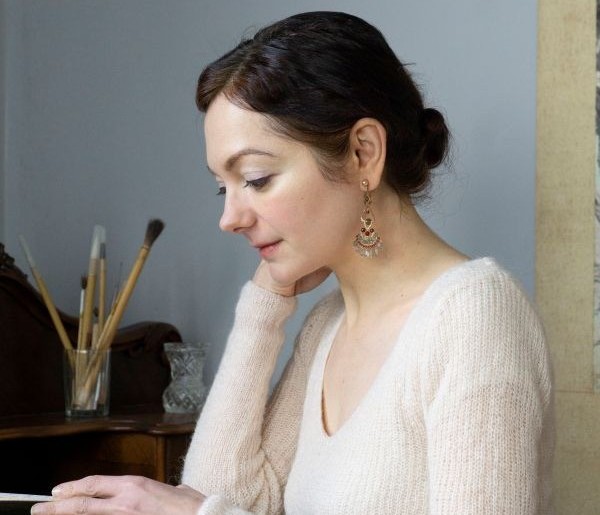
If you were to read beauty magazines, you’d be forgiven for thinking that layering skincare is a skill beyond the ken of mere mortals. One is expected to have a working  knowledge of organic chemistry, active ingredients and the latest in Asian skincare discoveries. Failing that, one should simply follow the magazines’ recommendations and splurge for the editor’s favorites.

In reality, layering skincare is fairly simple. All of us do it to an extent when we start with a toner and finish with a moisturizer. It always helps to know what Vitamin C does to one’s skin or how to use AHA as part of a routine, but layering doesn’t have to be a complicated process. Nor does it have to take up a big chunk of your morning.

The other day I timed how long it took me to finish my skincare in the morning, and I discovered that it was around 5 minutes. So, I thought that it might be a good idea to describe what I do in more detail, demystifying the layering process. Whatever skincare products you use, you can tailor your routine to your skin type and your goals.

From Light to Heavy

The main principle of skincare layering is to start from products with the lightest texture and build up to the heaviest. The idea is to ensure that all layers absorb properly without diluting each other. Toner goes on first, if you’re using it. Wait for it to be absorbed, which should take a minute and then move onto the serum, moisturizing lotion or moisturizing cream. It’s a good idea to wait a little before moving onto another product, 30 seconds to a couple of minutes.

Continue reading →

The City of Jasmine

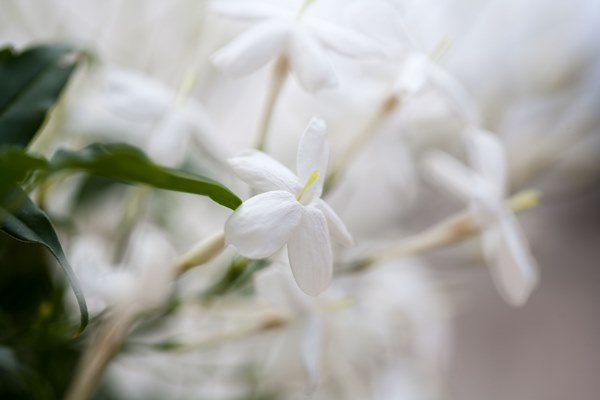
Writer Nizar Qabbani (1923-1998) described his native city of Damascus as “the womb that taught me poetry, taught me creativity, and granted me the alphabet of Jasmine.” Although the most fragrant of roses bears the name rosa damascena, Damascus rose, the Syrian capital is known as Madinat Al Yasmine, the City of ­Jasmine. Each fall it holds a festival in homage of this national flower, with people giving each other stems of jasmine and decorating their home with fragrant blossoms. It was even held in recent years, despite the conflict that left thousands dead and millions displaced, with flowers given to those who lost loved ones.

“A Damascene moon travels through my blood
Nightingales . . . and grain . . . and domes
From Damascus, jasmine begins its whiteness
And fragrances perfume themselves with her scent
From Damascus, water begins . . . for wherever
You lean your head, a stream flows
And poetry is a sparrow spreading its wings
Over Sham . . . and a poet is a voyager,”

writes Qabbani in one of his most renowned poems, A Damascene Moon. He was born in Damascus in 1923 in the old neighborhood of Mi’thnah Al-Shahm, which you encounter time and again in his poems. Qabbani’s poems are romantic and political, erotic and lyrical, breaking conventions and offering a glimpse into his lively, rich imagination. Since 1966 and until his death in 1998, Qabbani has been living abroad, but in his exile he has produced some of his finest poems. The longing for the City of Jasmine gives his words a strong charge, and as I read them, I think of all the places that I miss, all of the colors, scents and voices that make up my memories. As someone who created a fantasy jasmine forest, to replace the real one far away, I feel a poignant kinship with the Syrian poet.

Continue reading →

Chanel, Caron and Guerlain in Bulgakov’s The Master and Margarita

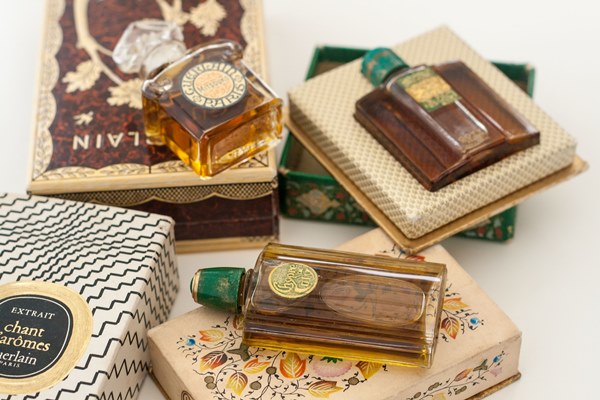
“The first time I encountered a perfume that beguiled me was in the pages of a book. The sultry red-haired witch in Mikhail Bulgakov’s The Master and Margarita enticed women with the promise of “Guerlain, Chanel No 5, Mitsouko, Narcisse Noir, evening gowns, cocktail dresses…” It would be some years before I smelled these perfumes, yet their names left a “baffling but seductive” imprint, just as the novel suggested.”

In my recent FT column, Revisiting Three Perfume Classics, I write about the three legendary perfumes that left their “baffling but seductive” trace in literature and history. They are Chanel No 5, Guerlain Mitsouko and Caron Narcisse Noir. Bulgakov started writing his novel in 1928 and worked on it until his death in 1940. The reason he selected these three perfumes as the lure for the black magic show was because they embodied glamour.

Continue reading →

Things I Learned in 12 Years of Bois de Jasmin

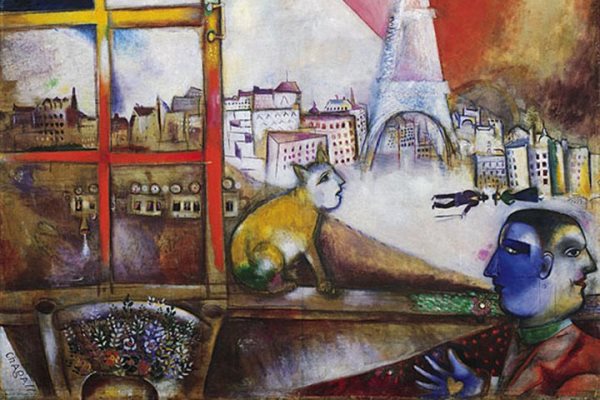
12 years is quite a milestone for a project that I started as a political science graduate student wanting a creative outlet beyond politics and economics. I picked a name, Bois de Jasmin, Jasmine Forest, fantasing of a place where I would rather be instead of a small university town, and wrote a review of Guerlain Jicky, a fragrance created in 1889, the same year the Eiffel Tower officially opened in Paris. The tower received scathing criticism–“a metal asparagus,” as one reviewer called it, while Jicky was praised as avant-garde. So I wrote about perfume classics and the time during which they were created, Balanchine ballets and the links between scent and painting. I was having fun and I thought of Bois de Jasmin as a much needed diversion. Little did I suspect that soon enough it would inspire me to make even greater changes.

When I started thinking and writing about perfume, I rebelled against the idea of olfaction as a superfluous sense. “To which organic sense do we owe the least and which seems to be the most dispensable? The sense of smell. It does not pay us to cultivate it or to refine it in order to gain enjoyment; this sense can pick up more objects of aversion than of pleasure (especially in crowded places) and besides, the pleasure coming from the sense of smell cannot be other than fleeting and transitory,” said Kant. I was discovering exactly the opposite. Paying attention to my sense of smell helped me make connections that I ordinarily wouldn’t have noticed.  It inspired me to study new subjects, travel and even learn new languages. Using my nose more often made my world infinitely richer.


Continue reading →

Jean Carles on Olfactory Training and Perfumer’s Organ

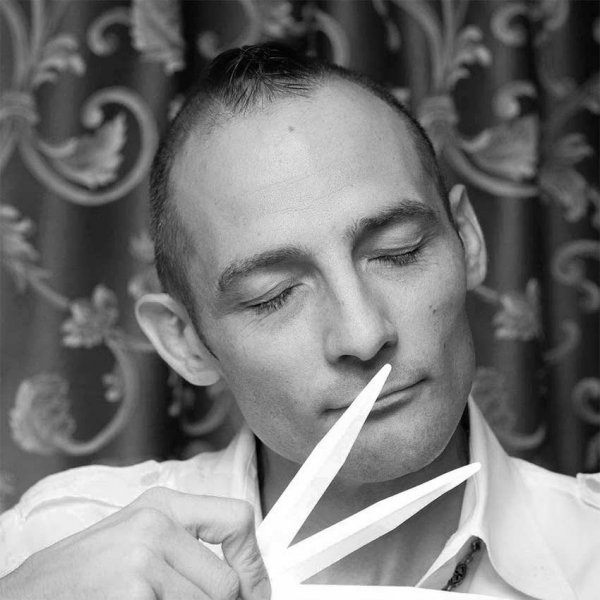
“Perfumery is an art, not a science, as many seem to believe. A scientific background is not necessary for the perfumer; scientific knowledge may even sometimes prove an obstacle to the freedom required in perfume creation,” wrote Jean Carles (1892-1966), the perfumer whose fingerprint is on Miss Dior, Carven Ma Griffe, Dana Tabu, Schiaparelli Shocking, and my absolute favorite, Elle… Elle by Lucien Lelong.

“The creative perfumer should use odorous materials in the same way that a painter uses colors and give them opportunity for maximum development and effect, although it is understood that potential reactions such as discoloration within the ultimate formulation and also the stability of the perfume should be given due consideration. This is about the only use the perfumer will be able to make of his scientific training, if any.”

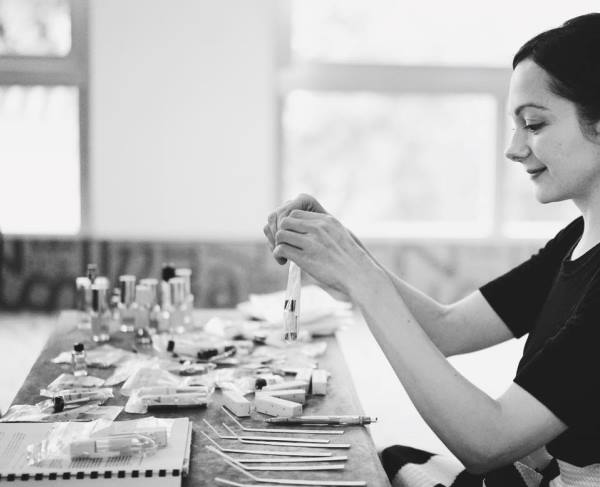
Today many would disagree with Carles’s dismissal of a scientific background, especially when a perfumer is expected to create fragrances for a variety of products, from laundry detergents to candles. Carles himself approached perfumery in a scientific manner, laying out the techniques in his influential “A Method of Creation and Perfumery” published in 1961. All perfumer trainees, myself included, studied according to his theories of smelling and composition.

Continue reading →

As Seen On

Design by cre8d
© Copyright 2005-2026 Bois de Jasmin. All rights reserved. Privacy Policy