Travel: 120 posts

Searching for scents and sensory traditions around the world.

The Hidden Gems of Brussels

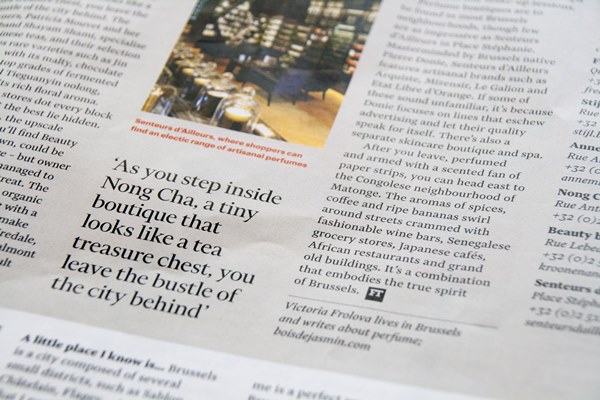
The Financial Times Weekend issue, October 31st, is devoted to Brussels, and it includes my article (p. 19-21) on my favorite places for sensory discoveries. I share advice on where to enjoy the best of Belgian chocolates, rare Chinese teas and beauty products. I also walk you through the fashion district of the city and highlight a few of its must-visit perfume spots. The issue also includes several other pieces on different aspects of Brussels, an interview with one of the best chocolatiers Pierre Marcolini and an excellent piece by Jim Brunsden with a city walk itinerary.
ft weekend

Click here to read the online version.

Of course, my list is not exhaustive, and since Brussels is a dynamic, ever-growing place, exploring its different neighborhoods and making your own discoveries is a special experience. If you’re familiar with the city and have other recommendations, please share them. Also, if there is a Brussels related topic you would like me to cover, do make a note in the comments.

The FT Weekend Magazine is available on newstands right now.
Scented Saints, Written Images, Endangered Heritage

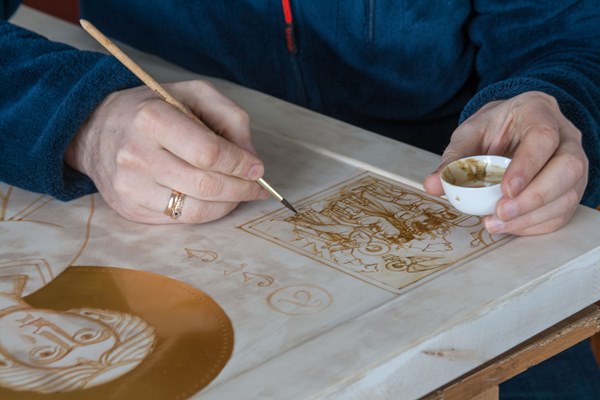
Beautiful sillage is a sign of sainthood in the Orthodox tradition. The fragrance, or mirro (holy myrrh), can be emitted by real life saints, saint’s relics or even icons, painted images of saints. It’s common even today to hear stories of icons shedding myrrh and filling the whole church with the heavenly scent. Such events are called thaumata, a Greek word for wonders. They’re not miracles in the supernatural sense like walking on water or feeding 4,000 with seven loaves of bread. Thaumata are everyday marvels, brief glimpses of the divine through the veil covering us. The same kind of wonder is held responsible for icons, because to paint a saint it’s not enough simply to have artistic skills. One has to be inspired.

lavra-artist-studio1

“I didn’t mean to become an icon painter. It was never my goal as an art student. I can’t explain it, but in the end, that’s just what happened,” says Natalya Gladovska, an icon painter at the Lavra Art Studios. My mental image of an icon painter owes much to Tarkovsky’s Andrei Rublev–a somber bearded monk in black robes. Gladovska laughs when I tell her so. She’s warm and bubbly, and everything about her, down to her tendrils of abundant red hair escaping from a loose bun, is filled with energy and verve.

Continue reading →

Jenever Belgian Liquor : Juniper, Rose, Lavender

Museums where you can exercise your sense of smell are few and far between. As anyone who has tried to convince a gallery to add a fragrance exposition knows, it can be a difficult undertaking. “Not enough funding” is a common excuse. One is left treating the aisles of Sephora as the august halls of perfume education. Or so it seems at first, because besides museums featuring fragrance, there are numerous venues that feature scent. For instance, any museum dedicated to wine or spirits would have a smelling bar and an explanation of aromatics. That you can later taste the stars of the exhibit only adds to the appeal.

lavender2jenever2

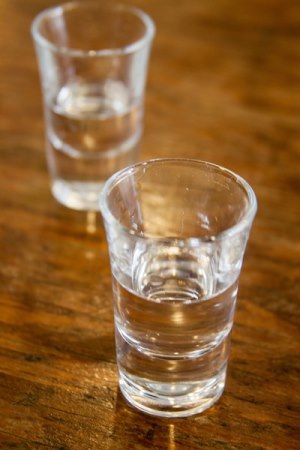
During my research on the lavender farm in Limburg, I discovered that Hasselt, the province’s capital, has a jenever museum. Jenever, also known as genièvre, genever or peket, is an ancestor of gin, a local spirit made out of grain and flavored with juniper and other botanicals, and it has been made in the region since the 13th century. Wine and brandy distilled from grapes have traditionally been expensive, while the surfeit of corn brought from the New World made aqua vitae distillers eager to experiment. The result was a drink described as “banishing cares and making the heart courageous.”

That this 75 proof liquor has such an effect is easy enough to believe. Jenever might have started out as medicine, but instead of using sugar to mask the rough taste of the alcohol base, pharmacists chose a much more interesting approach by flavoring it with spices, herbs and flowers. Eventually, locally grown juniper started to dominate the composition, while jenever moved from the pharmacy shelf to the cafe.

Continue reading →

Belgian Lavender

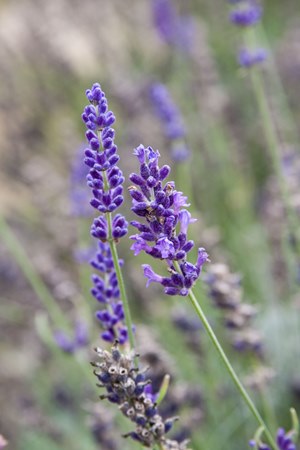
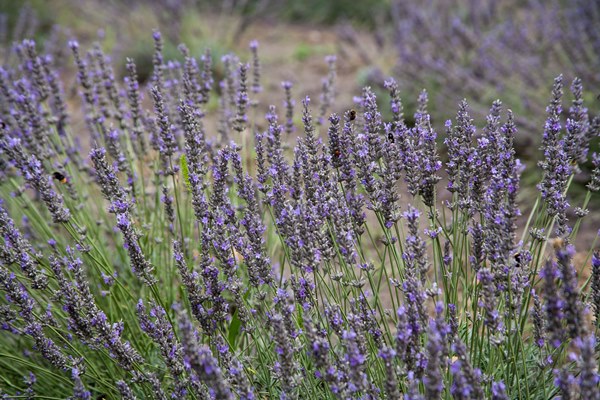
The Belgian province of Limburg is an expanse of green fields punctuated by neat red brick towns. Although Brussels is a much more laid-back and calm city in comparison to London, Paris or Berlin, as I stroll through the woods near Hasselt, Limburg’s capital, I feel as if I just left a bustling metropolis. It’s all serenity, stone church spires and the soft rustle of leaves in the trees lining the river. And the rich perfume of lavender.

lavender1

Although lavender is usually associated with Provence, there is a 4 hectare farm near Herkenrode in Limburg, and it’s open for the summer. “Yes, we have lavender in bloom, and it’s a genuine variety, not lavandin,” I was told by a lady at the nursery. “Please visit before we harvest it.” The following weekend my husband and I drove one hour to Limburg to see the lavender fields of Belgium.

Continue reading →

Petrykivka : Ukraine’s Vibrant Treasure

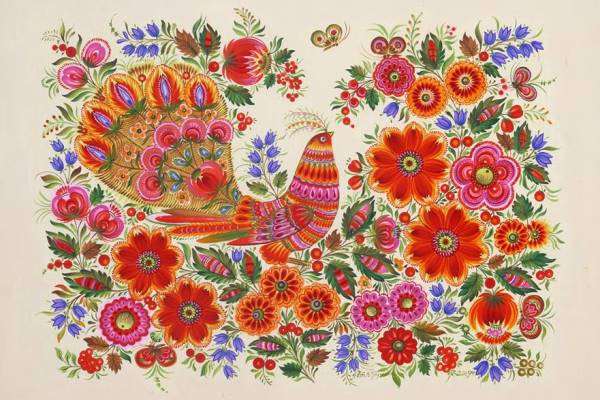
A petrykivka artist’s most important tools are her hands and her cat. To paint the intricate, colorful motifs of this traditional form of Ukrainian folk art, it’s essential to combine bold strokes with delicate ones. The tip of one’s finger might be used to create a cluster of round berries, a mass of dahlia petals or a tangle of oak leaves. But for the fine tendrils and feathers adorning roosters and cuckoo birds, classical symbols with complex meaning, a painter turns to a brush made of cat hair. “The cat first has to agree to give you some fur,” says Natalia Rybak, the artist at the Petrykivka Center for Folk Art, as she shows me the local art collection. “Not all do.”

petrykivka

Petrykivsky painting or “petrykivka” is one of many forms of ancient Ukrainian decorative arts. Its name is derived from the place of its origin, the village of Petrykivka in Dnipropetrovsk region, and it is closely tied to the Cossack tradition. Cossacks were members of the democratic communities that since the 15th century started forming into a loose federation in southern-central Ukraine. Independent from the neighboring states, the Cossack federation offered social freedoms and protection, thus drawing an ever increasing number of people from other regions to its villages. South-east of Kyiv, Petrykivka was established in the 17th century as the wintering ground for the Cossack divisions that spent the rest of the year in the areas around the lower Dnieper River. Even after the Cossackdom was destroyed by the Russian tsars in the 18th century, many former strongholds, such as Petrykivka, retained enough autonomy to develop their traditional crafts.

Continue reading →

As Seen On

Design by cre8d
© Copyright 2005-2026 Bois de Jasmin. All rights reserved. Privacy Policy