Jenever Belgian Liquor : Juniper, Rose, Lavender

Museums where you can exercise your sense of smell are few and far between. As anyone who has tried to convince a gallery to add a fragrance exposition knows, it can be a difficult undertaking. “Not enough funding” is a common excuse. One is left treating the aisles of Sephora as the august halls of perfume education. Or so it seems at first, because besides museums featuring fragrance, there are numerous venues that feature scent. For instance, any museum dedicated to wine or spirits would have a smelling bar and an explanation of aromatics. That you can later taste the stars of the exhibit only adds to the appeal.


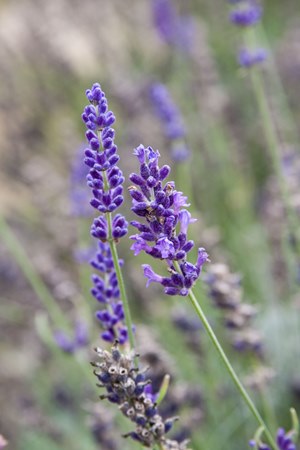
lavender2jenever2

During my research on the lavender farm in Limburg, I discovered that Hasselt, the province’s capital, has a jenever museum. Jenever, also known as genièvre, genever or peket, is an ancestor of gin, a local spirit made out of grain and flavored with juniper and other botanicals, and it has been made in the region since the 13th century. Wine and brandy distilled from grapes have traditionally been expensive, while the surfeit of corn brought from the New World made aqua vitae distillers eager to experiment. The result was a drink described as “banishing cares and making the heart courageous.”

That this 75 proof liquor has such an effect is easy enough to believe. Jenever might have started out as medicine, but instead of using sugar to mask the rough taste of the alcohol base, pharmacists chose a much more interesting approach by flavoring it with spices, herbs and flowers. Eventually, locally grown juniper started to dominate the composition, while jenever moved from the pharmacy shelf to the cafe.

Continue reading →

Doors Open Day at The Osmotheque

On Saturday, September 19th, the Osmothèque perfume conservatory will open its doors to visitors. Part of the Journées Européennes du Patrimoine program, the event gives a chance to discover the Osmothèque and its activities. As part of your tour (the entrance is free of charge), you can explore 4 rooms organized by olfactory themes, rose, vanilla, bergamot and patchouli. Then you can smell various natural and synthetic materials used in perfumery. Finally, you can visit the famous cave d’Osmothèque, a climate controlled cellar where the conservatory stores its 3300 fragrances.

coty chypre ad

The most interesting part of the visit for many would be the perfumes, and quite a few jewels are available. For instance, in the patchouli room, you can smell Coty Chypre (1917), Réminiscence Patchouli (1970), and Rochas Mystère (1978), in addition to modern patchouli examples like Thierry Mugler Angel (1992) and Dior Patchouli Impérial (2011).

Continue reading →

Van Cleef & Arpels California Reverie : Fragrance Review

44444

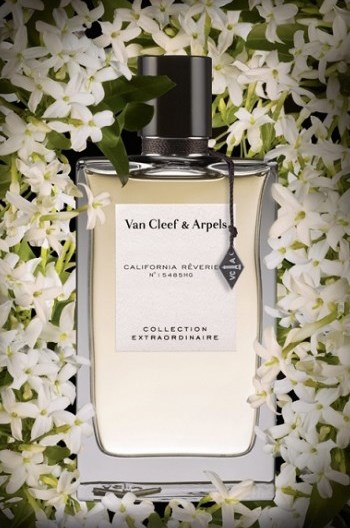
San Francisco is one of the most fragrant cities. The scents of salty sea breeze and jasmine are the strongest recollections from my visits. So I’m with Elisa on enjoying Van Cleef & Arpels California Reverie, an effervescent perfume inspired by California and jasmine. 

I love the idea of perfumes inspired by a place – take Christopher Street, a leather scent named for a street in New York City known for its nightlife. Or any number of Bond No. 9 scents – the connections to the individual neighborhoods have been stretching believability for some time, I admit, but a few – like Broadway Nite, Chinatown, and Fire Island – nail the atmospheres of their respective inspirations. Then there’s a host of perfumes named after spots in Paris, including at least two simply named Paris.

california-reverie

It’s funny, on reflection, that there are so many perfumes named after New York – it’s one of my favorite places to be, but honestly, it kind of stinks. California, on the other hand, seems a bit under-leveraged in perfumery briefs. San Diego, for example, is one of the best-smelling cities I’ve been to; the air smells like sea salt, flowers, and eucalyptus trees.

Continue reading →

Perfumes To Smell, Books To Read : Autumnal Lists

This time of year makes me prone to bouts of melancholy. I don’t like to bid goodbye to summer vacation, August peaches and picnics in the park. Since my school recollections are filled with the institutional smells of many children in confined spaces, burned milk, wet chalk and blackboards cleaned with a musty rag, I can’t get excited about the whole “back to school” thing either. My memory refuses to budge from this Dickensian vision even when prompted by the delicious smells of sharpened pencils and ink; I hated school until I started college.  I get out of my funk once the fall gets further under way and I notice the walnut sweetness of fallen leaves in the morning air and become grateful for any rose still blooming along Brussels’ chestnut lined avenues. But in the meantime, I just make the best of the transition and come up with lists.

brussels-fall1

Lists are somewhat of an obsession. I’ve been an inveterate list maker since my childhood. My mom treasures a compilation of “books I am going to write” that I came up with at the age of 12. They include “The History of India,” “The History of Greece” and “Constantinople, Jewel of the Byzantine Empire.” (Why on earth did I study political science at the university and not history, I now wonder.) I’m less ambitious these days and instead I just make lists of dishes to cook, places to explore in Brussels, perfumes to try or books to read.

Continue reading →

Sweet Tomato Chutney with Pistachios and Raisins

That tomato is a fruit becomes obvious once you pair it with sugar or sweet ingredients. One of the main aromatic components of tomato, furaneol, is also called strawberry furanone by fragrance and flavor chemists, because it’s such an important note in the complex berry aroma. Incidentally, it’s one of the reasons behind difficulties with tomato accords in perfumery–they smell of red berries if there is even a modicum of sweetness in the formula. It’s therefore natural to treat tomato in much the same way as you would a fruit–cooking it into jams, combining it with sweet pastry or melting it down with vanilla and caramel for an ice cream sauce. Or you can make it into a sweet chutney to be served with grilled meat or rice dishes.

tomato chutney

Chutney is an Indian sauce that may be raw or cooked, and the ingredients run the gamut from fruits and vegetables to beans and nuts. I’m a chutney fiend. I firmly believe that a dollop of chutney makes anything better–a sandwich, a bowl of rice, a piece of grilled chicken. So do many Indians, because not only do they excel in coming up with the most unusual chutney combinations, they don’t hesitate in pairing them together. For instance, spicy green coriander chutney is often partnered with a sweet date one. As you dip crisp eggplant fritters first in one, then the other and experience the explosion of flavor, you understand how silly is the whole idea of “less is more.”

Continue reading →

As Seen On

Design by cre8d
© Copyright 2005-2026 Bois de Jasmin. All rights reserved. Privacy Policy