Fragrance for a Gold Autumn

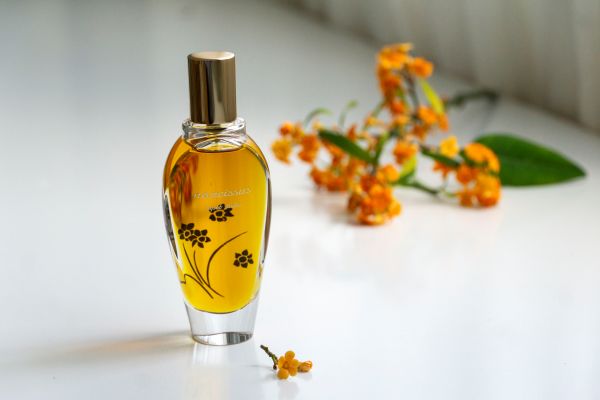
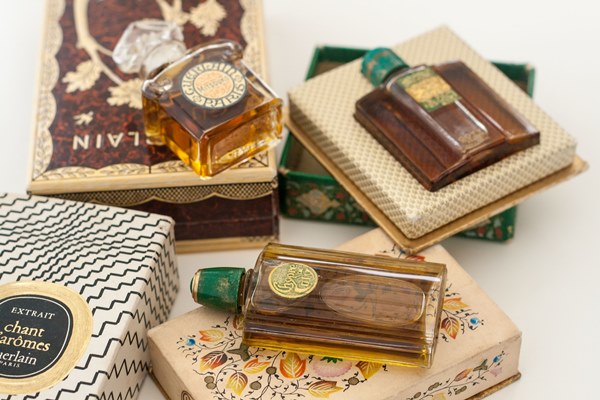
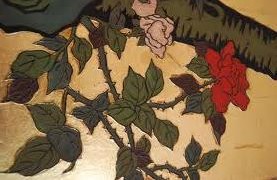
One of the most interesting principles in Japanese garden design is the idea of borrowed scenery, shakkei. Using existing landscape elements—distant mountains, ponds, and neighboring structures, a creator would plan the garden in such a way as to incorporate the surroundings into her composition and create her personal vision of nature. Perfumery is generally more about artifice and fantasy, but as summer fades, I too become inspired to borrow autumnal scenery for my fragrant accompaniment. My perfume choices become led by the scents of fall.


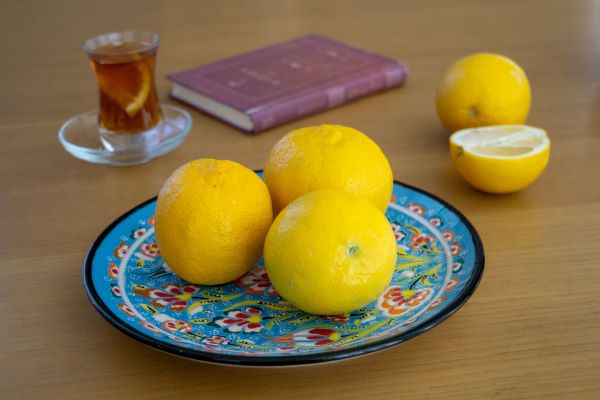
Even in the deodorized urban environment, autumn is a fragrant season. The moment that leaves start to fall, the air is filled with a mellow sweetness reminiscent of walnut shelves and faded leather. On my way to the metro, I take a roundabout way through a park, kicking the golden leaves and glossy chestnuts with the tip of my boots. On my scarf I carry Serge Lutens’s Chypre Rouge, a perfume that smells of maple syrup and bittersweet moss. Or I might select the delicate Bulgari Eau Parfumée Au Thé Rouge, an infusion of tea, ripe figs and maple leaves.

Continue reading →

My German Trip and Book Readings

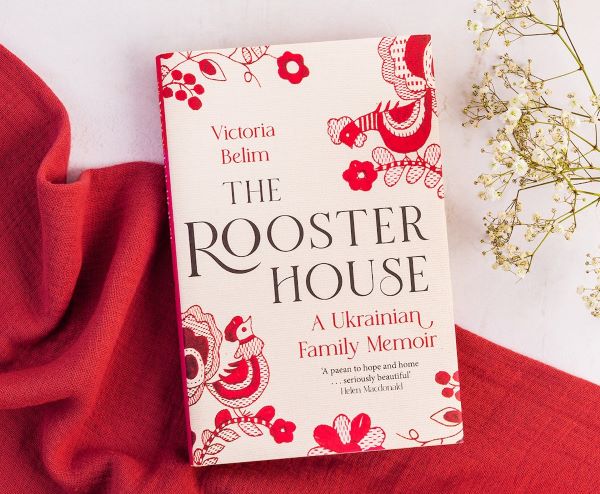
I will be in Germany from October 18th to 26th teaching a writing seminar and talking about Ukraine and my book The Rooster House. I will be visiting Frankfurt, Berlin, Munich, and Leipzig. I hope that I can meet some of you during my visit.

October 18th, Frankfurt

Frankfurt Book Fair, Ukrainian Collective Stand/ Hall:4.1. Stand: B

16:00-17:00
The Rooster House: My Ukrainian Family Story
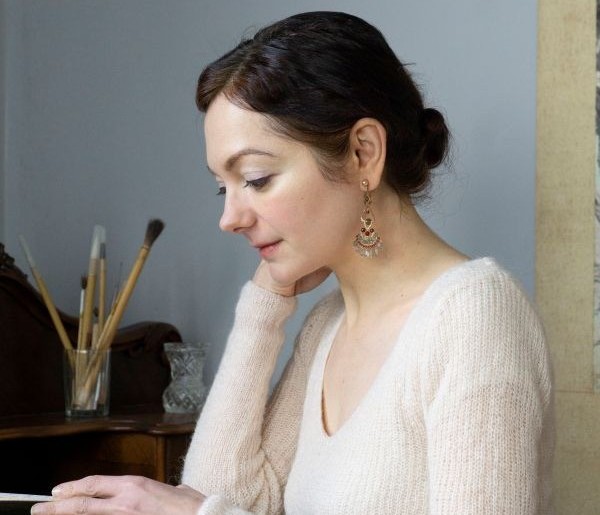
Victoria Belim (Writer, journalist, translator, and fragrance specialist). Moderator: Kyrylo Beskorovainyi (Co-founder of Kunsht).

Ukrainian Book Institute, Goethe-Institut, U.S. Consulate General Frankfurt

In 2014, the landmarks of Victoria Belim’s personal geography were plunged into tumult at the hands of Russia. Her hometown, Kyiv, was gripped by protests and violence. Crimea, where she’d once been sent to school to avoid radiation from the nuclear disaster at Chernobyl, was invaded. Kharkiv, where her grandmother Valentina studied economics and fell in love; Donetsk, where her father once worked; and Mariupol, where she and her mother bought a cherry tree for Valentina’s garden, all became battlegrounds. Victoria, by then a naturalized American citizen then living in Brussels, felt she had to go back. She had to spend time with her aging grandmother and her cousin Dmytro. She had to unravel a family mystery spanning several generations. And she needed to understand how her country’s tragic history of communist revolution, civil war, famine, world war, totalitarianism, and fraught independence had changed the course of their lives. A young woman’s quest to uncover her family’s difficult past reveals broader truths about the present conflict. Victoria Belim’s memoir is a personal history of her family’s turbulent past and a celebration of Ukrainian identity. The German translation was published as “Rote Sirenen. Die Geschichte meiner ukrainischen Familie“ with Aufbau Verlag.
Continue reading →

From The Family Album: Israel

I prepared a different article for today over the weekend, but when I spoke with my cousin in Israel and learned some of her friends ended up among the people held hostage, I didn’t have any motivation to finish my original piece. My cousin was crying and unable to talk and I didn’t know what to say to comfort her. We are not a religious family, but we ended up praying together, wishing for this suffering of innocent people to stop.

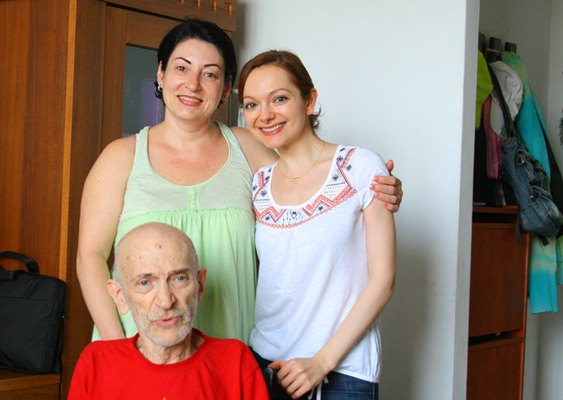
Those who have read The Rooster House know that I have family in Israel. My cousin left Ukraine in the early 1990s and eventually my uncle Vladimir, my father’s oldest brother, joined her. Vladimir was a fascinating character who drives the story in my book–and who inspired my interest in photography and Ayurveda. I have shared previously in Boy With a Fotokor how as a bedridden child suffering from the consequences of polio, he experimented taking photos of his surroundings. He created a large archive of images that are the most vivid captures of the Soviet Union in the 1950s.

Continue reading →

Trip to Kharkiv : From The Rooster House

The news of another Russian attack shook me, because it touched Kharkiv and claimed more than 50 lives. I couldn’t read the news without breaking down in tears. Kharkiv is Ukraine’s second-largest city, located in the northeast of the country. It’s about an hour by train by Poltava, and in my family’s geography, Kharkiv has a special place. That’s where my grandmother Valentina studied at the university, met her future husband Boris and had my mother. I wanted to give you our personal sense of this luminous city by sharing an excerpt from my book, The Rooster House. The scene describes our return to Kharkiv for Valentina to discover it after many years away and for me to discover yet another mystery.

Kharkiv was waking up to the rustle of the street cleaners’ brooms, the melodic whine of trams speeding down narrow alleys and the glare of the morning sun. Valentina and I took a bus from the train station, crossed a bridge over a muddy river and drove past old buildings draped in advertisements for manicures, beer on tap and legal help. The imposing blocks of the Soviet novostroiki, literally ‘new buildings’ that were no longer new, sidled up next to modern churches that aimed to look old.

Despite the changes the city had undergone since Valentina was a student, I could easily imagine what she must have felt on her first visit. Kharkiv had neither the splendour of Kyiv nor the bucolic charm of Poltava, but it had grandeur. The buildings were massive; the streets were wide; the monuments outsized. Kharkiv was also a town of memorial plaques. On every corner, a hero had died and a poet had penned a verse. I also noticed many blank spots where plaques had been removed. Some heroes were heroes no longer.

Continue reading →

In the Defense of Perfume and Other “Feminine” Pursuits

I often receive letters from women explaining that they feel guilty about their interest in perfume, because it’s “too indulgent” or “unnecessary.” It’s a luxury and we can live without it. Or so the argument goes. Except that it doesn’t make sense. Perfume is not a fundamental need for human life, but you could say the same for music, art, fashion, sports, restaurants or millions of other things that are not strictly necessary for survival but essential for a happy life. There is no reason to deprive yourself of something that gives you pleasure, and giving in to it shouldn’t be associated with guilt.

Scent is one of the simplest and most rewarding of enjoyments. By stimulating the sense of smell, you fantasize about another time and place, uncover a whole universe of new sensations and add splashes of color to the most ordinary day. Something as ubiquitous as a trip to the grocery store can become a fun experience as you smell the earthy tang of carrots or the pungent sharpness of onions piled in the vegetable section.  New research has revealed that the sense of smell is even more intricate than previously thought, and that smelling is one of the best exercises for the brain.

Continue reading →

As Seen On

Design by cre8d
© Copyright 2005-2026 Bois de Jasmin. All rights reserved. Privacy Policy