Perfume Trends: 62 posts

Overview of fragrance trends and popular perfumes

Popular Brands and Perfumes of 2020

For those who like lists and rankings, I have a little treat today courtesy of the Cosmetify Index, a service that ranks the most searched for and followed beauty brands around the world. The Cosmetify Index was created in 2019 to see how brands engage with social media and also how consumers respond to new launches. The newest index tracked searches and engagement in 2020, assessing the impact of the pandemic on beauty and fragrance sales.
The Cosmetify Index also tracks which brands are popular in which country, so you can glean fascinating information like Russia being a Jo Malone country, while China favors Estée Lauder. Yves Rocher rules in France, Italy, and Spain, while Rituals holds court in Germany, Scandinavian countries, and unexpectedly, Angola and Bhutan. The Indian subcontinent is united in its love for The Body Shop, although Nepal prefers Dove. And so on. Of course, these are the macrotrends and generalizations, but all trend reports are bird’s-eye-view snapshots.
Continue reading →

5 Modern Perfumes with a note of surprise

A good fragrance smells familiar, a great fragrance smells surprising. The whole quest of modern perfumery can be summed by this sentence. We’re instantly attracted to the scents that remind us of something — a pleasant memory or another pleasant perfume, which is why well-liked, best-selling fragrances are often reminiscent of other perfumes on the market. A composition that rises above a merely easy-to-like, however, has an unexpected element. This surprising touch makes the scent linger in the memory and intrigue us. Finding the right combination of familiar and surprising is part of perfumer’s aim.


The five fragrances below represent different genres and styles, but the one element they have in common is surprise. I’ve selected examples that surprise rather than jolt to show subtle accents at play. These perfumes reinterpret classic themes, challenge conventions, and most importantly, smell wonderful.

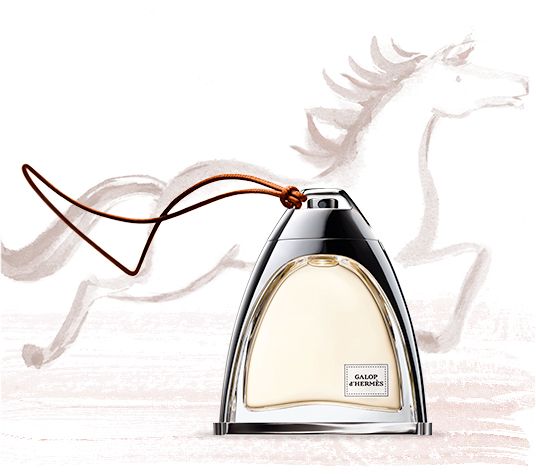
Galop d’Hermès

At the top of my list is Galop d’Hermès, a fragrance that appears at first as a pastel toned, chic rose but has a dark, smoldering heart. To wear Galop is to be enveloped in soft layers of leather, woods and musk. The new Hermès in-house perfumer Christine Nagel also added an accord of incense inflected rose and juicy quince, an additional surprise.

Continue reading →

Three Crisp and Bright Incense Perfumes

Frankincense, the subject of my recent article and video, is on my mind again. Today I would like to reply to a request for fresh and bright incense fragrances that can be worn during warm weather.

Frankincense is a chameleon of a note, and it can evoke different impressions depending on what other ingredients are used in a composition. In general, if you’re looking for a fresh incense blend, consider fragrances with green, leafy and citrus notes. If you’re after a dark, smoky incense, search for notes like benzoin, tonka bean, Peru balsam, amber and guaiacwood.

Fragrances mentioned in the video:

Aedes de Venustas Copal Azur

Comme des Garçons Zagorsk

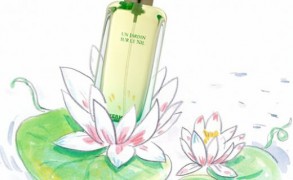
Hermès Un Jardin sur le Nil

More on the subject of incense: why the supplies of frankincense are fragile and which brands source sustainably.

What unconventional fragrances do you prefer during summer? What are your favorite incense perfumes?

Is It Time to Rename the Oriental Fragrance Family?

My original article on this topic was published in FT’s magazine, March 2016 issue, but the topic is as relevant as ever so I decided to continue the discussion here.

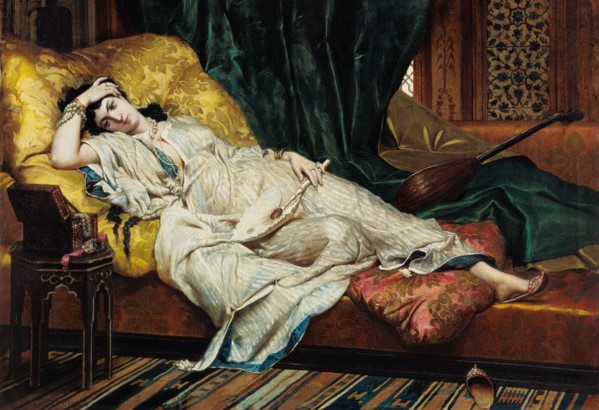
The world of perfume press releases is one in which Edward Said never wrote “Orientalism”.  Odalisques lounge in the incense-scented harems of marketers’ imaginations. The Mughals are still ruling India, and the Arabian Desert is a vast expanse of golden sands populated with handsome explorers—not an oil well in sight. There is even a fragrance family called “oriental.”

The term is misleading and vague. The Middle East and North Africa have old and sophisticated fragrance traditions, but the average oriental one might come across at Harrods has little to do with their classical forms. This family of French perfumery grew in tandem with other 19th-century developments in society, economy and art. As Ingres painted his erotic ideals in a harem setting, perfumers used heavy, rich notes like balsams, vanilla and musk to fashion their fantasies of the east. The fascination lingered well into the 20th century. Guerlain Shalimar was created in 1925, but it reprised all the hallmarks of the genre—opulence, warmth and an exotic backstory.

Continue reading →

What Materials Are Valued by Perfumers And Why

If you’ve ever been confused by a term “matières nobles” or “noble materials” in a perfume marketing description, I have a video for you. These materials are so called, because in classical French perfumery, they are renowned for their expense and know-how required to produce them. These materials typically include floral essences such as rose oil, rose absolute, jasmine absolute, tuberose absolute, etc. The term should be taken with a grain of salt, because just because a press release mentions “matières nobles,” there is no guarantee that they’re present in a discernible amount or that they are “noble” indeed. Natural essences also have quality categories.

In the video, I describe the history of the term and then mention the materials that are valued by perfumers. To explain how they are used in a fragrance formula, I will use the following perfumes as my examples:

Serge Lutens A La Nuit
Chanel No 5/Jean Patou Joy
Etat Libre d’Orange Rossy de Palma
Acqua di Parma Iris Nobile
Frédéric Malle Une Fleur de Cassie
Comme des Garçons Wonderwood

Any materials that you particularly like in fragrances? What note mentioned in descriptions tempts you to try a fragrance?

As Seen On

Design by cre8d
© Copyright 2005-2026 Bois de Jasmin. All rights reserved. Privacy Policy