Perfume Notes: 112 posts

Articles on perfume ingredients and fragrance terminology

Opoponax : Velvet and Smoke Perfume Ingredient
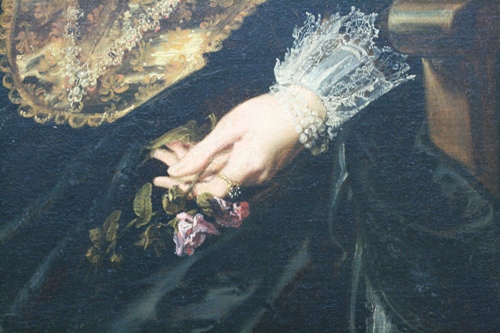
I never fully appreciated the beauty of a material with a funny name like opoponax (also spelled as oppoponax or opopanax) until about a year ago when I had to test a large batch for quality. A huge vat was unloaded on my desk and as I took off the lid and leaned over to dip a testing strip into the molasses-like liquid, the wave of warm, sweet scent washed over me. It smelled of aged scotch, mahogany shavings and bitter caramel, but it was also velvety and powdery. It was overwhelming to smell opoponax in such a way, but the tactual, almost tangible presence of its scent made a strong impression on me.

Of course, you don’t need a vat of opoponax to appreciate its suave presence in perfumes. Opoponax is sometimes called the sweet myrrh, because both myrrh and opoponax are derived from the bark of the Commiphora species (in case of opoponax from Commiphora opoponax/Commiphora erythraea). Its relationship to myrrh is mostly botanical, because opoponax smells sweeter, warmer, more powdery and smoky. Myrrh makes me think of damp stones; opoponax brings to mind the smoldering embers of a fireplace. Myrrh is a somber Gregorian chant, and opoponax is a joyful madrigal.
Continue reading →

Lilac : Perfume Note That Smells of Almonds and Roses

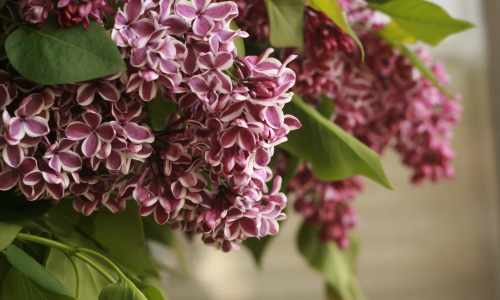
My childhood smelled like crushed strawberries, dirt caked fingers, freshly baked sugar buns, sun dried linens and lilacs. Those few days in the spring when the lilacs would bloom profusely and fill our house with their heady perfume were enough to leave a lasting memory for years. So whenever I see a lilac bush in bloom, I can’t resist burying my face in the thick foam of its tiny blossoms.  Lilac smells of roses, milky almonds and green leaves. The first whiff is citrusy and fresh; a deeper inhale reveals its haunting accent of decay and mothballs (indole, the same aromatics that give jasmine, tuberose and orange blossom their seductive timbre).

Continue reading →

Speaking Perfume : A-Z of Common Fragrance Descriptions

The inability of our language to fully capture the nuances of scents can be very frustrating. We associate scents with something – a place, a memory, a flavor – but most people struggle to describe smell on its own terms. Perfumers and professional fragrance evaluators overcome some of the communication issues by being trained to use specific terms to define fragrances. Often this language finds its way to press releases and perfume counters, but lacking an explanation, it is often meaningless. Who would ever guess that “aromatic” in perfumery parlance means green, camphorous, herbal notes, as opposed to “having an aroma,” as a dictionary would define it? Or how would one define balsamic, aldehydic and floralcy?

blue-flowers

A few months ago we chatted about the terms we found confusing, and based on that discussion I made a list of common terms and perfume descriptors. This list is constantly updated, and for more information on a specific term, please click on the link associated with it. Please feel free to suggest other terms to add.

A B C F G H I L M O P R S T V W Z

Continue reading →

Building Perfume Wardrobe Guide Part 6 : Ambery

Offering

Part 1: Florals ~ Rose
Part 2: Florals ~ Jasmine and White Florals
Part 3: Florals ~ Lily of the Valley and Violet
Part 4: Florals ~ Blends
Part 5: Essentials

My Perfume Wardrobe is back from its winter break with a new installment on ambery fragrances. This perfume genre is warm and sensual, with rich notes of vanilla, amber, patchouli, sandalwood and musk. The fragrances like Coty’s  L’Origan (1905), Ambre Antique (1910) and Émeraude (1921) paved the way to the dazzling array of ambery perfumes available today.

Continue reading →

Myrrh : Sensual, Haunting Perfume Note

My

Even if you’ve never smelled myrrh, a gum resin obtained from Commiphora myrrha trees native to Yemen and Somalia, its aroma contains so many familiar hints that it is not likely to seem exotic. Strange, maybe, but not completely foreign. Imagine the scent of raw mushrooms and black licorice, then add a bit of smoldering damp wood and bakery exhaust fumes. For some people it is also reminiscent of cool church stones, since myrrh is often used in liturgical incense blends.

Among the notes in the perfumer’s palette, some materials have a reputation of being challenging. Myrrh is one of such difficult, but exciting notes. It has so much character that unless a perfumer is a skilled technician, myrrh ends up smothering the fragrance. As perfumer Calice Becker observes, myrrh for a perfumer is like butter for a chef; it enriches the flavors.  A proper balance of myrrh with other ingredients results in a sensual, haunting character. The dose can range from a delicate accent to a heavy-handed stroke, but in all cases, myrrh indeed deepens the composition.

Continue reading →

As Seen On

Design by cre8d
© Copyright 2005-2026 Bois de Jasmin. All rights reserved. Privacy Policy