Food & Fragrance: 176 posts

Articles about the gourmand pleasures, flavorful cooking, scent and taste experiments and tested recipe ideas

Cauliflower with Saffron and Coriander

Saffron has the reputation of a luxurious spice. Use it in tiny quantities for the most delicate of preparations like custards and seafood bisques, advises many a cookbook. Certainly, unless you live in saffron producing areas like Iran, Turkey or Kashmir, you’ll pay more for saffron than other spices in your collection, but its flavor is so dramatic that it’s worth a splurge. What I don’t agree with is using saffron only in special occasion dishes. Life is too short for that.
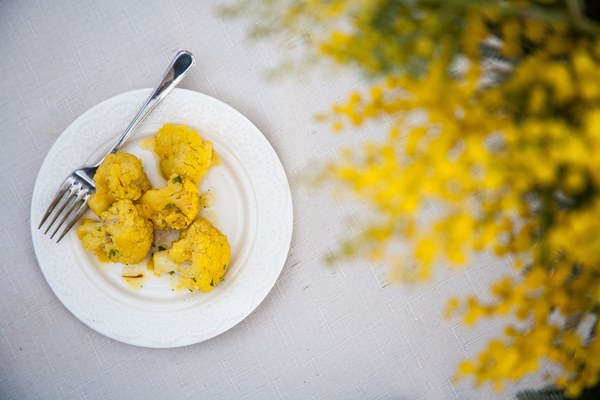
cauliflower-saffron1

Saffron has a medicinal-leathery scent, with a hint of apricot and floral notes. Its fragrance will entice on its own, but it’s bold enough to stand up next to strong flavors. Today’s recipe is a good example. It’s a cold cauliflower dish, and it’s a good vehicle for saffron. The combination of coriander, saffron and white wine is the right blend of spice and acidity, and it gives cauliflower elegance that one doesn’t usually expect from cruciferous vegetables.
Continue reading →

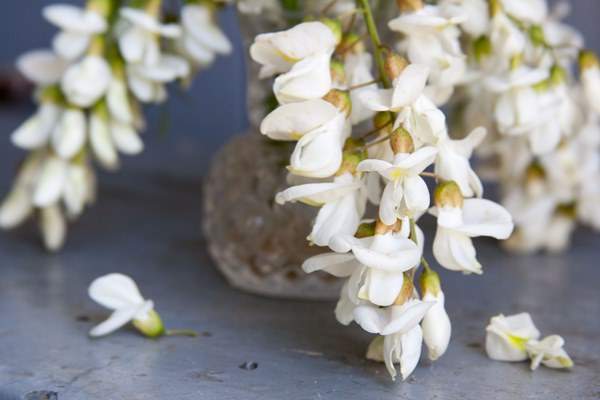
White Acacia Tisane

Acacia blossoms mark the beginning of summer in Poltava. White clusters appear on craggy trees that ordinarily get noticed only because their powerful roots crack the pavement around the city. But come May, the streets are filled with their perfume of sweet orange and jasmine and the sidewalks are covered with a carpet of white pointy blossoms. “Now it’s really the end of spring,” remarks an elderly woman to no one in particular. She rearranges bunches of green onions and dill on a makeshift stall she set up near a bus stop and brushes off the fallen acacia flowers onto the pavement.

white acacia

I count spring not in months but in flowers. First come apricot blossoms and star magnolias. Then cherry blossoms make their brief entrance turning dreary Soviet-era street blocks into Impressionist etudes. Apples, lilacs, and viburnum move in successive waves, and finally it’s the time of acacias. In their heady perfume I smell the blistering heat of summer and dusty chestnut leaves.



Continue reading →

Haft Seen

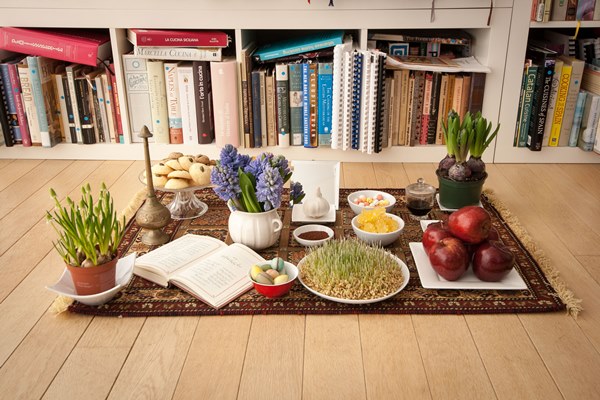
Out of all holidays, Nowruz and Easter inspire me the most with their promise of rebirth and hope. Nowruz, which means “new day” in Persian, falls on the spring equinox (March 20th in 2016) and is celebrated for the thirteen following days. Often called Persian New Year, it’s an important celebration not only in Iran, but also Azerbaijan, Afghanistan, Georgia, India, Turkey, and other lands that were once part of the political or cultural Persian sphere.

haft seen1

I received a glimpse of Nowruz through my Azeri stepmother, although my own explorations directed me further down the path. While today it is by and large a secular event, observed by people of different religions and communities, Nowruz is a 3000 year old holiday with rich symbolism and ties to ancient Zoroastrian traditions. Nowruz contains beautiful, colorful and uplifting elements, a great reason to celebrate it.

Continue reading →

Sweet Orange Salt, Bitter Orange Sugar

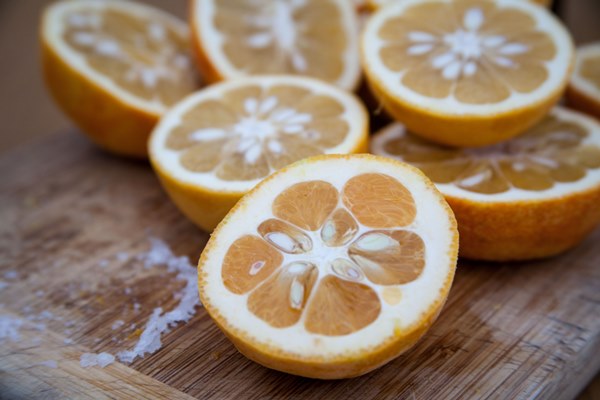
Citrus is the main reason I’ll miss winter. The season of blood oranges, lemons and grapefruits is winding down in our parts, and although I look forward to the strawberries and cherries of spring, a perfect orange is enough to make me forget the cold, sticky snow and grey skies of Belgian winters. Orange rewards you with both taste and smell, since few other plants are so willing to yield their aromatic oils. With orange–or any other citrus fruit–you only need to squeeze the thick spongy peel to experience essence in its pure form.

bitter orange1

It’s a pity to waste all of that goodness, and if I have organic , unsprayed fruit, I preserve the zest in a variety of ways: by candying, flavoring vinegar, mixing with tea, drying or perfuming salt and sugar. The latter is by far the easiest and most versatile way to capture the aroma. All you need to do is to grate the colored part of the fruit and mix it with the base ingredient of your choice.

Continue reading →

Expanding Your Smell Vocabulary via Wine Tasting

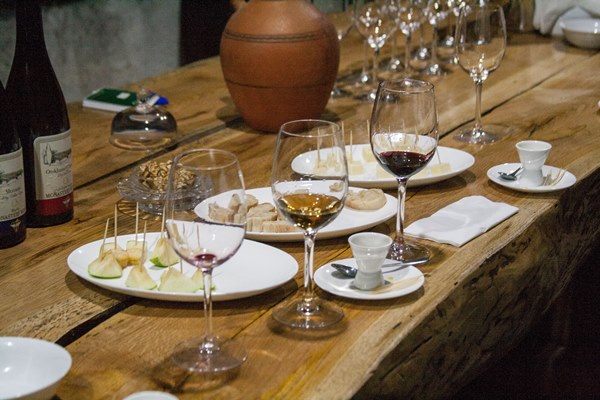
How to improve both your sense of smell and your ability to speak about aromas via wine tasting? Elisa explains.

A few months ago I read a sentence in the Atlantic that gave me serious pause: “In English, there are only three dedicated smell words—stinky, fragrant, and musty—and the first two are more about the smeller’s subjective experience than about the smelly thing itself.” Excuse me, what? I can think of a lot more smell words than that. How about aromatic, acrid, pungent, yeasty, perfumey, resinous, skunky?

wine tasting

And those are just the “dedicated smell words” – but most descriptive terms can be used for multiple types of sensory experience. “Rosy” could refer to a perfume or a complexion, “silky” to a fabric or a voice, “sharp” to a taste or a smell or a sound or a feeling. Our senses aren’t as distinct as we think – most of “flavor” is actually smell (that’s why you can’t taste your food when you have a cold), and sound effects or different color packaging can make your chips taste fresher or your soda taste sweeter. (See also the “McGurk effect” – seeing a different mouth shape makes you “hear” a different sound.)

Continue reading →

As Seen On

Design by cre8d
© Copyright 2005-2026 Bois de Jasmin. All rights reserved. Privacy Policy