Classical Challenge

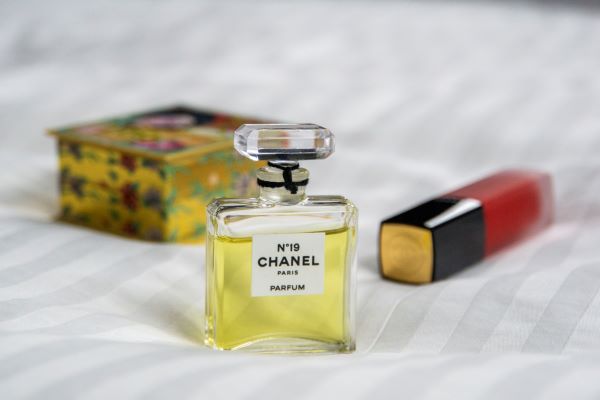
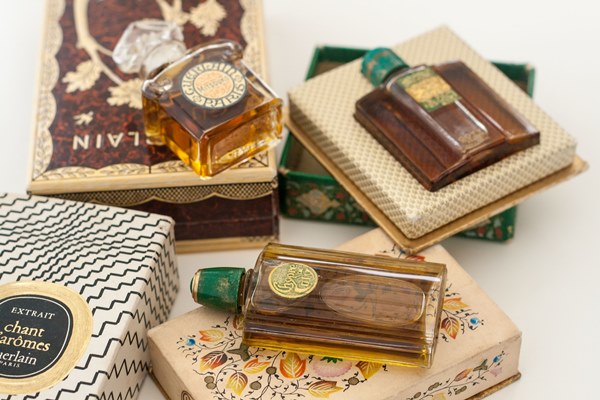
“I have no luck with classical perfumes,” confessed a friend. “My grandmother wore Jean Patou Joy, my mother loved Chanel No. 5, but when I wear these fragrances, I feel like I’m playing dress up.” She wondered why she completely missed the allure of fragrances widely considered iconic.  It is easy to attribute it to personal tastes and associations, but I decided to embark on a classical challenge.

The French use the phrase “grand parfum” to describe fragrances that not only have symphonic complexity but also a distinguished heritage. Chanel No. 5 is a quintessential example—created in a remarkable collaboration between Coco Chanel and perfumer Ernest Beaux, it revolutionized the ‘20s with its daring blend of aldehydes, manmade materials that smell starchy and metallic, and opulent floral essences. It is voluptuous, rich and heady. Today, on the other hand, we are no longer used to the strong burst of aldehydes, and the curves in perfumes—as on Hollywood actresses—are toned down.

Continue reading →

Recommend Me a Perfume : December 2020

Merry Christmas! I wish all of you happy holidays. May this season be full of light, beauty and happiness for you. May all of us make the most of whatever remains of this year, even if we say goodbye to it with few regrets. Our “Recommend Me a Perfume” thread is open this week. You can use this space to find perfume recommendations, to share your discoveries and favorite scents, and to ask any questions about scents, aromas and flavors. Or you can just tell us what perfume you are wearing!

How does it work: 1. Please post your requests or questions as comments here. You can also use this space to ask any fragrance related questions. To receive recommendations that are better tailored to your tastes, you can include details on what you like and don’t like, your signature perfumes, and your budget. And please let us know what you end up sampling. 2. Then please check the thread to see if there are other requests you can answer. Your responses are really valuable for navigating the big and sometimes confusing world of perfume, so let’s help each other!

To make this thread easier to read, when you reply to someone, please click on the blue “reply” link under their comment.

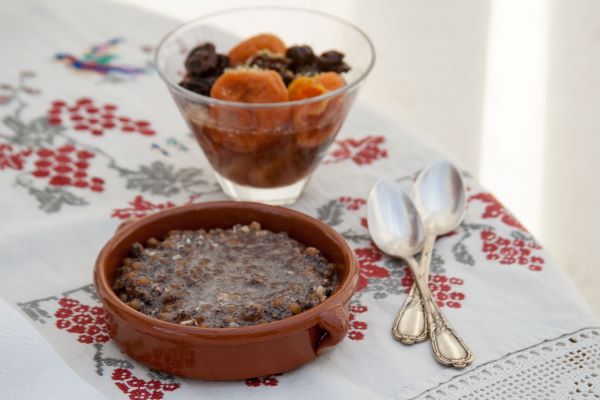
Photography by Bois de Jasmin, a Ukrainian traditional Christmas dish called kutya. I have a recipe for it here as well as a recipe for the spiced fruit compote that accompanies it.

Synthetics in Perfumery : Hedione Part 2

As a counterpart to the first series of Synthetics in Perfumery, here is the second part. The material I cover today is hedione. I explain how and by whom it was discovered, what led up to the experiments with hedione and what makes it such an important material. Hedione, which is the Firmenich tradename for methyl dihydrojasmonate, occurs naturally in jasmine. While its quantity in jasmine essence is quite small, it provides a unique radiant effect–and that is what Edmond Roudnitska discovered when he used it to create Dior’s Eau Sauvage. While on its own hedione doesn’t have a particularly strong character, the luminosity and radiance that it lends to compositions are striking.

Without hedione, Eau Sauvage would have been a well-crafted but not particularly memorable cologne. Without hedione, we wouldn’t be able to experience a variety of sensations and textures. It’s one of the most versatile perfume materials and today it’s hard to find a fragrance that doesn’t include it.

If you’ve liked my video and want to learn more about hedione, here is another article: Hedione Luminous Jasmine. It includes a number of perfume examples and mentions the doses of hedione used in them.

Gold, Frankincense and Myrrh

When they saw that the star had stopped, they were overwhelmed with joy. On entering the house, they saw the child with Mary, his mother; and they knelt down and paid him homage. Then, opening their treasure chests, they offered him gifts of gold, frankincense, and myrrh.” Matthew 2:11

Gold, frankincense and myrrh have been venerated since antiquity and their importance often exceeded their monetary value. Many know the Biblical story of the adoration of the Magi, but you can find mentions of these materials interspersed in Hindu, Islamic and Judaic texts. Since perfumery reflects trends in art, fashion, and society at large, I have always wanted to explore the three gifts of the Magi in the context of fragrance. I thought that it would be a fascinating exercise.

While the value of gold may be self-evident, its ability to hypnotize and dazzle is even more prized. The pursuit of such an irresistible sensation has deeply influenced perfumery, despite the fact that gold does not have an obvious olfactory profile. After all, just as gold is an exquisite adornment, so too is perfume.  Although every perfumer might interpret the gilded idea differently, many gold fantasy accords fall in the realm of rich oriental notes—spice, amber, balsam, tobacco, vanilla.

Continue reading →

Synthetics in Perfumery : Intro and Background

I’ve made a series of videos about synthetics in perfumery–from a perfumer’s perspective. I would like to explain why certain synthetic aroma-materials have become important in modern perfumery and what effects they create. The video I share today is the  first in the series, and it will offer an overview of the topic as well as talk about one of the most important synthetics. The second video will be released next week.


If you have any suggestions on the materials you would like me to cover or specific topics, please let me know. I note down all of your requests. Thank you!

As Seen On

Design by cre8d
© Copyright 2005-2026 Bois de Jasmin. All rights reserved. Privacy Policy