Perfume 101: 517 posts

Here you can find how to guides to selecting, testing and enjoying scents. Also includes are the lists of our top favorite perfumes for different occasions and articles covering all range of topics related to fragrance. If you’re curious to step inside a perfume lab (or even become an industry professional), this group of essays will be of interest.

The Scent of Empire Chanel No 5 and Red Moscow by Karl Schlogel

The Scent of Empire: Chanel No 5 and Red Moscow by Karl Schlögel

The first time my grandmother was introduced to my future grandfather, he was performing a duet with his brother. Identical twins and devastatingly handsome, the duo sang their most popular number about a girl holding a bottle of “Tejé.” This French-sounding perfume intrigued me, but despite searching for Tejé in Google and various perfumery databases, I couldn’t find any trace of it. It was not until I read Karl Schlögel’s book The Scent of Empire: Chanel No 5 and Red Moscow did I realize that that it wasn’t Tejé, but rather TeZhe. It certainly was not French. TeZhe stood for the State Trust of Fat and Bone Processing Industry, which included perfume manufacturing. It was the LVMH of the USSR, if you will, and it was under its auspices that the most famous Soviet perfume, Red Moscow, was born. Schlögel’s book is about the world of Red Moscow and its intriguing connection to Chanel No 5.
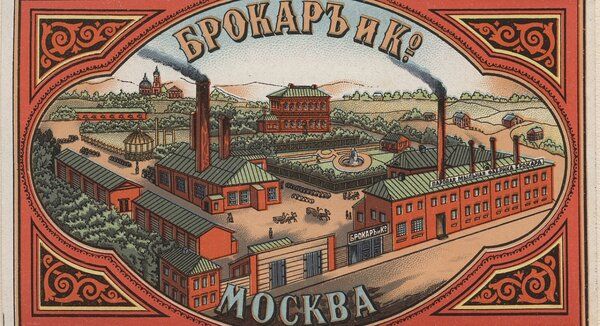
Brocard Moscow vintage poster

Schlögel’s story alternates between Moscow and Paris, Red Moscow and No 5 and the personalities that surrounded them. Red Moscow was created in 1925 by Auguste Michel, who like the creator of No 5, Ernest Beaux, was a French perfumer working in Moscow. Michel was born in Grasse and joined Rallet in Moscow in 1908, where he and Beaux were students of Alexandre Lemercier. Beaux and Michel had been influenced by the work on aldehydes done by the perfumer Robert Bienaimé at Houbigant. Beaux remained with Rallet, while Michel moved to work for Brocard, another French perfume house in Moscow.

Continue reading →

The Perfect Scent of Spring and Cherry Blossoms

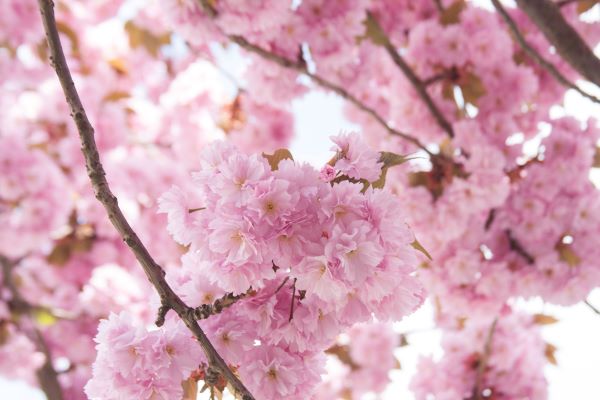
Be wary of perfumes called Cherry Blossom. They promise a whirlwind of pink petals and poetry, but they’ll deliver a wan fruity-floral scent that doesn’t come close to the real thing.  What do they smell like, these flowers, that despite falling off almost as soon as they open, have captured the imagination of poets and philosophers? To contemplate a cherry blossom is to reflect on beauty and mortality, the passing of time and the power of subtle things.

The scent of cherry flower is indeed subtle, but it’s not bland. Neither is it sweet or fruity of the commercial fragrance type. The scent is bitter and green. If you bury your face in the petals and let the yellow pollen settle on your cheeks, you notice hints of Amaretto, honey and green sap. It’s surprisingly assertive, with enough character to stand out next to the pungent aroma of blooming pears and the sugary sweetness of apple flowers. Every spring, I wish I could distill it all into a fragrance, and every spring I give up on this idea. As Japanese poets have rightly noted, the beauty of cherry blossom is in its evanescence.

Continue reading →

Fascinating Perfumery: How Violets and Ionones Made History

It’s not an understatement to say that without the humble violet we wouldn’t have perfumery as we know it today. At the end of the 19th century when the fashion for violet perfumes was all the rage, several German chemists set out to isolate the aroma-material that gives this flower its delicate and yet persistent scent. Until then violet essence was distilled from the flowers of Viola odorata, a process that required more than 33,000 kg of flowers to obtain a kilogram of violet oil. The search for Veilchenduft, the scent of violet, led to the discovery and isolation of ionones, a class of materials that are sweet and powdery.

In today’s film, I describe how this violet-scented revolution happened and compare different types of ionones. The term ionone is derived from the Greek word “iona,” which means violet, and “ketone” referring to its chemical structure. Several isomeric ionones occur naturally in flowers like rose and violet as well as in different fruit and berries. Fine grades of Japanese green tea are rich in ionones as is milk–if a cow eats ionone-rich alfalfa, ionones will then be found in its milk.

I mention several violet gold standards such as

Coty L’Origan

Guerlain L’Heure Bleue

Chanel No 19

Chanel Coco

Rochas Femme

Yves Saint Laurent Paris

Lancôme Trésor

This episode focuses more on the classics, and in the next film I will discuss modern fragrances featuring ionones. Ionones: Sweet and Powdery includes even more perfumes and information on these fascinating materials.

Of course, I would love to hear about your favorite violets, vintage or modern. 

Bitter Orange Smells Sweet : Favorite Perfumes

Bitter orange peel has a beautiful sweet-floral fragrance, with hints of spice and pine. Yet, in contrast to sweet orange, bitter orange essential oil is less commonly used in perfumery. In this the final episode in the bitter orange series, I will explain why it is so. Then I will talk about some of my favorite bitter orange perfumes and describe how bitter orange notes contribute to their characters.

The perfumes mentioned in this episode include
Frédéric Malle Cologne Bigarade
Jo Loves Green Orange and Coriander
Miss Dior Chérie L’Eau
Atelier Cologne Orange Sanguine

Continue reading →

What Does Petitgrain Smell Like and My Favorite Perfumes

What is petitgrain and how does it smell like? This iconic perfumery material is derived from the same plant as neroli and orange blossom absolute, bitter or Seville orange tree. Its name means “small grain” in French, and it refers to the fact that traditionally petitgrain was distilled from immature bitter orange fruit. Today, twigs and leaves are more likely to be used. And it smells heavenly–green, sparkling, bright, with a distinctive orange blossom accent.

My new video is devoted to everything petitgrain. I describe how it’s usually used in perfumery and then mention my favorite fragrances that illustrate the complex facets of this essential oil.

Continue reading →

As Seen On

Design by cre8d
© Copyright 2005-2026 Bois de Jasmin. All rights reserved. Privacy Policy