books: 37 posts

À rebours (Against Nature) by Joris-Karl Huysmans : Scents in Books

“From black-rimmed plates they ate turtle soup and eaten Russian rye bread, ripe Turkish olives, caviar, salted mullet-roe, smoked Frankfurt black puddings, game in gravies the colour of liquorice and boot-blacking truffled sauces, chocolate caramel creams, plum puddings, nectarines, preserved fruits, mulberries and heart-cherries; from dark coloured glasses they drank the wines of Limagne and Rousillon, of Tenedoes, Val de Peñas and Oporto, and, after the coffee and the walnut cordial they enjoyed kvass, porters and stouts.”

― Joris-Karl Huysmans, Against Nature

His writing inspired Oscar Wilde—and corrupted Dorian Gray. As an art critic, he discovered Degas and Odilon Redon. Joris-Karl Huysmans (1848-1907) was one of the most prominent stars of the European art scene at the end of the 19th century, and yet he remains little known to the general public. However, two events this year are putting Huysmans into the spotlight. First, the Bibliothèque de la Pléiade, published by Gallimard, has added his works to their prestigious collection of classics. Second, Musée d’Orsay will hold an exhibition from 26th November 2019 to 1st March 2020 devoted to Huysmans’s contributions to 20th century aesthetics.
Continue reading →

5 Things That Inspire Me

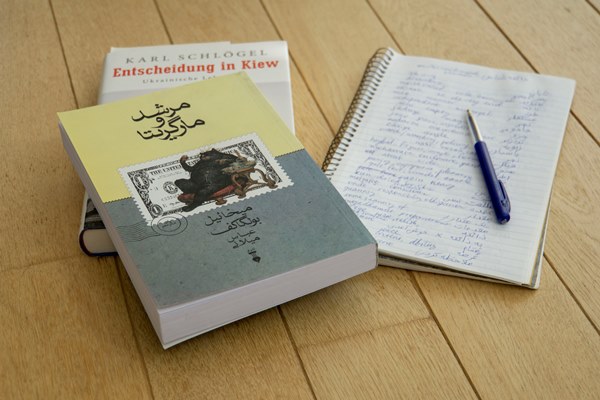
When I work on any long-term project, my office looks as if a tornado went through it. Since I prefer to work at a low table sitting on a cushion, my legs folded in the lotus position, I use the floor around me as my canvas. Books, research materials, and reference volumes cover it in random looking piles and mixed among them are items I find inspiring. Of course, the chaos is not entirely random, and I can tell you where I have my Japanese-English dictionary, Philip Kraft’s guide to fragrance chemistry or a volume of Persian poetry, without having to get up from my table. (The table, by the way, was a $10 acquisition from a Turkish shop, intended for making phyllo pastry.)


Casting a quick glance at the items that surround me today, I realized that they are much more than the materials I use for my writing, but rather the things that inspire me, the things that give me pleasure simply by looking at or touching them. I’m sure everyone can make such an inspiration collage–and I’m sure that for every person it would be different, but I wanted to share mine with you.

Continue reading →

Bulgaria Travel Reading List

Bulgaria, like so many places that fell on the other side of the Iron Curtain, remains terra incognita. Yet, it has an ancient history, delicious food, beautiful music, picturesque churches, incredible biodiversity, and of course, roses. Despite its small size, Bulgaria supplies 50% of the world’s rose essence.

I’ve decided to put together a list of non-fiction and fiction books. These novels and travel accounts present a fascinating and rich land, a place where many different cultures, influences and traditions meet.

Continue reading →

How to Learn A Language by Reading and Listening

In my first two articles outlining my methods for studying languages, I mentioned that I rely on reading both to learn new languages and to maintain the ones I already speak. However, I wanted to explain what I do in more detail, because my strategy differs from the more usual ones found in language books and classrooms. Generally, we’re told that we should just start reading, look up the words we don’t know and just slough through the book despite the difficulties. In the same vein, we’re advised to watch foreign films and listen to music.

The problem with this approach is that it takes a long time to learn a language in such a passive way. Of course, we should plunge into books we want to read as soon as we feel that we have enough of the basics and we should watch films and songs. The latter is especially important to get used to the rhythm and melodies of the language you’re learning and to create your own language bubble. (Watching films with subtitles, by the way, is not particularly effective, since our brains use the path of least resistance and effectively tune out the incomprehensible by focusing on the familiar.) I often tune into German, Portuguese or Japanese radio stations and listen to them as I cook or edit photos.  However, if your goal is to learn to speak the language, then you have to follow a different strategy when reading and listening.

Continue reading →

Fall Reading : Odyssey, Celestial Bodies and Obsessions

Autumn can be described as “golden,” “melancholy” or “rainy,” but I like the Japanese epithet of autumn as “the season for reading,” dokusho no aki. There is something particularly inviting about the image of sitting down with a book and a steaming cup of tea on a rainy day. Or I like to take a favorite book of poetry to a park and read a few stanzas as I wade through the fallen leaves. This fall, however, I’ll more likely be reading at train stations and airports as I have several trips lined up. Whatever the circumstances, I made a list of books to read. For the Bois de Jasmin fall reading list, on the other hand, I want to share the books I’ve read and enjoyed. As always, I look forward to your lists and recommendations.

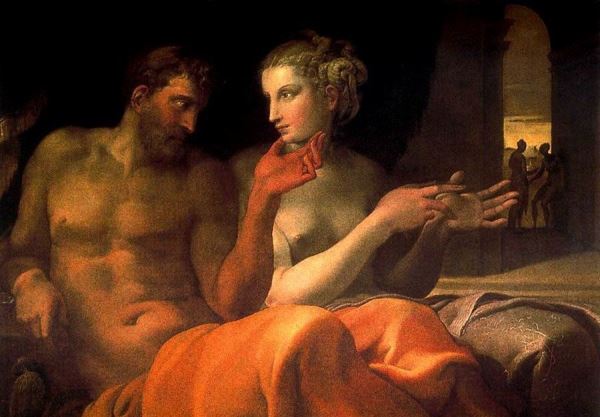
Homer, The Odyssey

I’ve decided to re-read The Odyssey after I finished Mary Beard’s Civilisations: How Do We Look/The Eye of Faith. Beard observes that certain works of literature influenced our culture to such a great extent that we take it for granted. Two of the most important books in the history of Western literature, as well as the oldest, are Homer’s Iliad and The Odyssey. I’ve selected The Odyssey, because it was my favorite when I was a student, and the copy we had at home was a French translation by Leconte Lisle circa 1860’s. It’s a translation in prose, but I found it beautiful and suspenseful.

Continue reading →

As Seen On

Design by cre8d
© Copyright 2005-2026 Bois de Jasmin. All rights reserved. Privacy Policy