Summer: 172 posts

Perfumes that put me in a summer mood, all year round

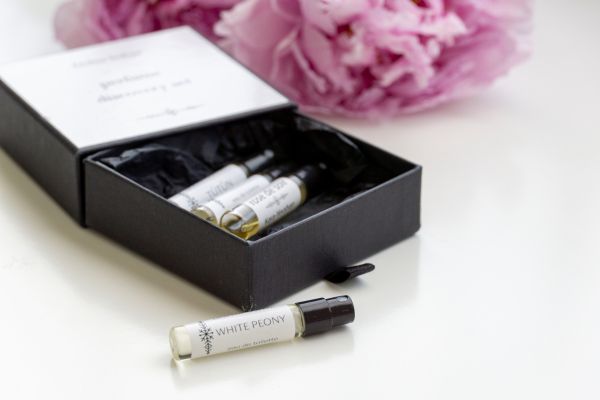
Sofiya Dolna White Peony : Fragrance Review and Ukrainian Perfumery

44444

The first time I smelled White Peony by Dolna Sofiya, I had the sensation of stepping into a memory I hadn’t lived yet—a sunlit room, lace curtains swaying, petals scattered on a linen tablecloth. The perfume didn’t just unfold, it breathed, as if it had been waiting to be noticed: a gauzy blend of rose buds, green leaves, and the faintest trace of nectar. But what stayed with me wasn’t only the scent, it was the sense of intent. This was no imitation. It was a statement: delicate, yes, but deliberate.
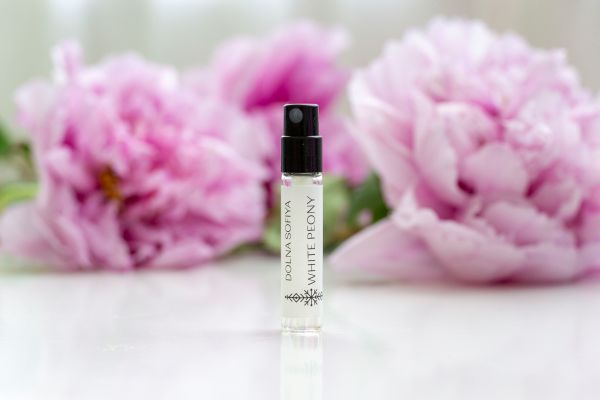
Its creator, Sofiya Dolna, is part of a quiet, brave movement blooming in Ukraine, one where scent becomes not just personal expression, but a cultural declaration. In the lingering wake of White Peony, I sensed something larger stirring, a new kind of perfumery, rooted in emotion, resilience, and place. And today I want to tell you about Sofiya and about what it means to make something beautiful in a time of rupture.

Perfume

White Peony opens like a page in spring light, soft, yet vivid. The initial impression is the brightness of green tea and crushed flower petals, fresh and dewy. The green facets are pronounced, which initially gives the fragrance sharpness. Yet as the composition evolves, the verdant notes soften into a sweet, creamy floral accord. There’s something restrained about the sweetness, as though Sofia didn’t want to romanticize the flower but instead to show it in its quiet strength as well as a fantasy of a blossom. Think a Monet painting of a peony, rather than a high-resolution photograph.
Continue reading →

Sofiya Dolna White Peony : Fragrance Review (in Ukrainian)

44444

Уперше відчувши аромат White Peony Софії Дольної, я ніби ступила в пам’ять, якої ніколи не жила — залита сонцем кімната, мереживні фіранки, пелюстки на лляній скатертині. Цей парфум не просто розкривався — він дихав, ніби давно чекав, щоб його помітили: прозора суміш пуп’янків троянди, зеленого листя і найніжнішої краплі нектару. Але залишився зі мною не тільки аромат — а його намір. Це була не імітація. Це була заява: ніжна, так, але цілеспрямована.

Його творчиня, Софія Дольна, є частиною тихого, сміливого руху, що розквітає в Україні — там, де аромат стає не просто особистим виразом, а культурною заявою. У післясмаку White Peony я відчула щось більше — початок нового парфумерного простору, вкоріненого в емоціях, стійкості й відчутті місця. І сьогодні я хочу розповісти вам про Софію — і про те, що означає створювати красу у час розломів.

Як розкривається White Peony

White Peony відкривається мов весняне світло — м’яко, але яскраво. Перше враження — це свіжість зеленого чаю і подрібнених квіткових пелюсток, свіжа й росиста. Зелені ноти яскраві й трохи різкі на старті, але з часом вони пом’якшуються, переходячи в солодку, кремову квіткову ноту. У солодкості є стриманість — ніби Софія не хотіла ідеалізувати півонію, а показати її справжню, тиху силу. Так, це півонія, але її образ, забарвлений трояндовими штрихами, поданий крізь призму фантазії — радше як акварель Моне, ніж як чітка фотографія.

Continue reading →

Green Scents for Summer Freshness

I’m inspired by the scents of spring, but this idea has little to do with the calendar season. My ideal spring is a state of mind, which is why the perfumes that evoke an exhilarating, uplifting sensation are part of my wardrobe all year round. The most effervescent among them conjure up the color green.

Chanel Cristalle is a classic example of a green floral that has a dazzling character and radiant aura. It suggests lemon peel and shimmer, with a bittersweet twist of orange blossom and petitgrain (distilled Seville orange leaves). The Eau de Toilette offers the freshest experience, but it can be difficult to find. While the Eau de Parfum is so lavishly decorated with hyacinth and narcissus that it becomes a velvety, baroque bouquet, it has an uplifting green note that feels like champagne bubbles. Cristalle Eau Verte is another beautiful rendition, sharper, brighter, and yes, greener.

Continue reading →

The Art of Ukrainian Bead Necklaces

Yesterday, Ukrainians celebrated Vyshyvanka Day, the day of the national embroidered shirt. This traditional garment has so much significance as an embodiment of quintessentially Ukrainian art and sense of beauty that its celebration is a day that many anticipate with pleasure. This week Ukraine’s eastern region of Kharkiv was heavily shelled by Russia, but whenever it was safe, people still came out into the streets wearing vyshyvanka. Certainly, vyshyvanka can be worn anytime and I have many pieces that range from exquisitely embroidered blouses to simple white shirts with subtle decoration.

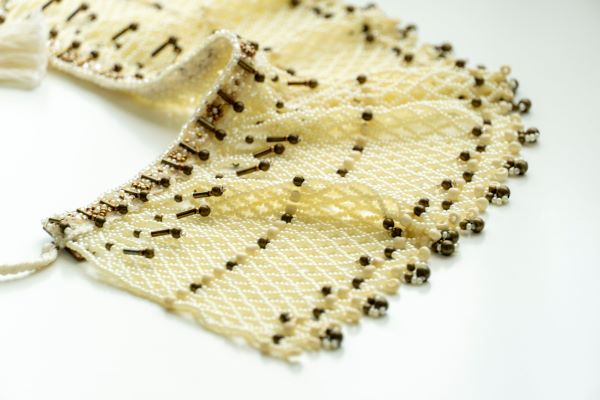
A popular companion to vyshyvanka is a necklace. Ukrainian traditional jewelry is quite elaborate and there are many types of necklaces made of different materials–stones, coral, amber, ribbons, wood, glass. Some of my favorite traditional necklaces are of the beaded style. Gerdan is a wider, longer necklace that looks like a pendant. Kryza is even larger and it  falls like a collar around the neck (that’s the style you can see in the title photo.) Silyanka is a narrow, choker-style necklace.

Continue reading →

Rosewater in Food and Fragrance

The 10th century Persian philosopher and scientist Avicenna is credited with many contributions to astronomy, geography, psychology, logic, mathematics, and physics. He also found time to delve into perfumery and devised methods to extract essential oils, experimenting on roses. If Avicenna were to step into a fragrance lab today, he would orient himself quickly enough–modern perfumery is a curious amalgam of state-of-the-art science and traditional techniques. For instance, rose oil is prepared in much the way as in Avicenna’s time through the process of steam distillation.

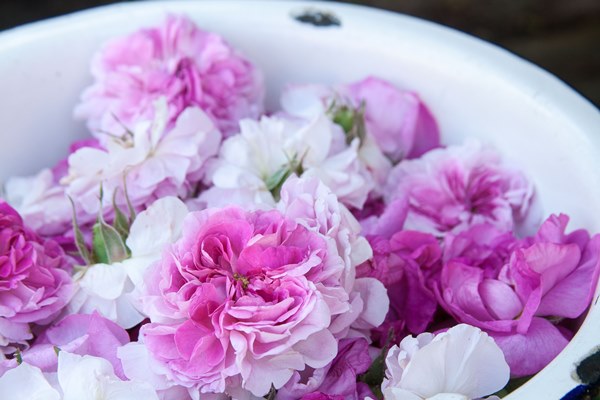
Even older than rose oil is rosewater, an ingredient with a history predating Avicenna. Lebanese food writer Barbara Abdeni Massaad, whose award winning cookbook Mouneh explores the traditions of preserving fruit, vegetables and flowers, includes a section on making rosewater. “Yes, the distillates from roses and orange flowers continue to be made in villages,” she commented on the vitality of the tradition. “Older people still believe that homemade is best.”

Continue reading →

As Seen On

Design by cre8d
© Copyright 2005-2026 Bois de Jasmin. All rights reserved. Privacy Policy